This article was automatically translated from the original Turkish version.
Type of Geographical İndication | Signpost | ||||||||
|---|---|---|---|---|---|---|---|---|---|
Application Date | 30.01.2021 | ||||||||
Registration Number | 1039 | ||||||||
Registration Date | 02.03.2022 | ||||||||
Product / Product Group(s) | Meals and soups | ||||||||
Province(s) | Ankara | ||||||||
Applicant/Registrant(s) | Akyurt Municipality | ||||||||
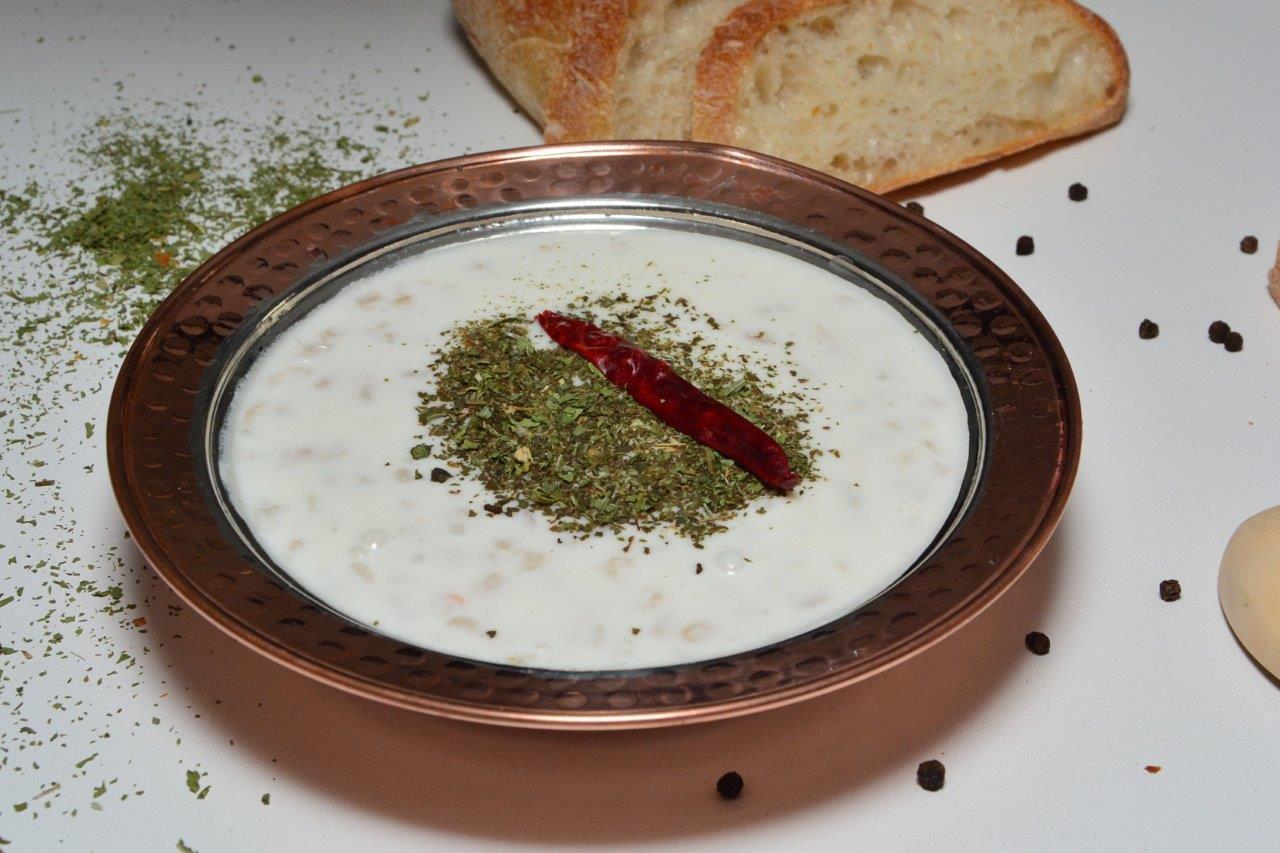
Akyurt Cold Soup is a traditional summer dish unique to the Akyurt district of Ankara. Known locally as “cold ayran porridge,” this soup stands out for its nourishing and cooling properties. Developed by the people of Akyurt, whose lives are closely tied to agriculture and livestock farming, the dish serves the dual purpose of meeting energy needs and providing relief from summer heat. It represents a culinary heritage that reflects the region’s cultural and geographical characteristics.
One of the key ingredients of Akyurt Cold Soup is yarma (cracked wheat), which is produced in the region using traditional methods. This process reflects both agricultural knowledge and the imece culture of communal labor:
Wheat harvesting takes place at the beginning of summer; local farmers carefully select hardy local wheat varieties.
After harvest, the wheat is dehulled and cracked in stone mills or hand mills.
The cracked wheat is then dried in the sun to become yarma.
In some households, this process is carried out using wooden pounding mallets; this method requires both physical labor and traditional expertise.
Yarma production in Akyurt does not merely meet culinary needs; it also supports the sustainability of local agriculture and highlights the visibility of women’s labor.
The core ingredients of Akyurt Cold Soup are yarma, chickpeas, and ayran. The traditional recipe follows these steps:
Yarma and chickpeas are pre-boiled and prepared in advance.
Ayran is made by mixing yogurt and water to achieve a consistency that is neither too thick nor too watery.
The boiled yarma and chickpeas are combined with the cooled ayran.
Salt is added optionally according to taste.
The mixture is refrigerated for several hours before serving to ensure it is served cold.
While some households add herbs such as mint, dill, or cucumber for variation, the original form of Akyurt Cold Soup remains simple and unadulterated.
To preserve the local identity of Akyurt Cold Soup and enhance its recognition, the Akyurt Municipality and local producer cooperatives submitted an application for geographical indication status. During this process, the dish’s origin, production method, and cultural context were thoroughly documented. The Turkish Patent and Trademark Office confirmed that the soup is unique to Akyurt, and that its recipe, ingredients, and preparation method reflect the region’s distinctive character. The registration process was carried out with active participation from local producers, with the primary goals of standardizing the recipe and safeguarding local knowledge. Upon completion of registration, the aim was to ensure that Akyurt Cold Soup contributes to the local economy and gains national recognition as a documented part of Anatolian culinary heritage. This geographical indication was officially registered on 02.03.2022 under Law No. 6769 on Industrial Property, with protection effective from 30.01.2021.
This soup is especially consumed in Akyurt during the summer months. It is a meal traditionally eaten by local farmers during midday to cool down after fieldwork. It is also commonly served at communal gatherings, imece-based work events, and summer weddings. In this context, the role of the cold soup extends beyond nutrition to encompass social sharing and solidarity.
Thanks to its yarma and chickpea content, the soup is rich in fiber, protein, and complex carbohydrates. Ayran supports digestion through its probiotic properties. In this way, Akyurt Cold Soup offers an example of both traditional and balanced nutrition.
Akyurt Cold Soup holds a simple yet deeply rooted position in the district’s culinary culture. Despite modernizing lifestyles, it continues to maintain widespread popularity, particularly in rural areas and among the elderly population. The recipe, passed down from generation to generation by local women, is regarded as a cultural element that reflects Akyurt’s local identity and seasonal rhythms of life.
Akyurt Municipality. "Akyurt Soğuk Çorbası." Turkish Patent and Trademark Office, January 30, 2021. Accessed August 16, 2025. https://ci.turkpatent.gov.tr/Files/GeographicalSigns/79ff1387-f237-4db8-92de-62b76af3d6be.pdf
Türk Patent ve Marka Kurumu. "Akyurt Soğuk Çorbası." Coğrafi İşaretler Portalı. Accessed August 16, 2025. https://ci.turkpatent.gov.tr/cografi-isaretler/detay/3382

Type of Geographical İndication | Signpost | ||||||||
|---|---|---|---|---|---|---|---|---|---|
Application Date | 30.01.2021 | ||||||||
Registration Number | 1039 | ||||||||
Registration Date | 02.03.2022 | ||||||||
Product / Product Group(s) | Meals and soups | ||||||||
Province(s) | Ankara | ||||||||
Applicant/Registrant(s) | Akyurt Municipality | ||||||||
Yarma Production
Ingredients and Preparation Method
Geographical Indication and Registration Process
Cultural and Seasonal Context
Nutritional Properties
Place in Local Identity