This article was automatically translated from the original Turkish version.
+1 More
Author(s) | Ibn al-Nafis | ||||||||
|---|---|---|---|---|---|---|---|---|---|
Century Written | 13th century | ||||||||
Language(s) | Arabic | ||||||||
Commentators | Nafis b. Avad al-Kirmani (d. 853/1449), Mahmud b. Ahmed al-Emshati (d. 901/1496), Sediddin Muhammad b. Masud al-Kazeruni (d. 744/1344), Jamal al-Din Aksarayi (d. 791/1388-89) | ||||||||
Turkish Translations | Turki Mucez - Ahmed b. Kemal, Sharh-i Mucez fi't-Tibb - Sururi | ||||||||
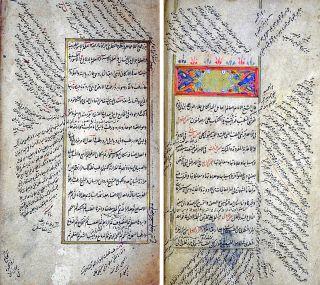
al-Muʿjaz fi’t-Tibb (al-Muʿjaz) is a general medical treatise composed by Ibn Nafis (Ibn al-Nafis), who lived in the 13th century. The author is recognized as a major scientific figure within the Islamic medical tradition and is referred to in some sources as the “Second Ibn Sina.” The designation of Ibn Nafis as the “Second Ibn Sina” underscores his adherence to the philosopher-physician tradition and his role in reinterpreting Galenic-Ibn Sinaean theory within the framework of Islamic science. Ibn Nafis’s scientific reputation rests primarily on his explanation of pulmonary circulation—the minor circulation—centuries before Harvey. al-Muʿjaz is regarded as one of his principal medical works. Because the treatise is considered a commentary on Ibn Sina’s al-Qanun fi’t-Tibb, it is also cited in some sources as Muʿjaz al-Qanun.
The version based on the Sururi commentary begins with an introduction, the basmala, and praise. In this section, the author states that “every disease has its remedy,” emphasizing the importance of medical science and asserting that health preservation is achievable through the maintenance of the human body. This emphasis reveals that the treatise is not solely concerned with disease treatment but also with hifz al-sihha and preventive medicine.
al-Muʿjaz has held a central position in medical education since its composition and was used as a textbook in madrasas and dar al-shifas for centuries. Two interpretations exist regarding its relationship with Ibn Sina’s al-Qanun fi’t-Tibb: The first view regards al-Muʿjaz as an abridgment of al-Qanun; the second defines it as an “expanded summary.” This second interpretation suggests that the work is both abridging and augmenting, and that due to its practical accessibility, it replaced al-Qanun in medical schools.
Ibn Nafis’s discovery of pulmonary circulation demonstrates that he was not merely a follower of Ibn Sina but also an authority willing to correct classical theories when necessary. In this context, al-Muʿjaz is not a simple abridgment but rather a medical compendium that preserves the systematic structure of al-Qanun while updating it with 13th-century knowledge and enhancing its pedagogical accessibility.
The treatise is organized into four main sciences arranged in a systematic unity. The introduction of the Sururi manuscript includes tables serving as a table of contents listing key concepts and topics. This feature indicates that the work was designed with practical utility in mind.
The four sciences cover the following subjects:
This structure is noteworthy for its resemblance to modern divisions in medical education.
The first science, titled “Kawa’id-i juz’i’t-tibb,” explains the fundamental principles of theoretical and practical medicine. This section is based on the theories of the four elements and the four humors, examining physical and mental functions, types of temperaments, and the predispositions of organs to specific temperaments.
In the anatomy section, simple and compound organs are introduced; the section on nerves provides a detailed examination of cranial nerves. Physiological explanations are framed within the theory of the soul, including a schema assigning specific functions to different parts of the brain.
In the etiology section, environmental factors such as air conditions, climate, and solar influence are discussed. Diagnostic tools like pulse and urine are analyzed in relation to humors and environmental variables.
This science encompasses pharmacology and dietetics. Most simple drugs are plant-based substances; the properties and uses of ginger, acacia, onion, broad bean, celery, cumin, mulberry, olive, hellebore, lotus, nesrin, and pomegranate are described. Although drugs are partially arranged alphabetically, the ordering is not entirely systematic. Animal meats and their health properties are also examined.
The third science addresses organ-specific diseases according to the classical “head to toe” arrangement. It covers headaches, diseases of the sensory organs, chest and lung disorders, and ailments of the stomach, liver, intestines, and rectum. Disorders of the urinary system are also included, along with gynecology, andrology, and discussions of sexuality and women’s diseases under the heading “bah.”
The fourth science deals with diseases not confined to a specific organ. Infectious diseases such as fevers, plague, leprosy, and scabies; joint disorders; abscesses and swellings requiring surgical intervention; and topics concerning hair, skin, and toxicology are treated in this section. In the Sururi commentary, infectious diseases are attributed to harmful humors; treatments recommended include emetics and laxatives, as well as substances such as camphor, mercury, sulfur, rose water, and saffron water. Bathing is also advised for the elimination of excess humors.
For general treatment of poisoning, olive oil and emesis are recommended; rabies from animal bites is classified as one form of toxic poisoning.
Numerous commentaries have been written on this work. Among the most important commentators on al-Muʿjaz are Nafis ibn Avad al-Kirmani (d. 853/1449), Mahmud ibn Ahmad al-Amshati (d. 901/1496), Sadi al-Din Muhammad ibn Masud al-Kazaruni (d. 744/1344), and Jamal al-Din Aksarayi (d. 791/1388–89).
al-Muʿjaz retained its importance in Ottoman medical education and became the subject of numerous commentaries. The work, preserved in many manuscripts in Turkish libraries, was translated into Turkish twice.
The first Turkish translation was completed in 948 (1541–42). Although modern sources frequently attribute this translation to Ahî Çelebi, chief physician during the reigns of Bayezid II and Yavuz Sultan Selim (d. 1524), this attribution is disputed. Sources indicate that the translator was Ahmad ibn Kamal, a physician from the Edirne Bayezid Dar al-Shifa. Indeed, Kâtip Çelebi records the translator as Ahmad ibn Kamal in Kashf al-Zunun.
Ahmad ibn Kamal titled his translation Türkî Muʿjaz. He states that he undertook the translation to enable Turks to benefit from medical knowledge, since most medical texts were written in Arabic and Persian. This translation was presented to Suleiman Pasha, a vizier of Kanuni Sultan Süleyman. Ahmad ibn Kamal’s work is a direct Turkish translation that does not rely on the Arabic text of al-Muʿjaz.
Muslih al-Din Mustafa ibn Shaban, known as Sururi, who lived in the 16th century, both translated and commented on al-Muʿjaz. Written in 959/1552, this work employs an original method: each Arabic sentence is presented in its original form, followed by its Turkish translation and commentary. Sururi used a distinctive layout to separate the text from its commentary and occasionally referred to other sources. This approach elevated the work from a simple translation to an advanced instructional text for 16th-century Ottoman medicine. A critical edition of the work was published in 2022 by the Turkish Manuscripts Institution.
Emir Çelebi, chief physician in the 17th century, authored a work titled Enmûzecu’t-Tibb, which goes beyond mere similarity of title to establish a direct relationship with al-Muʿjaz. Comparative studies show that Emir Çelebi adopted the structural organization of al-Muʿjaz, copied entire sections verbatim, and incorporated them into his work in Turkishized form. This parallelism is particularly evident in the section on “Süt Azlığı.” This demonstrates that al-Muʿjaz remained one of the foundational texts of Ottoman medicine well into the 17th century.
Acıduman, Ahmet. "El-Mūcez fi't-Tibb ve Enmūzecu'ţ-Tıbb Üzerine Bir Ön Çalışma: İki Eser Arasında Yalnızca Bir İsim Benzerliği Mi Var?" Mersin Üniversitesi Tıp Fakültesi Lokman Hekim Tip Tarihi ve Folklorik Tıp Dergisi 12, no. 2 (2022): 282-293. Accessed November 15, 2025. https://www.researchgate.net/publication/360786712_El-Mucez_fi't-Tibb_ve_Enmuzecu't-Tibb_uzerine_bir_on_calisma_Iki_eser_arasinda_yalnizca_bir_isim_benzerligi_mi_var
Hayırlıdağ, Mustafa. "İbnü'n-Nefîs'in el-Mûcez Adlı Eserinin Genel İncelemesi." Külliyat, Osmanlı Araştırmaları Dergisi, no. 18 (2022): 233-240. Accessed November 15, 2025. https://dergipark.org.tr/tr/download/article-file/2572069
Kahya, Esin. "Sururi (Mustafa Muslihiddin b. Şaban)." *Belleten* 72, no. 264 (2008): 491-499. Accessed November 15, 2025. https://belleten.gov.tr/eng/full-text-pdf/69/tur
Kahya, Esin. "İbn Nefis ve Eseri el-Mucez." *Ortaçağ İslâm Dünyası'nda Bilim ve Teknik [Makaleler]*, edited by Yavuz Unat. Ankara: Lotus Yayınevi, 2008: 349-360. Accessed November 15, 2025. https://isamveri.org/pdfdrg/D174675/2008/2008_KAHYAE.pdf
Kahya, Esin. “İbnü’n-Nefîs.” *TDV İslâm Ansiklopedisi*. TDV İslâm Araştırmaları Merkezi, 2000. Accessed November 15, 2025. https://kureansiklopedi.com/tr/detay/ibnun-nefis-2
Sürûrî, Gelibolulu Muslihuddîn Mustafa. *Şerh-i Mûcez fi’t-Tıbb (İbnü’n-Nefîs’in el-Mûcez fi’t-Tıbb’ının Şerhi)*. Edited by Mücahit Kaçar and Ahmet Akdağ. Istanbul: Türkiye Yazma Eserler Kurumu Başkanlığı Yayınları, 2022. Accessed November 15, 2025. https://ekitap.yek.gov.tr/Uploads/ProductsFiles/84ddfab4-5c67-4218-9e2b-bdfe72ed0fe9.pdf

Author(s) | Ibn al-Nafis | ||||||||
|---|---|---|---|---|---|---|---|---|---|
Century Written | 13th century | ||||||||
Language(s) | Arabic | ||||||||
Commentators | Nafis b. Avad al-Kirmani (d. 853/1449), Mahmud b. Ahmed al-Emshati (d. 901/1496), Sediddin Muhammad b. Masud al-Kazeruni (d. 744/1344), Jamal al-Din Aksarayi (d. 791/1388-89) | ||||||||
Turkish Translations | Turki Mucez - Ahmed b. Kemal, Sharh-i Mucez fi't-Tibb - Sururi | ||||||||
No Discussion Added Yet
Start discussion for "Al-Mujaz fi al-Tibb (Book)" article
Historical Context and Relationship with al-Qanun fi’t-Tibb
Structure of the Work: The Four Sciences
First Science – Theoretical Principles of Medicine
Second Science – Drugs and Diet
Third Science – Organ-Specific Diseases (Special Pathology)
Fourth Science – General Pathology, Surgery, and Toxicology
Ottoman Translations and Commentaries
Ahmad ibn Kamal’s Türkî Muʿjaz Translation
Sururi’s Sharh-i Muʿjaz fi’t-Tibb
Emir Çelebi and Enmûzecu’t-Tıbb