

This article was automatically translated from the original Turkish version.
+2 More
Origin(s) | Alaşehir Türkiye Manisa | ||||||||
|---|---|---|---|---|---|---|---|---|---|
Registration Type | Mahreç İşareti | ||||||||
Basic Materials | Ground Beef, Phyllo Dough, Onion, Parsley, Black Pepper, Bone Broth, Butter | ||||||||
Service Style | Served with Yogurt and Parsley, Optional | ||||||||
Cooking Method(s) | Fried in Oil and Cooked with Bone Broth | ||||||||
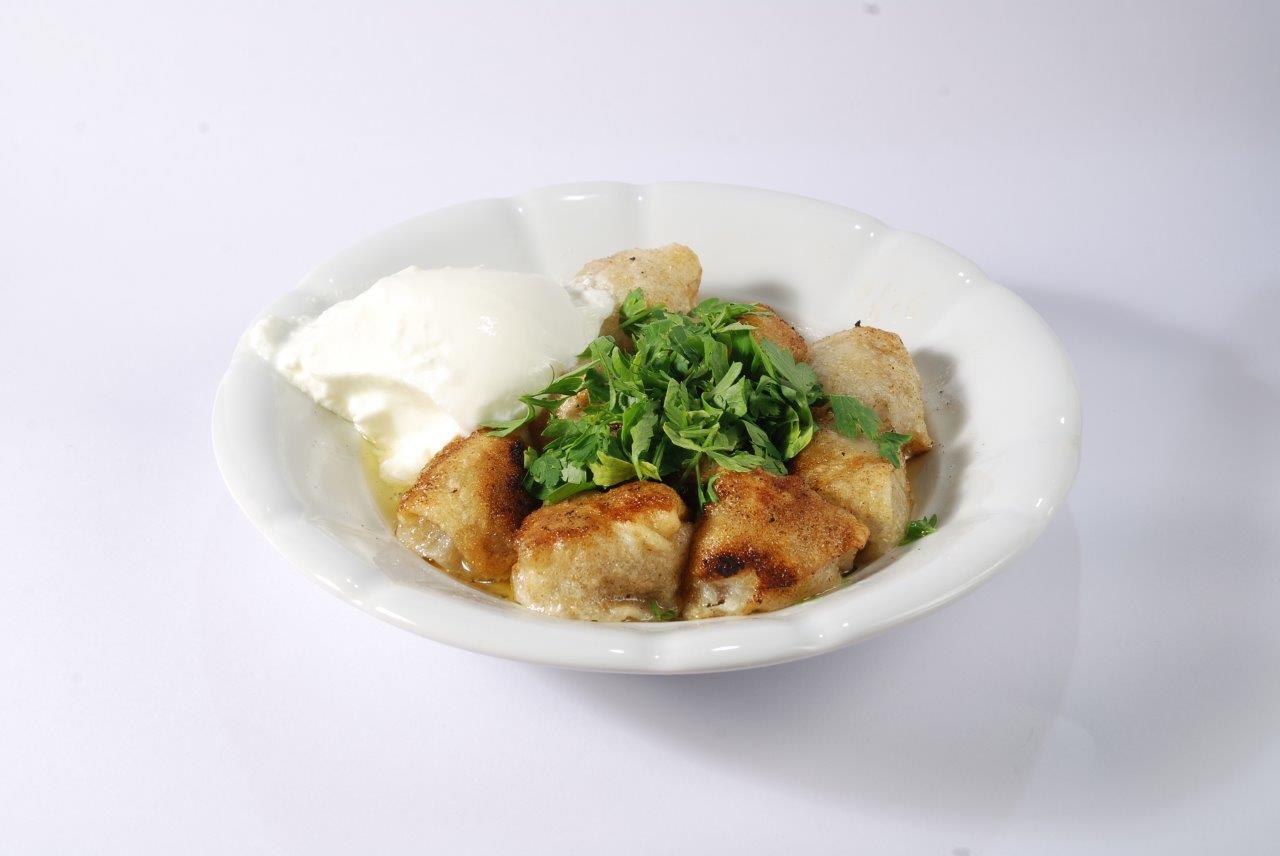
Alaşehir kapaması is a traditional meat dish specific to the Alaşehir district of Manisa in Türkiye’s Aegean Region. This dish, passed down from Ottoman cuisine to the present day, constitutes an important part of the cultural and gastronomic heritage of the Alaşehir region due to its distinctive flavor and preparation method. Registered as a geographical indication in 2022, Alaşehir kapaması is distinguished from similar dishes by its unique recipe, cooking technique, and presentation style.
Alaşehir kapaması was officially registered with a geographical indication by the Turkish Patent and Trademark Office on 21 March 2022, following an application submitted by the Alaşehir Chamber of Commerce and Industry. The registration process was carried out to preserve the region-specific production methods and ensure their transmission across generations. The geographical indication certificate provides detailed specifications regarding the production technique, ingredients, and presentation format.
Alaşehir kapaması is based on the principle of wrapping a spiced minced meat filling in thin sheets of dough, frying it in oil, and then simmering it in bone broth before serving with butter. The filling is prepared using lean beef mince, dried onion, parsley, black pepper, and salt. This mixture is wrapped in thin dough sheets, initially fried in liquid oil until crisp, and then cooked together with butter and bone broth until ready to serve.
The dish may be served with yogurt and chopped parsley according to preference. As a dish consumed both in daily meals and on special occasions, Alaşehir kapaması holds a prominent place on the tables of the local population.
According to the registered recipe, the essential ingredients for Alaşehir kapaması are as follows:
Alaşehir kapaması is frequently prepared and offered by the local population during special occasions such as weddings and holidays. Widely recognized in Alaşehir and its surrounding areas, this dish is one of the key examples reflecting the region’s gastronomic identity. The registration process aims to support local producers and safeguard the traditional recipe for future generations.
Accessed November 26, 2025.
Accessed November 26, 2025.
Akta Derneği. "Alaşehir Kapaması." Akta.org.tr. Accessed July 2, 2025.
Kültür ve Turizm Bakanlığı. "Alaşehir Kapaması." Kültür Portalı. Accessed July 2, 2025.
Manisa İl Kültür ve Turizm Müdürlüğü. "Alaşehir Kapaması." Manisa İl Kültür ve Turizm Müdürlüğü Resmî Web Sitesi. Accessed July 2, 2025.
Türk Patent ve Marka Kurumu. "Alaşehir Kapaması." Coğrafi İşaretler Ulusal Veri Tabanı. Accessed July 2, 2025.
Türk Patent ve Marka Kurumu. Alaşehir Kapaması – Coğrafi İşaret Tescil Belgesi (PDF). Accessed July 2, 2025.

Origin(s) | Alaşehir Türkiye Manisa | ||||||||
|---|---|---|---|---|---|---|---|---|---|
Registration Type | Mahreç İşareti | ||||||||
Basic Materials | Ground Beef, Phyllo Dough, Onion, Parsley, Black Pepper, Bone Broth, Butter | ||||||||
Service Style | Served with Yogurt and Parsley, Optional | ||||||||
Cooking Method(s) | Fried in Oil and Cooked with Bone Broth | ||||||||
Geographical Indication Registration
Product Definition and Characteristics
Ingredients
Preparation and Cooking Process
Cultural Significance