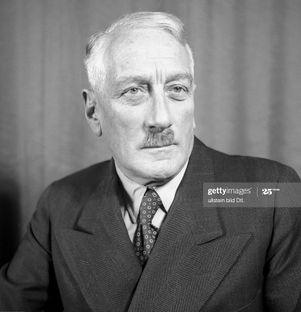


+1 More

Date of Birth | 22 February 1876 | ||||||||
|---|---|---|---|---|---|---|---|---|---|
Place of Birth | Geneva, Switzerland | ||||||||
Date of Death | 29 December 1956 | ||||||||
Nationality | Switzerland | ||||||||
Mother Tongue | French | ||||||||
Graduation | Faculty of Letters, University of Geneva | ||||||||
Profession(s) | Educational Scientist Politician Academic | ||||||||
Position in Türkiye | 1932 Darülfünun Investigation and Reform Report | ||||||||
Contribution | 1933 University Reform | ||||||||
Nobel Nomination | 1951, 1953 (Peace Prize) | ||||||||
Academic Position | Professor of Pedagogy, University of Geneva | ||||||||
Political Position | Membership and Presidency of the Swiss Cantonal Council | ||||||||
The report he prepared served as the basis for the abolition of Darülfünun and the establishment of Istanbul University. It addressed child-centered pedagogical principles within the educational philosophy and the interaction between schools and society.
Albert Malche was born on 22 February 1876 in Geneva, Switzerland. He came from a French-speaking Jewish family. After graduating from the Faculty of Letters at the University of Geneva, he began his academic career in 1910. In 1912 he was appointed professor at the Chair of Pedagogy at the University of Geneva. He served as secretary of the senate from 1918 to 1920, became a member of the senate in 1927, and was elected president of the University of Geneva Senate in 1930.
Malche advocated that education should be structured around three fundamental principles:
In accordance with these principles, he established practice schools in Switzerland and contributed to teacher training programs.
In 1931, Albert Malche was invited to Türkiye by the Turkish government to identify structural problems at Darülfünun. He arrived in Türkiye in early 1932 and conducted observations on curricula, staff structure, administrative functioning, buildings, and equipment. He completed his report on 29 May 1932.
The report noted that teaching methods were inconsistent with contemporary scientific developments, language proficiency levels were low, and academic publications were insufficient. It also emphasized the need for reform in the university’s administrative structure.
Malche participated in the Darülfünun Reform Commission convened in 1933 and became involved in the establishment process of Istanbul University. As part of his assigned duties within the commission, he contributed to the recruitment of academic staff from abroad. During this process, he acted as an intermediary in the appointment of Jewish academics who had fled the Nazi regime in Germany.
Malche stated that Istanbul University should primarily consist of Turkish academics, but he noted that the appointment process was conducted by the Ministry of National Education.
Albert Malche returned to Switzerland in 1934 and became involved in politics. From 1940 to 1941 he served as a member and president of the Swiss Confederation’s Council of States. In 1951 and 1953 he was nominated for the Nobel Peace Prize for his efforts in assisting German refugee academics. He died in Switzerland on 29 December 1956.
Namal, Yücel, and Karakök, Tunay. “Atatürk and the University Reform (1933).” *International Journal of Social Sciences and Education Research* 7, no. 1 (2021): 1–11. Accessed July 24, 2025. https://dergipark.org.tr/en/download/article-file/1711445.
Şimşek, Ahmet. “Albert Malche (1876–1956).” *Atatürk Ansiklopedisi*. Accessed July 24, 2025. https://ataturkansiklopedisi.gov.tr/detay/167/Albert-Malche-(1876-1956).

Date of Birth | 22 February 1876 | ||||||||
|---|---|---|---|---|---|---|---|---|---|
Place of Birth | Geneva, Switzerland | ||||||||
Date of Death | 29 December 1956 | ||||||||
Nationality | Switzerland | ||||||||
Mother Tongue | French | ||||||||
Graduation | Faculty of Letters, University of Geneva | ||||||||
Profession(s) | Educational Scientist Politician Academic | ||||||||
Position in Türkiye | 1932 Darülfünun Investigation and Reform Report | ||||||||
Contribution | 1933 University Reform | ||||||||
Nobel Nomination | 1951, 1953 (Peace Prize) | ||||||||
Academic Position | Professor of Pedagogy, University of Geneva | ||||||||
Political Position | Membership and Presidency of the Swiss Cantonal Council | ||||||||
Life and Education
Pedagogical Approach
Appointment Process in Türkiye
University Reform and Participation
Later Life and Death