

This article was automatically translated from the original Turkish version.
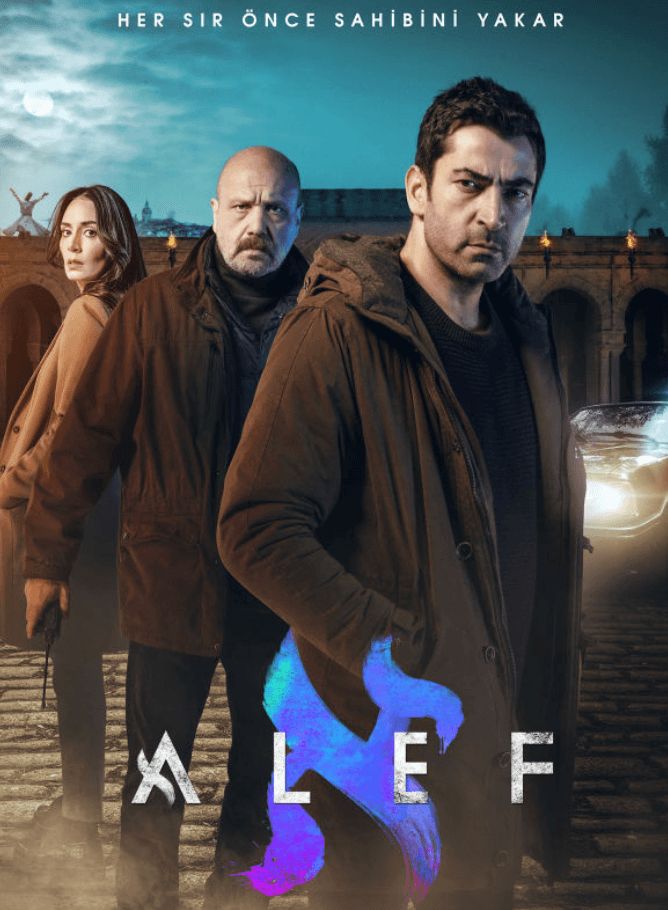
Alef has been regarded as a production that stands outside the structural and thematic conventions of Turkish television. The series, produced by FX and BluTV common, was released in 2020 and attracted attention both in domestic and certain international circles. It was listed by Variety magazine as one of the 15 international series of the year. The screenplay, written by Emre Kayış, was directed by Emin Alper in his first television series project. The production was developed as an eight-episode miniseries. The cast includes Kenan İmirzalıoğlu (Kemal), Ahmet Mümtaz Taylan (Settar), and Melisa Sözen (Yaşar) place.
The story begins with a corpse found in the Bosphorus. Initially presenting the impression of an ordinary murder, it evolves over subsequent episodes into a series of crimes rich in historical and symbolic elements. The “Alef” symbol found at each crime scene suggests the presence of a larger underlying structure behind the events.
One of Alef’s most striking features is its deepening of the police procedural genre through historical and Sufi elements. The symbols clues and targets behind the murders lead viewers not only into a detective narrative but also into the history of the Ottoman Sufism and Sunni-Ghayrī Sunnī conflicts.
The character Yaşar (Melisa Sözen) a doctor of Islamic history provides the detectives with insights into Sufi orders rituals and religious structures of the Ottoman period. The Kalenderis Mevlevi and Maşuki such as orders occupy both historical and symbolic roles within the series. Structures under the Ottoman Bektashi umbrella and their relationship with the state are detailed in the context of the Sunni consolidation process. In this regard Alef holds the distinction of being among the first Turkish series to advance a police procedural within a Sufi atmosphere.
Director Emin Alper has brought his cinematic experience to television with Alef. Known previously for films such as Tepenin Ardı Abluka and Kız Kardeşler Alper has established a controlled building in Alef both aesthetically and narratively. Wide shots muted tonalities atmospheric lighting and mystical Istanbul landscapes shape the series’ mood.
One of Alper’s greatest challenges was not having written the screenplay himself. However throughout the production he collaborated closely with screenwriter Emre Kayış contributing partially to the script and with the producers’ support maintained his visual vision. His preference for Scandinavian crime dramas reveals inspiration particularly from the series “Bridge”.
The choice of locations was designed to support this direction approximately 70 different sites across Istanbul were specially decorated. The music was entrusted to Mercan Dede a name known for Sufi-electronica fusion works further reinforcing the atmosphere.
Throughout the series the personality clashes between Kemal and Settar come to the fore. Kemal modern is portrayed as an educated and intellectually influenced character while Settar embodies a more traditional and instinctive profile. This dynamic is felt not only in the resolution of events but also in the backdrop representing Istanbul’s East-West divide. However some details regarding the characters’ pasts remain unexplored. For instance many questions about Kemal’s lost family remain ambiguous by the series’ end. Additionally the connection between the first murder victim a transgender individual and the overall plot is insufficiently explained. This leaves certain episodes feeling unresolved for viewers.
Nevertheless Alef contains social critiques embedded in its subtext. Issues such as Kurdish identity transgender rights the position of Afro-Turks and corruption within the public bureaucracy are woven into both the screenplay and dialogue. In this sense the series offers not only a police procedural but also a contemporary social observation landscape.
The structural problem in Alef lies in the drop in pacing during the middle episodes and the rushed resolution of plot points in the final final. The strong atmosphere established in the early episodes disperses in the middle sections while the finale sees many knot either superficially resolved or left entirely suspended. This situation stems particularly from the failure of the historical and mystical backdrop developed throughout the series to find a dramatic resolution. Nonetheless Alef’s pioneering nature and its genre-transcending quality position it as a significant entry in Turkish television production. The international attention it received particularly its inclusion on the Variety list demonstrates that this success extends beyond the local level.
The Triangle of History Sufism and Murder
Direction and Atmosphere
Depth of Characters and Critical Context
Structural Shortcomings and Notable Achievements