This article was automatically translated from the original Turkish version.
+1 More
Location | Alpullu Kırklareli Babaeski | ||||||||
|---|---|---|---|---|---|---|---|---|---|
Foundation Date | 26 November 1926 | ||||||||
Organizational Structure | State-Private | ||||||||
Privatization | 2018 | ||||||||
Current Status | Active | ||||||||
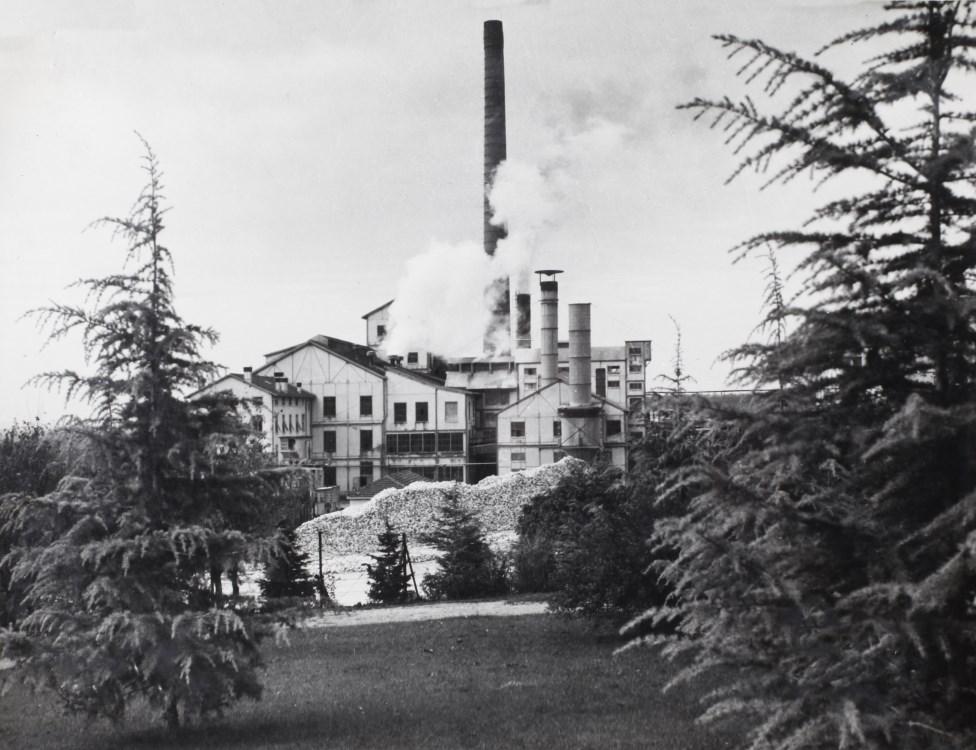
Alpullu Sugar Factory is the first sugar production facility established in Türkiye during the Republican era. Located in Alpullu, a village in the Babaeski district of Kırklareli province in Thrace, the factory began operations in 1926 and has played a significant role in the economic, social, and architectural development of the region. Established through a partnership between the state and private sector in the early years of the Republic, the factory was instrumental in establishing beet cultivation in the region, diversifying agricultural production, and shaping the model of modern industrial settlements.
The construction of the Alpullu Sugar Factory was completed in approximately 11 months, and production commenced on 26 November 1926. Ensuring domestic production of sugar—a staple consumer good—in the early years of the Republic, promoting widespread beet cultivation, and achieving regional economic development goals defined the factory’s establishment process. As Türkiye’s first sugar production facility, the factory holds a prominent place in the nation’s industrial history.

Alpullu Sugar Factory (Binbir Gıda)
Various attempts at sugar production were made in the Ottoman Empire during the 19th century. Efforts to establish factories continued at the end of the 19th century and the beginning of the 20th century but were not implemented due to insufficient water resources, lack of capital, and capitulations. This situation prevented the establishment of a modern sugar factory in Türkiye until 1926.
In the early years of the Republic of Türkiye, sugar industry was strategically regarded as a key sector in line with the goal of “economic independence.” Objectives regarding sugar were defined at the 1923 İzmir Economic Congress, and the promotion of domestic production was decided upon.
During this period, the state’s priorities were:
Efforts to achieve domestic sugar production in Türkiye were revived after the proclamation of the Republic, and the establishment of the sugar industry received state support. In this context, regional deputies and entrepreneurs founded “Istanbul and Thrace Sugar Factories A.Ş.” with the aim of establishing a sugar factory in Thrace after Uşak.
Among the founding members were:
The majority of the company’s shares were held by İş Bankası, with Ziraat Bankası and the Thrace Regional Administration as partners. The distribution of the founding capital was as follows:
This structure transformed the factory into both a regional initiative and a model of the Republic’s state-supported development strategy.
Three key factors influenced the decision to locate the factory in Alpullu:
These conditions made Alpullu a suitable industrial settlement both for production processes and transportation logistics.

Alpullu Sugar Factory (Binbir Gıda)
When the factory began operations in 1926, beet cultivation was a newly introduced activity for Thrace farmers. With the factory’s activation, beet planting rapidly spread throughout villages in the region and became one of the foundational elements of the local economy.
In its early years, the Alpullu Sugar Factory began processing by-products of the sugar industry, including:
Molasses and beet pulp supported livestock farming in the region as by-products of beet processing. By 1933, a significant portion of Türkiye’s sugar demand was met by the Alpullu and Uşak factories.
On 20 December 1930, Atatürk visited the Alpullu Sugar Factory during his tour of Thrace. On the same day, he rested at the Ergene Köşkü within the factory complex. This pavilion was later preserved as a museum in honor of Atatürk, with the room where he stayed maintained in its original state.

Atatürk’s Diary Entry from His Visit to the Alpullu Sugar Factory (Binbir Gıda)
After production ceased in 2013, the factory reopened in 2017 following continued beet cultivation by local farmers. According to 2017 data, approximately 175 farmers from 104 villages produced around 130,000 tons of beets, enabling the facility to resume operations.【1】
In 2018, the factory was privatized. Today, it is operated by Binbir Gıda Tarım Ürünleri Sanayi ve Ticaret A.Ş.

Alpullu Sugar Factory (Anadolu Ajansı)
According to the registration announcement dated 11 August 2020, the area where the Alpullu Sugar Factory is located has been designated as a protected site under two categories by the Ministry’s decision dated 15 April 2020 and numbered 88130:
This registration decision was published in the Resmi Gazete in accordance with the regulation published in the Resmi Gazete on 27 October 2017, numbered 30223. The registration was carried out due to the natural characteristics and conservation value of the area where the factory is situated.
The Alpullu Sugar Factory complex is one of the spatial manifestations of the Republic’s modernization policies. The complex was not limited to production facilities; it also included housing for workers and managers, as well as social and cultural infrastructure, forming a multifaceted living environment.
The main structures within the complex include:
All of these facilities served both the workers and the local population.
The architectural design of the complex reflects the influence of the Art Deco style. In particular, the interior fittings of the Ergene Köşkü and the architectural elements of the Big Pavilion bear traces of this movement, which was widespread in Europe during the first half of the 20th century.
The factory was not merely an economic production facility; it also became a center that transformed social life in the region. The modern social facilities within the complex were made accessible to both factory workers and the local population. Electricity, cinema, sports facilities, and other amenities were experienced by the local community for the first time through this settlement.
The Alpullu Sugar Factory played a significant role in introducing the modern lifestyle envisioned by the Republic to the broader society. The housing and living spaces for factory workers were designed in accordance with the modern nuclear family model of the period.
For the first time in the region, cinema screenings, electric lighting, sports facilities, credit-based provision of modern household items to workers (washing machines, refrigerators), social courses and educational activities, and ballrooms and meeting halls were all provided at this facility.
With the commencement of production at the factory:
The processing of beets grown by Thrace farmers contributed to the sustainability of the regional economy.
Anadolu Ajansı. "Asırlık fabrika yeniden üretime başladı." Accessed November 25, 2025. https://www.aa.com.tr/tr/ekonomi/asirlik-fabrika-yeniden-uretime-basladi/911096
Binbir Gıda Tarım Ürünleri Sanayi ve Ticaret A.Ş. "Alpullu Şeker Fabrikası." *binbirgida*. Accessed November 25, 2025. https://www.binbirgida.com/medya/alpullu-seker-fabrikasi
Durukan Kopuz, Ayşe. "Alpullu Şeker Fabrikası ve İşçi Konutları." *ODTÜ Mimarlık Fakültesi Dergisi* 35, no. 2 (2018/2): 29–54. Accessed November 25, 2025. https://open.metu.edu.tr/handle/11511/50590
Mülayim, Ali, and Timur Kaprol. "İşçi Sınıfı İçin Modern Yaşamın Kodları: Alpullu Şeker Fabrikası." *Electronic Journal of Vocational Colleges* 6, no. 1 (May 2016): 25–32. Accessed November 25, 2025. https://dergipark.org.tr/tr/pub/ejovoc/issue/36628/416967
Mülayım, Ali. "Endüstri ve Estetiğin Kesişimi: Alpullu Şeker Fabrikası Yerleşkesi-Ergene Köşkü ve Donatıları." *Journal of Awareness* 2. (2017): 221-234. Accessed November 25, 2025. https://dergipark.org.tr/en/download/article-file/358076
Türkiye Cumhuriyeti Çevre, Şehircilik ve İklim Değişikliği Bakanlığı. "Alpullu Şeker Fabrikası Tescil İlanı." *tvk.csb.gov*. Accessed November 25, 2025. https://tvk.csb.gov.tr/alpullu-seker-fabrikasi-tescil-ilani-duyuru-410046
Türkşeker. "Tarihçemiz." Turkseker.gov. Accessed November 25, 2025. https://www.turkseker.gov.tr/?ModulID=3&MenuID=3
Yurtoğlu, Nadir. "Atatürk Döneminde Türkiye'de Şeker Politikası ve Ülke Ekonomisine Etkileri (1923-1938)." *Çağdaş Türkiye Tarihi Araştırmaları Dergisi* XXIV/48 (Spring 2024): 205–246. Accessed November 25, 2025. https://dergipark.org.tr/tr/pub/cttad/issue/86390/1395586
Öztaş, Sezai. "Alpullu Şeker Fabrikası'nın Kuruluşu ve Yöreye Sosyo-Kültürel Etkileri." *2. Uluslararası Avrasya Sosyal Bilimler Kongresi (ICOESS) Bildiri Tam Metinleri Kitabı*, edited by Kadir Ulusoy, 2018, pp. 356–369. Accessed November 25, 2025. https://www.researchgate.net/publication/388832424_Alpullu_Seker_Fabrikasi'nin_Kurulusu_ve_Yoreye_Sosyo-Kulturel_Etkileri
[1]
Anadolu Ajansı. "Century-old factory resumes production." Anadolu Ajansı. Access Date: 25 November 2025. https://www.aa.com.tr/tr/ekonomi/asirlik-fabrika-yeniden-uretime-basladi/911096

Location | Alpullu Kırklareli Babaeski | ||||||||
|---|---|---|---|---|---|---|---|---|---|
Foundation Date | 26 November 1926 | ||||||||
Organizational Structure | State-Private | ||||||||
Privatization | 2018 | ||||||||
Current Status | Active | ||||||||
No Discussion Added Yet
Start discussion for "Alpullu Sugar Factory" article
History
Founding of the Republic and the Foundation of Sugar Industry Policy
Path to Establishment (1923–1926)
Site Selection
Establishment and Production Process
Atatürk’s Visit to the Alpullu Sugar Factory
Present Day
Registration Process
Site and Architectural Structure
Social and Cultural Impact
Economic Significance