

This article was automatically translated from the original Turkish version.
+1 More
American Skullcap (Scutellaria lateriflora)
Team(s) | Lamiales | ||||||||
|---|---|---|---|---|---|---|---|---|---|
Family | Lamiaceae | ||||||||
Habitat | forest clearings wetland areas stream banks Moist meadows | ||||||||
Specie(s) | Scutellaria lateriflora L. | ||||||||
Geographic Distribution | Eastern and central regions of the United States, southern Canada | ||||||||
Genus | Scutellaria | ||||||||
Class | Magnoliopsida (Eudicots) | ||||||||
American Skullcap (Scutellaria lateriflora L.), Lamiaceae family, is a perennial herbaceous species native to North America. In the literature, it is commonly referred to as "American Skullcap," "Takke Otu," or historically as "Mad Dog Weed." The genus name Scutellaria is derived from the Latin word "scutella," meaning "small dish"; this nomenclature refers to the shield-like projection on the calyx, which is the most distinctive identifying feature of the plant. This species typically grows between 5 cm and 1 m in height and is found in wetlands, meadows, and moist forested areas.

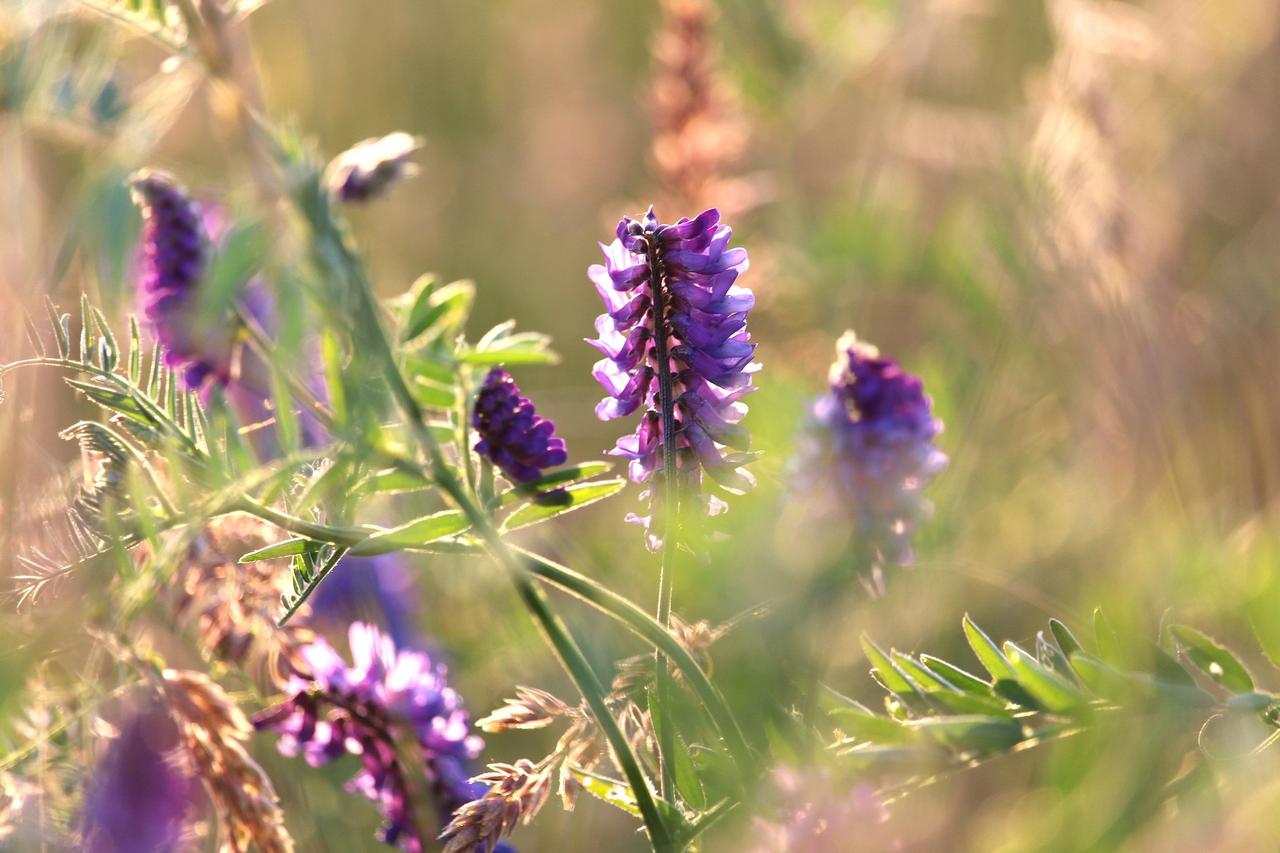
American Skullcap (Scutellaria lateriflora) (Pixabay)
The above-ground parts of the plant consist of square-shaped upright stems and oppositely arranged simple leaves. Stems typically vary in color from pale yellowish-green to purplish hues, with vascular bundles positioned at the corners in cross-section. Leaves are thin, ovate-lanceolate, 3–11 cm long, and have coarse serrated margins. During flowering, bilabiate flowers in whorls arising from the leaf axils are blue, occasionally white or pink. The fruit consists of four small nutlets located at the base of the persistent calyx. Microscopically, the leaf epidermis is characterized by diacytic and anomocytic stomata, 4–8-celled glandular trichomes, and protective trichomes with cuticular striations. Organoleptically, the dried material is dark green to olive green in color, with a slightly bitter taste and a faint aroma that fades over time.

Geographical Distribution of American Skullcap (Image Generated by Artificial Intelligence)
Scutellaria lateriflora is taxonomically a native species of the North American continent. Its natural habitat includes wetlands, marsh edges, moist meadows, and shaded forest ecosystems. This species exhibits high ecological adaptability and can thrive in regions with low temperatures as low as -34 °C.
In terms of soil requirements, the plant prefers moist, loamy soils, particularly during summer months, but can also grow in sandy or clay soils provided adequate drainage is maintained. Regarding light requirements, full sunlight may limit biomass production; therefore, partial shade or full shade provides the most favorable growing conditions.
In traditional Western herbal medicine, S. lateriflora is primarily used for its calming, sedative, and antispasmodic effects on the nervous system. Modern pharmacological research has focused on the plant’s anxiolytic (anxiety-reducing), antioxidant (protecting cells from free radical damage), anti-inflammatory (inflammation-reducing), and neuroprotective (nerve cell-protecting) potential.
In a double-blind, placebo-controlled clinical study on humans, above-ground parts of the plant were reported to reduce anxiety in healthy individuals. This anxiolytic effect is believed to result from modulation of the GABA-A receptor complex (the primary inhibitory receptor structure in the nervous system) by flavonoids present in the plant (naturally occurring bioactive phenolic compounds). Additionally, laboratory studies have demonstrated that plant extracts exhibit strong antioxidant activity by scavenging free radicals and inhibiting lipid peroxidation, while also providing protective effects against DNA damage. Recent research has also raised the possibility of its use as an antidiabetic agent due to its potential to inhibit alpha-glucosidase enzyme and thereby reduce postprandial hyperglycemia.【1】
The American Herbal Products Association classifies S. lateriflora as a "Class 1" herb, meaning it is considered safe when used appropriately. Historical reports of hepatotoxicity associated with this plant are not due to S. lateriflora itself, but rather to accidental or intentional contamination with morphologically similar Teucrium species, which contain hepatotoxic neo-clerodane diterpenes. Therefore, it is critical to verify the authenticity of commercial products using chemical markers such as baicalin and verbascoside. Clinical data regarding safety during pregnancy and lactation are insufficient; however, no serious adverse effects have been reported in traditional use. Theoretically, the plant may potentiate the effects of sedative medications and should be used with caution in such cases.
Scutellaria lateriflora can be propagated commercially by seed or root division. The plant prefers moist, loamy soils and partial shade and is hardy up to USDA hardiness zone 4. Harvesting is typically performed by cutting the aerial parts approximately 10 cm above ground level at full bloom. To preserve flavonoid content, harvested material should be handled gently and dried rapidly in the shade; an ideal drying temperature of 40–45 °C is recommended, with final moisture content maintained at approximately 10%. After drying, the material should be stored protected from moisture and light, as powdered material tends to lose flavonoid content over time.
Warning: The content presented here is intended solely for general encyclopedic informational purposes. This information must not be used for diagnosis, treatment, or medical advice. Always consult a physician or qualified healthcare professional before making any health-related decisions. Neither the author nor KÜRE Encyclopedia assumes any responsibility for consequences arising from the use of this information for diagnostic or therapeutic purposes.
Kuroda, M., K. Iwabuchi, and Y. Mimaki. “Scutellaria lateriflora'nın Hava Kısımlarının Kimyasal Bileşenleri ve bunların α-Glukosidaz İnhibitör Aktiviteleri”. *Natural Product Communications* 7, no. 4 (2012). Accessed February 19, 2026. https://doi.org/10.1177/1934578X1200700413
Lohani, M., M. Ahuja, M. A. Buabeid et al. “Flavonoid Bakımından Zengin Scutellaria lateriflora'nın Antioksidan ve DNA Koruyucu Etkileri”. *Natural Product Communications* 8, no. 10 (2013). Accessed February 19, 2026. https://doi.org/10.1177/1934578X1300801019
Maleki, Sina, Toktam Akaberi, Seyed Ahmad Emami, and Maryam Akaberi. “Diterpenes of Scutellaria spp.: Phytochemistry and pharmacology”. *Phytochemistry* 201 (2022): 113285. Accessed February 19, 2026. https://doi.org/10.1016/j.phytochem.2022.113285
Pixabay. "Takke, Mor Çiçekler, Doğa, Bloom." Pixabay. Accessed February 19, 2026. https://pixabay.com/tr/photos/takke-mor-%C3%A7i%C3%A7ekler-do%C4%9Fa-bloom-6556370/
Pixabay. “Takkeler, Kır Çiçekleri, Çayır, Doğa.” Pixabay. Accessed February 19, 2026. https://pixabay.com/tr/photos/takkeler-k%C4%B1r-%C3%A7i%C3%A7ekleri-%C3%A7ay%C4%B1r-do%C4%9Fa-6609704/
Pixabay. “Takkeler, Menekşe Çiçekleri, Bahçe, Doğa.” Accessed February 19, 2026. https://pixabay.com/tr/photos/takkeler-menek%C5%9Fe-%C3%A7i%C3%A7ekleri-bah%C3%A7e-6607317/
Shen, Jie, Pei Li, Shuangshuang Liu, et al. “Traditional uses, ten-years research progress on phytochemistry and pharmacology, and clinical studies of the genus Scutellaria”. *Journal of Ethnopharmacology* 265 (2021): 113198. Accessed February 19, 2026. https://doi.org/10.1016/j.jep.2020.113198
Upton, Roy and R. H. Dayu. “Skullcap Scutellaria lateriflora L.: An American Nervine.” *Journal of Herbal Medicine* 2, no. 3 (2012): 76–96. Accessed February 19, 2026. https://doi.org/10.1016/j.hermed.2012.06.004
[1]
Upton, Roy and R.H. D’Ay. "Skullcap Scutellaria lateriflora L.: An American nervine." Journal of Herbal Medicine 2, no. 3 (2012): 76–96. Access date: 19 February 2026.https://doi.org/10.1016/j.hermed.2012.06.004

American Skullcap (Scutellaria lateriflora)
Team(s) | Lamiales | ||||||||
|---|---|---|---|---|---|---|---|---|---|
Family | Lamiaceae | ||||||||
Habitat | forest clearings wetland areas stream banks Moist meadows | ||||||||
Specie(s) | Scutellaria lateriflora L. | ||||||||
Geographic Distribution | Eastern and central regions of the United States, southern Canada | ||||||||
Genus | Scutellaria | ||||||||
Class | Magnoliopsida (Eudicots) | ||||||||
No Discussion Added Yet
Start discussion for "American Skullcap (Scutellaria lateriflora)" article
Morphological and Microscopic Characterization
Geographical Distribution and Habitat Characteristics
Therapeutic Applications and Pharmacological Effects
Safety Profile and Adulteration Issues
Cultivation and Processing Techniques