

This article was automatically translated from the original Turkish version.
+1 More
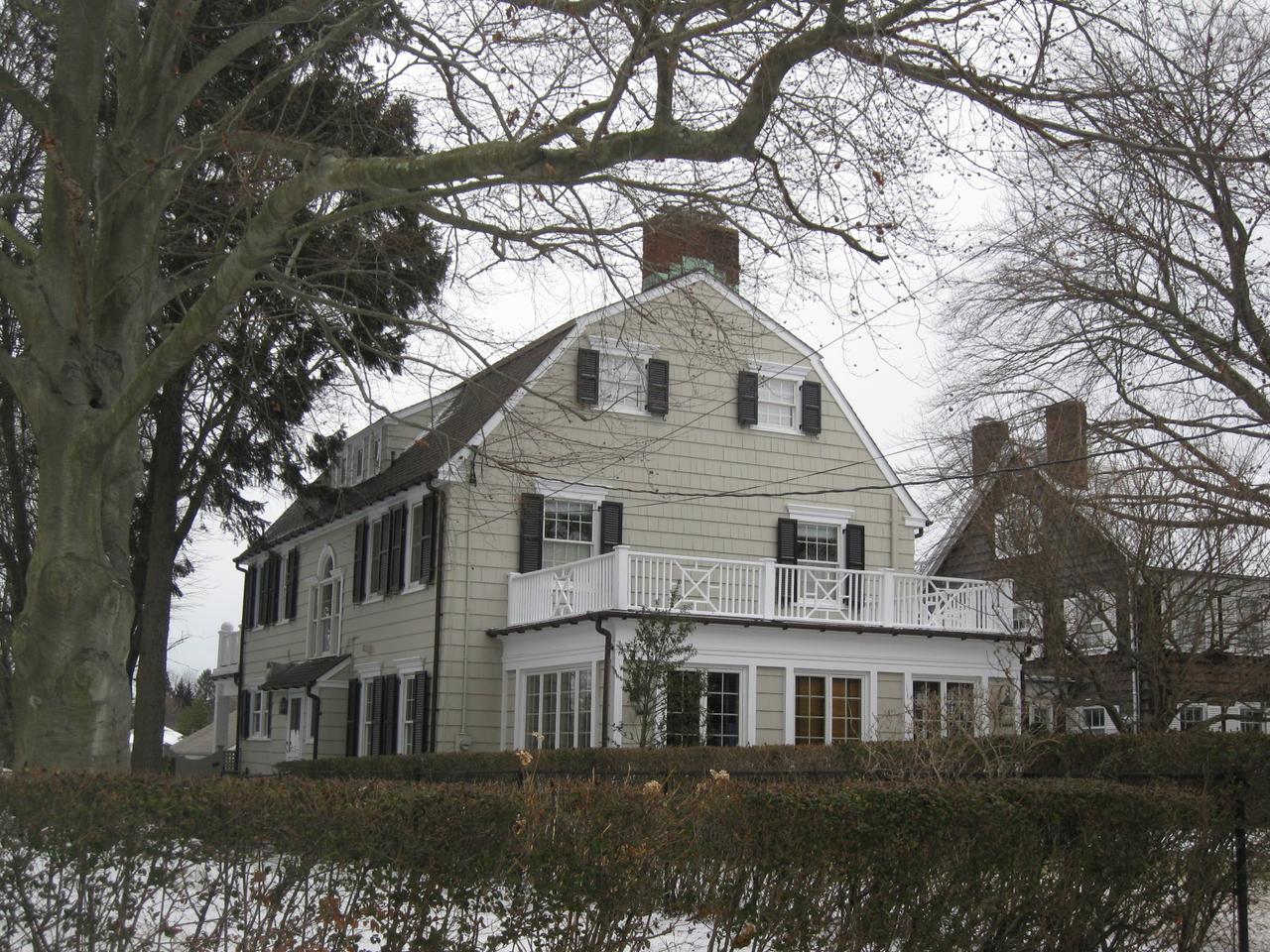
The Amityville Case refers to a two-layered phenomenon that occurred at 112 Ocean Avenue in the town of Amityville on Long Island New York. The first layer is the murder of six members of the DeFeo family on 13 November 1974; the second is the “extraordinary” events that George and Kathleen Lutz claimed to have experienced after moving into the house on 18 December 1975 and their subsequent departure on 14 January 1976 after just 28 days. This narrative became visible through local and national press coverage and television interviews; the chain of events centered on the Lutz family’s testimony gained lasting prominence in popular culture with the publication of Jay Anson’s book The Amityville Horror in the summer of 1977.
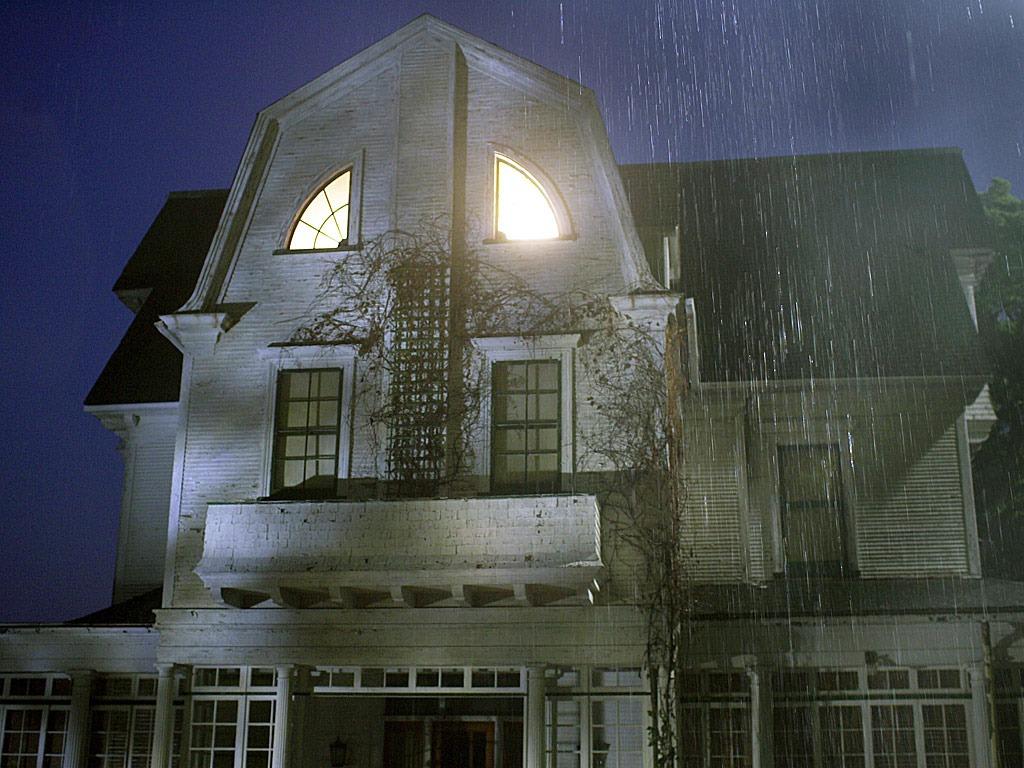
Amityville House - The Amityville Horror (2005) - (IMDb)
The case functions on one hand as a haunted house narrative built around the theme of “possession or invasion” and on the other hand has become central to debates over fabrication and exaggeration due to statements made during the 1979 legal proceedings and critical analyses. Within this framework the accounts and criticisms surrounding the formation and publication of the Lutz narrative allow the event to be viewed not merely as a “supernatural experience” but as a cultural phenomenon with dimensions of production dissemination and debate.
Between 02.00 and 04.00 on Wednesday 13 November 1974 Ronald “Butch” DeFeo Jr. (23) shot and killed his father Ronald DeFeo Sr. (43) his mother Louise (42) and his siblings Dawn (18) Allison (13) Mark (11) and John (9) at their home at 112 Ocean Avenue using a .35 caliber Marlin rifle. According to crime scene reports all victims were found shot in their beds and initially discovered in a prone position; although DeFeo attempted various defenses after his arrest he ultimately admitted to the murders. The trial took place in Riverhead and on 4 December 1975 he was sentenced to 25 years to life for each murder resulting in six consecutive life sentences.
Two factors are highlighted to explain why neighbors did not hear the gunshots that night: the adjacent house to the north was vacant and the DeFeo family dog had been barking loudly for a prolonged period in its outdoor kennel; closed windows and strong winds may have further masked the sounds. While early reports emphasized that the victims remained motionless in identical positions later forensic findings revealed that at least three victims had been awake at the time of the shootings and that some body positions were likely arranged after death. In particular it is reported that Louise DeFeo was shot while attempting to reach her husband and Allison was shot in the face while looking directly into the barrel with her head raised.
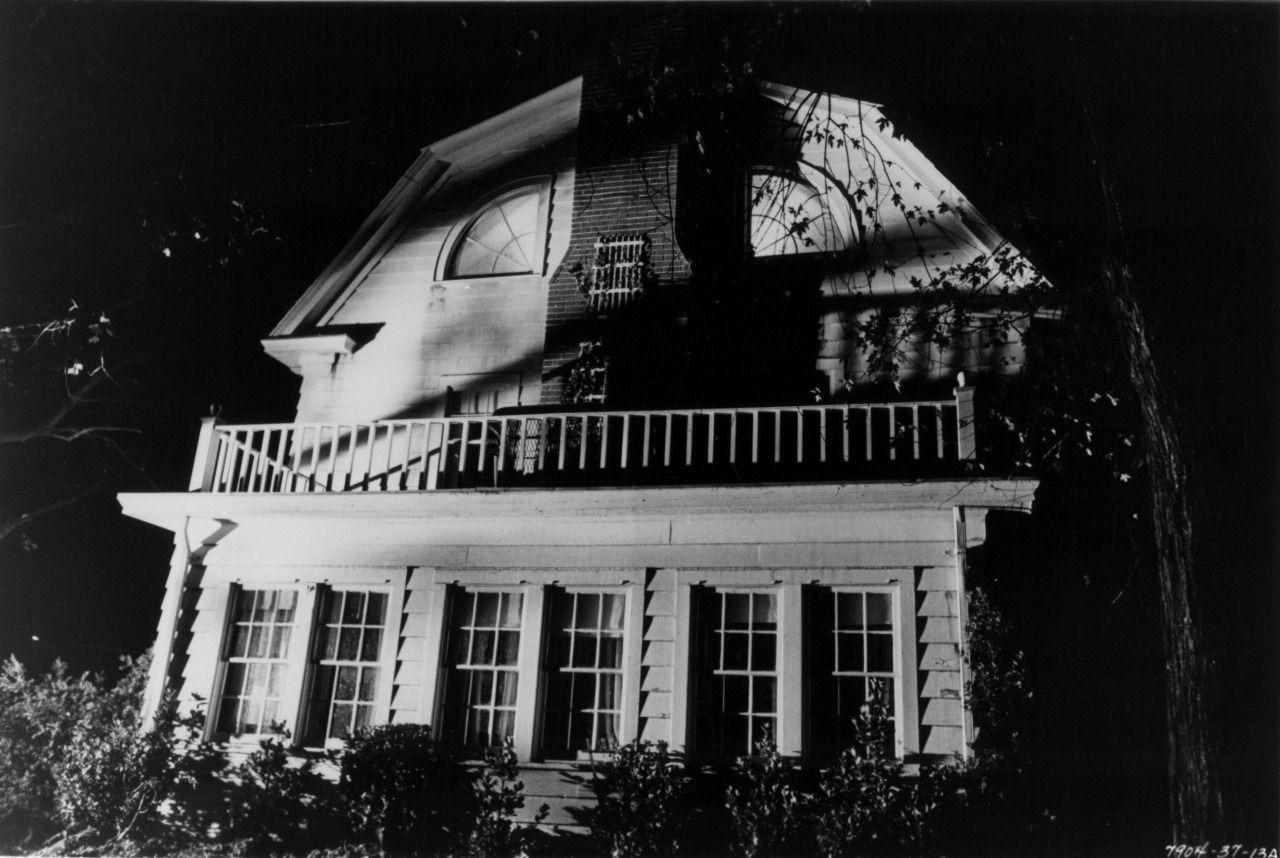
Amityville House - The Amityville Horror (1979) - (IMDb)
The timeline also includes DeFeo’s behavior after the killings. He placed his bloody clothes and some evidence into a pillowcase and removed them from the house; after throwing the rifle into the Amityville canal he left the remaining items in a storm drain in Brooklyn. He then appeared at work and told friends he had called the house but no one answered; in the afternoon he went to Henry’s Bar where he expressed concern for his family and said he would break into the house; upon returning he informed police that “my mother and father have been shot.” His arrest and formal charges were completed on 15 November.
Accounts of motive vary. Contemporary news reports and subsequent analyses point to escalating tension between father and son fueled by life insurance policies on the family totaling approximately 200000 dollars and a reported “fake burglary” incident two weeks before the murders in which cash and checks belonging to a business were allegedly stolen. DeFeo’s history of supervised release substance abuse and domestic conflicts has led to the assessment that the act was not the result of supernatural causes but rather the final explosion of a spiral of familial violence.
The Lutz family moved into the house at 112 Ocean Avenue on 18 December 1975. According to their account irregular heating issues unexplained foul odors and sudden cold spots appeared in specific rooms from the very first days. George Lutz reportedly woke up every night at approximately 03.15 a time claimed to be the “trigger hour” of the events. It was asserted that some belongings left behind by the DeFeo family remained in the house particularly in the ground floor and basement areas where an unusual atmosphere was felt.
According to the narrative certain recurring motifs quickly became prominent. It was claimed that streaks resembling water currents appeared on the ground floor walls a small enclosed section not shown on any floor plans was identified as the “red room” in the basement and flies appeared in clusters despite the winter season. The hanging cross in the living room was said to have changed position or turned upside down doors and windows showed signs of damage as if force had been applied from within heavy footsteps were heard in the stairwell. The Lutzes’ young daughter claimed to have seen a creature resembling a pig with large eyes whom she called “Jodie” and their pet dog was said to become agitated at night especially near the boathouse.
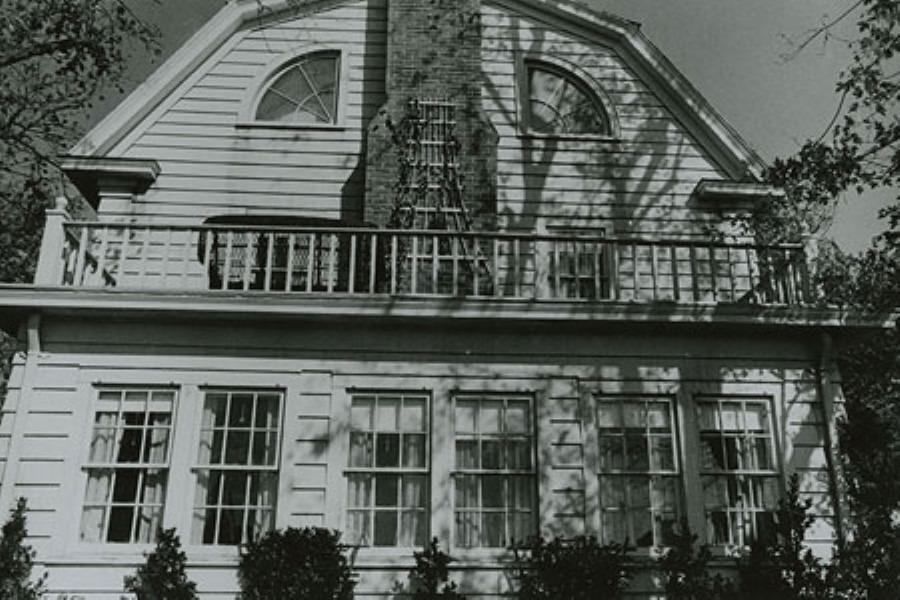
Amityville House - The Amityville Horror (1979) - (IMDb)
During this period contact with the church also came into play. A priest summoned to the house reportedly felt unwell in certain rooms developed health problems after returning home and experienced frequent interruptions in telephone lines during attempts to communicate. The Lutzes claimed to have tried purification rituals involving prayer and holy water during which they heard a harsh warning voice followed by intensified foul odors and sharper cold spots in some rooms. The family’s daily life deteriorated: George Lutz struggled to go to work neglected personal hygiene and constantly fed the fireplace; Kathleen Lutz turned increasingly to prayer and religious rituals. Doors were said to open and close on their own sounds resembling a heavy choir marching were heard from the upper floors and the position of a lion statue on the ground floor allegedly changed.
It is claimed that tension escalated around New Year’s. Inward warping of window and door frames unexplained banging sounds in children’s rooms and shape distortions on wall surfaces were added to the narrative. George began routinely patrolling the canal and boathouse area outside the house at 03.15 after waking; Kathleen reported waking suddenly from nightmares.
In the second week of January the sounds of dragging and thumping increased in the basement and ground floor door slams multiplied on the upper floor and shadowy figures were reported in the corridor. Family members experienced intensified chills loss of appetite and nightmares; finally it is claimed that on the night of 14 January 1976 or early the next morning the family hastily abandoned the house and never returned. Shortly afterward interviews television programs and the subsequent book publication caused this account to enter a lasting cycle of circulation.
This account consists solely of the Lutz family’s claims; it is presented not as verified facts supported by physical evidence legal documentation or third-party observation but as the content of their assertions.
The public revelation of the Lutz family’s alleged experiences gained momentum through initial local media reports and especially through a Channel 5 New York evening news broadcast on 5 February 1976 titled “Satanic Powers in Amityville.” This broadcast referenced the DeFeo murders and reported that the family had left the house four weeks after moving in had contacted police and a priest and believed a supernatural force was present.
During the same period it was reported that William Weber DeFeo’s attorney had stated he would seek scientific investigations and possibly study the psychic dimension through academic institutions. Approximately two weeks after the broadcast the Lutz couple held a press conference at Weber’s office; this event became one of the turning points in expanding the story’s media circulation.
In January 1976 George and Kathy Lutz met with Weber and journalist Paul Hoffman to discuss the possibility of turning their experiences into a commercial publication; it is reported that during these discussions the idea of marketing the Lutz narrative by linking it to the DeFeo case was raised. Shortly thereafter the parties parted ways and the Prentice-Hall and Jay Anson route emerged.
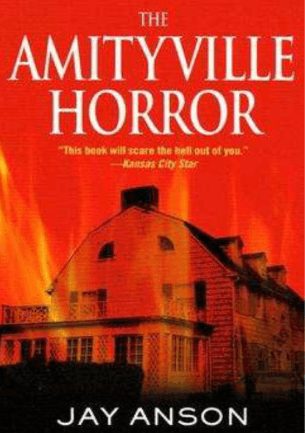
The Amityville Horror Book Cover (Jan Anson)
The Amityville Horror: A True Story was published in July 1977; in his afterword Anson claimed that the Lutzes had recorded their experiences on tape to establish a chronology and that certain elements were corroborated by “independent witnesses.” This emphasis on verification served as an editorial strategy to support the narrative’s authenticity; however this too was entirely based on Anson’s and the Lutzes’ own claims.
Between 1977 and 1979 the book and its first film adaptation achieved commercial success; the Lutz couple appeared on numerous television programs and earned substantial royalty income. The lawsuits filed during this period brought into public view questions about the narrative’s production motives and claims regarding its construction. In the 1979 Lutz v. Hoffman trial in Brooklyn excerpts from Weber’s court testimony fueled widespread debate by suggesting that the story had been “partly constructed together”; the same testimony included allegations that priest and media figures had been deliberately brought in to create an impression of external corroboration.
During the same years academic literature countered the Anson/Lutz narrative by compiling statements from subsequent homeowners who reported no supernatural occurrences and by citing Weber’s public remarks that “we created the story together.” These writings noted inconsistencies in physical evidence such as door and window damage and pointed out that Ric Osuna’s investigations had added new but still controversial testimonies to the file.
The lawsuits initiated in 1979 marked a turning point by formally documenting these claims and counterclaims. In court testimonies statements emerged suggesting that certain elements of the narrative had been “designed” or “developed” together; in contrast the Lutz side maintained that they had first recorded their experiences on tape to establish a chronological order that some elements had been confirmed by third parties and that the core of the narrative was grounded in genuine experiences. Thus the same legal process simultaneously revealed two opposing lines: one fueling suspicion of fabrication and exaggeration and the other reinforcing the narrative’s authenticity through claims of verification.
Case files and media reports also multiplied questions about the narrative’s production motives. Topics such as royalties licensing fees film rights and media visibility placed the relationship between the narrative’s “commercial success” and its “factual accuracy” at the center of debate. Some testimonies suggested that “story elements” had been shaped to increase media interest while the opposing side argued that the nature of the events made them impossible to fully verify by conventional evidentiary standards and therefore witness testimony must be accepted as the primary basis.
A Frame from Amityville House (Flickr)
In the final analysis the legal proceedings did not establish any “final truth” but rather documented the diverse motivations conflicting recollections and marketing strategies behind the narrative’s formation and dissemination thereby reaffirming that the core of the Amityville case rests on claims testimonies and interpretations.
Counter-lawsuits and appeals filed during this period added complexity rather than clarity to the picture. Some claims were dismissed on procedural grounds while others were later published independently in media outlets television programs and interviews. Thus the legal arena transformed into a space for debating the boundaries between a “verifiable fact” and a “commercially engineered popular narrative”; the claims and counterclaims became primary material for subsequent academic investigations.
Skeptical literature has compiled numerous questions regarding the consistency and verifiability of elements in the Lutz narrative. First despite claims of “independent corroboration” statements from later residents who experienced nothing supernatural are highlighted: the accounts of James and Barbara Cromarty who lived in the house for eight months after the Lutzes contradict the claim that the story had been “verified by contemporary witnesses.” These compilations also emphasize that motifs such as doors and windows being broken from within hundreds of flies hatching in midwinter and hoofprints on snow do not align with environmental conditions and records; for example news reports and notes indicate that there was no snowfall in the area on the date cited for the “hoofprint” claim.
Second critics argue that the 1976 television report and the in-house “investigation” sessions involving mediums were presented with fictional and sensational elements to amplify the narrative’s circulation. Claims of demonic entities the “entity from below” and feelings of discomfort during sessions are treated in research writings as assertions grafted onto the media narrative without methodological scrutiny. This line of critique also questions the book’s claim of “multiple independent witnesses” since the criterion of “independence” is ambiguous and witness profiles largely circulated within the same media network.
Third Zindler’s analyses provide concrete examples of inconsistencies between the narrative and reality. Scenes such as “the front door being torn off its hinges” are compared with architectural details; findings that the door was in fact a “storm door” and that the “door hinge” motif may have originated from a garbage shed door are cited as examples of how dramatic storytelling diverged from factual grounds.
Amityville: The Awakening Official Trailer (Rotten Tomatoes Trailers)
Additionally the parallel drawn between the victims’ “prone position” in the DeFeo murders and Anson’s depiction of the Lutz children “sleeping face down” is interpreted as an artificial connection; in fact forensic accounts indicate that at least two victims were in different positions at the time of death weakening this parallel.
Fourth statements from the 1979 Lutz v. Hoffman proceedings are used to support the claim that the narrative was “jointly constructed.” In trial transcripts William Weber’s remarks such as “we created the story together” and “we transformed elements into what the public would believe were paranormal phenomena” serve as evidence for the thesis that the search for credibility was entangled with fictional strategies. The same documents describe a plan to contact the Channel 5 reporter and “bring in external forces” to generate an impression of reliability; this demonstrates that the television broadcast and the impression of “independent witnesses” can be understood as media engineering. All these statements are claims by the involved parties and skeptical literature interprets them as supporting the commercial construction of the narrative.
Finally skeptical writings draw attention to “symbolic correspondences” in the Lutz narrative (the 03.15 motif the “red room” door hinges the cross turning upside down) and their similarity to tropes in popular horror narratives; some elements are suggested to have been copied from films such as The Exorcist. In contrast the defense line in Anson’s text that “scientific investigation would be conducted followed by examination of the psychic dimension” is read as an attempt to enhance credibility by establishing a rational-paranormal hierarchy within the narrative itself.
The Amityville narrative rapidly established a lasting place in popular culture through the 1977 book and the 1979 first film adaptation; it soon became one of the most visible modern examples of the haunted house theme influencing both horror cinema and documentary/television content. The sequels remakes and spin-offs that followed the initial adaptation extended beyond the original plot to sometimes use the name “Amityville” merely as a brand association spreading the genre’s subgenres.
The Amityville Horror (1979) Official Trailer (Rotten Tomatoes Trailers)
Analyses show that this production line has continued steadily despite weak connections to the original events and that parody and genre-bending examples have been incorporated. The list begins with the 1979 The Amityville Horror and extends through 1980s–1990s direct-to-video releases the 2005 remake low-budget productions of the 2010s and 2020s and the 2023 miniseries and 2024 releases. This continuity demonstrates the narrative’s flexibility in the cinema and video market its power to generate curiosity simply through its name and the adaptability of its recurring motifs within the genre.
Academic readings explain this popularization not only by the number of productions but also through spatial imagination and structural schemas of horror narratives. In comparisons between The Amityville Horror and The Conjuring concepts such as the “center–periphery” tension the house’s transformation from a “secure center” into an “anti-home” and the progression of haunting through stages of “infestation – oppression – possession” illustrate how the Amityville example has been reproduced at a typological level.
In this framework the basement and other threshold or liminal spaces are coded as the “semiotic periphery of fear” George Lutz’s gradual detachment and aggressive tendencies transform the house into an “active agent” and the final “escape” presented as the only solution are fundamental building blocks that strengthen the narrative’s cultural image. A similar schema in The Conjuring debates the possibility of “purification and recovery” but in the Amityville line the house’s identification with “irreversible corruption” leaves a more enduring imprint in popular culture.
Public presentations television recordings and in-house “investigation” sessions involving mediums are another channel shaping cultural memory. The relationships established with media organizations of the time and the stated strategy of “bringing in external forces to generate an impression of reliability” reveal how the narrative was deliberately designed to enter the media circuit and thereby amplify its popular impact. Keeping in mind that these statements are themselves claims the television and paranormal-focused performances elevated Amityville from an “event” to a “phenomenon” laying the groundwork for subsequent waves of film television and documentary productions.
The Amityville Horror (2005) Official Trailer (Amazon MGM Studios)
Looking back today Amityville serves both as a template for “based on a true story” horror cinema and as a self-sustaining sub-ecosystem whose name carries intrinsic marketing value. The chain stretching from the 1979–1996 sequels to the 2005 remake from the 2011 direct-to-video productions to the 2023–2024 new releases confirms the theme’s endless adaptability and its resonance in popular culture; some productions have loosened their ties to the original plot entirely and borrowed only the “Amityville” association while others directly treat the narrative’s claim status as their subject (My Amityville Horror 2012 etc.). This diversity continues to sustain Amityville’s presence in contemporary horror narratives and the media industry.

Historical Background: The DeFeo Murders (1974)
The Lutz Family’s 28 Days (The Family’s Account)
Dissemination of the Paranormal Narrative
Legal Proceedings and Debates
Skeptical Investigations
Cultural Impact and Adaptations