


This article was automatically translated from the original Turkish version.
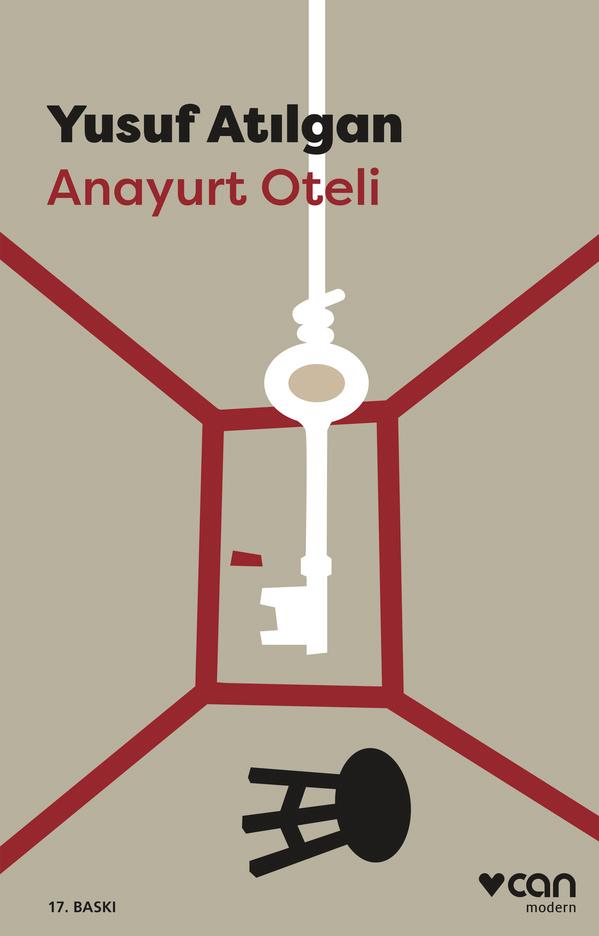
Yusuf Atılgan’s second novel, Anayurt Oteli, published in 1973, is regarded as one of the modernist examples of Turkish literature. The narrative structure, centered on the inner world of a single character, focuses on the individual’s loneliness, alienation, and existential anguish, as in his earlier work Aylak Adam. The events taking place in a hotel in the small town where the protagonist Zebercet lives span the period from 20 June 1963 to 10 July.
The novel centers on Zebercet, the secretary and manager of the Anayurt Hotel. Zebercet’s life, which proceeds in a monotonous routine, is upended when a woman arrives at the hotel one night via a delayed train and departs after promising to return.
Zebercet becomes obsessively fixated on the woman’s return. Over time, his mental state deteriorates. The prolonged waiting deepens his introverted nature and brings to the surface perverse sexual tendencies and violent behaviors. He ultimately kills the maid, then the hotel’s cat, and finally hangs himself in the room where the woman had stayed.
The story unfolds in a hotel converted from a mansion in an unnamed small town. In reality, the hotel’s inspiration was the Anavatan Hotel in Manisa. Atılgan drew upon his own experiences at the hotel to write the novel. In the novel, the hotel is not merely a physical space but also a reflection of Zebercet’s inner world, portrayed as his “homeland.”
Zebercet is a person who has been alienated since birth, minimizing his social interactions and shaped by repressed emotions and obsessive thoughts. Being born seven months premature and losing his mother at the age of two, along with his exclusion during military service and in social life, have left deep scars on his personality. His sexuality is repressed and has taken on a perverse form; his relationship with a promiscuous woman involves an unconscious dimension of sexual violence.
The novel explores themes such as loneliness, alienation, communication breakdown, and repressed sexuality. Psychological alienation is conveyed through the character of Zebercet, enriched by narrative techniques such as stream of consciousness and interior monologue.
Anayurt Oteli is considered one of the early examples of postmodern literature in Türkiye. The text draws attention through its layered narrative, temporal shifts, interwoven past-present chronology, and symbolism. The hotel is not merely a physical space but also a metaphysical entity tied to the protagonist’s inner world.
The novel was adapted into a film in 1986 by Kavur under the same title. Starring Macit Koper, the film successfully captures the psychological depth and theme of loneliness from the novel. Although the film includes some deviations from the book in certain scenes, it remains largely faithful to the source and is regarded as one of the finest adaptations in Turkish cinema.
Anayurt Oteli is a prime example of the psychological novel in Turkish literature that focuses on the inner world of the individual. The character of Zebercet stands as a powerful symbol of loneliness, repressed desires, and marginalization. Yusuf Atılgan’s sparse yet profound narrative has gifted Turkish literature with an unforgettable and powerful novel.

No Discussion Added Yet
Start discussion for "Anayurt Hotel (Book)" article
Summary of the Plot
Setting and Time
Main Character: Zebercet
Themes and Narrative Techniques
Postmodern Traces
Cinematic Adaptation