
This article was automatically translated from the original Turkish version.
Author(s) | Ivan Yefremov | ||||||||
|---|---|---|---|---|---|---|---|---|---|
Category | Science Fiction | ||||||||
Publisher(s) | İthaki Yayınları | ||||||||
Number of Pages | 400 | ||||||||
ISBN | 9786053759140 | ||||||||
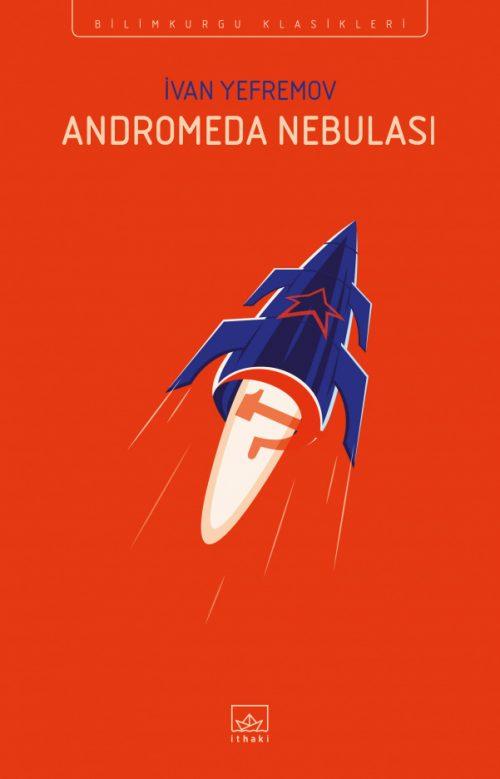
The Andromeda Nebula is a novel written by Soviet scientist and author Ivan Yefremov, first published in 1957 and regarded as one of the classics of socialist science fiction. The story is set in a future in which humanity has achieved a classless and exploitative-free civilization, where science and morality are deeply intertwined. In this world, individuals pursue universal progress and social advancement rather than personal interests.
The novel describes an era in which humanity has made a tremendous leap in technological and social development, establishing contact with other star systems. Earth has become a place free of war, hunger, and inequality. Science, art, and philosophy have merged; individuals have learned to suppress personal desires and have adopted the advancement of society as their life’s purpose. The narrative follows a team of interstellar explorers and the ethical, emotional, and existential conflicts they encounter during their journey.
Erg Noor: Captain of the starship. A courageous, strategically minded character with a strong sense of duty. He is devoted to humanity’s universal goals but finds himself caught between these ideals and his personal emotions. He bears the tension between collective consciousness and individual desire.
Ren Boz: A physicist and scientist. He possesses a personality deeply concerned with the ethical implications of scientific progress. He experiences conflict between personal passions and scientific responsibility, embodying the idea that science is not neutral but can be directed.
Veda Kong: A historian. Emotionally fragile but ideologically committed to the system. She feels close to both Erg Noor and Dar Veter. As a figure torn between emotion and duty, she demonstrates that even in a utopia, internal conflicts persist.
Mven Mass: He suffers from an inner revulsion and fear toward space travel. His fear of cosmic emptiness reveals that utopia cannot offer an ideal form of life for every individual. He represents the natural limitations of the human being.
Utopia and Social Consciousness: At the core of the novel is a vision of a future in which the individual exists in perfect harmony with society, having transcended personal ambitions.
Science and Morality: Technical achievement alone is insufficient; ethical awareness is equally vital. The power of science is examined alongside its boundaries.
Existential Search: Even in the most ideal society, individuals may confront the quest for “meaning” and “purpose,” as exemplified by Dar Veter.
Space Travel and Spiritual Expansion: Space is not merely a physical domain of exploration but also an inner arena of personal trial.
Yefremov, Ivan. Andromeda Nebulası. Çeviren Hazal Yalın İthaki Yayınları, 2019.

Author(s) | Ivan Yefremov | ||||||||
|---|---|---|---|---|---|---|---|---|---|
Category | Science Fiction | ||||||||
Publisher(s) | İthaki Yayınları | ||||||||
Number of Pages | 400 | ||||||||
ISBN | 9786053759140 | ||||||||
No Discussion Added Yet
Start discussion for "Andromeda Nebula (Book)" article
Plot
Main Characters and Traits
Themes and Depth