This article was automatically translated from the original Turkish version.
Type of Geographical İndication | Origin Name | ||||||||
|---|---|---|---|---|---|---|---|---|---|
Application Date | 26.01.2021 | ||||||||
Registration Number | 989 | ||||||||
Registration Date | 27.12.2021 | ||||||||
Product / Product Group(s) | Other products | ||||||||
Province(s) | Ankara | ||||||||
Applicant/Registrant(s) | Ankara Chamber of Commerce | ||||||||
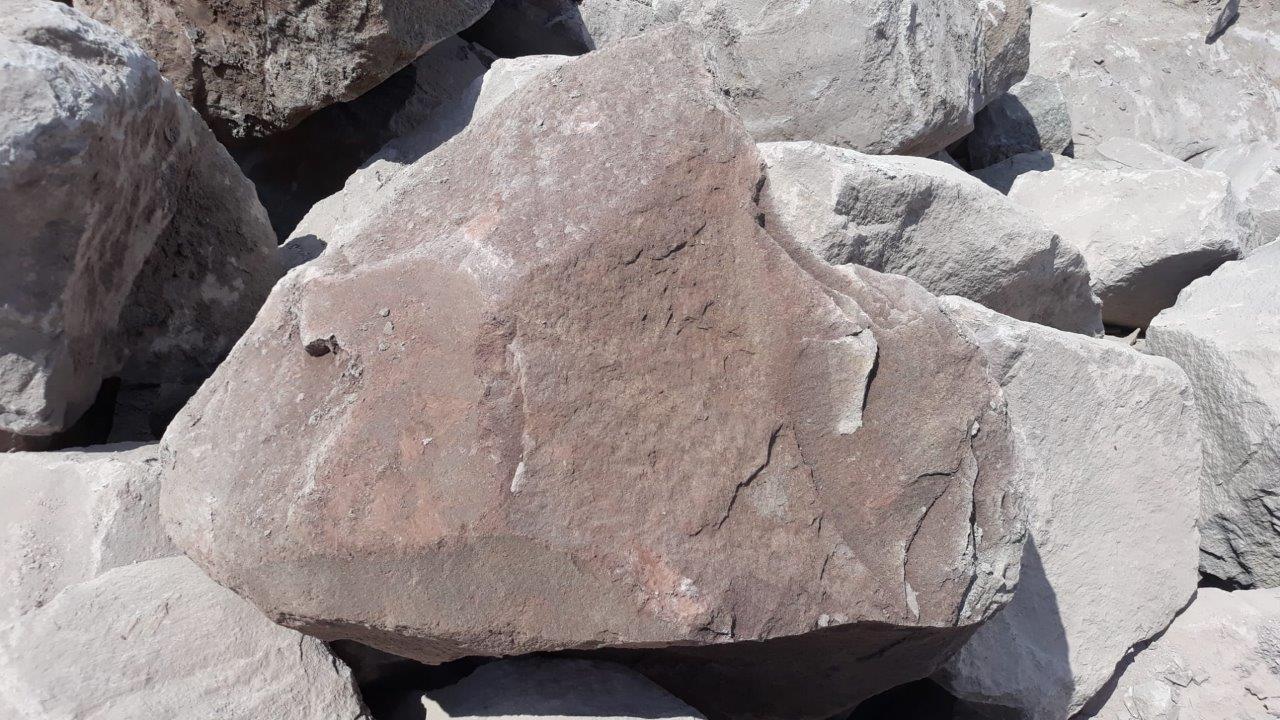
Ankara andesite stone is a natural volcanic rock extracted in the province of Ankara. Formed as a result of volcanic activity during the Tertiary and Quaternary periods, this stone consists of porphyritic andesitic rock with a homogeneous structure composed of crystals and glass. Its pastel color tones, which do not fade, attract attention. The stone’s color range varies between gray, pink and red tones; it particularly takes on a bright pink appearance when wet. Color variations arise due to differences in cooling rates during the stone’s formation process, which also affect its degree of durability. Gray-colored blocks exhibit a denser texture and higher strength due to early cooling.
Ankara andesite stone contains, mineralogically, plagioclase, hornblende, biotite and pyroxene. Its chemical composition includes 57–63 percent silicon dioxide, positioning it as an intermediate type between basalt and rhyolite. It also contains minerals such as plagioclase feldspar, alkali feldspar, olivine, pyroxene, kalsilite and biotite. The stone has a spotted texture, with plagioclase crystals appearing in streaked, intergrown or transparent forms. The pink color originates from the plagioclase within the rock. Quartz structures known as “white spots” enhance the stone’s durability and resistance to chemical agents. Its hardness and dense texture, combined with ease of workability, make it a preferred material in stonemasonry.
Ankara andesite stone is known for its high resistance to natural conditions. Its compressive strength ranges between 1200–1700 kg/cm². The stone’s key physical properties are as follows:
Ankara andesite stone is extracted from quarries in blocks weighing 6–25 tons. These blocks are transported to processing facilities where they are cut into slabs. After cutting, the stones, referred to as “rough slabs,” retain circular saw marks. Subsequently, various surface treatments are applied:
Ankara andesite stone has a wide range of applications due to its durability, ease of workability and aesthetic pastel colors. Its resistance to color fading and low maintenance requirements make it popular in the construction industry. It is frequently used in building facades, paving and curb stones, roads and sidewalks. It is also preferred for furniture and decorative elements, either polished or unpolished. Its historical use as a primary building material in Ankara’s historic structures further underscores its cultural and historical value.
Ankara andesite stone was registered as a “geographical indication” on 27 December 2021 under Law No. 6769 on Industrial Property. The registration was carried out by the Ankara Chamber of Commerce, and the stone is produced exclusively within the boundaries of Ankara province. The inscription “Ankara Andesite Stone,” along with its logo and geographical indication emblem, must appear on the product or packaging. If this is not feasible, the information must be displayed prominently at the production facilities.
Inspections are conducted annually under the coordination of the Ankara Chamber of Commerce by an inspection body composed of expert representatives from Ankara University Faculty of Engineering, Gölbaşı Yurt Bey Industrialists and the Ankara Stone Producers Association. Additional inspections are carried out upon complaint or necessity. During inspections, compliance with extraction standards, adherence to production methods and proper use of the geographical indication are verified. Inspection reports are submitted to the Turkish Patent and Trademark Office.
Ankara Andezit Stone. "Coğrafi İşaret Tescil Belgesi." Türk Patent ve Marka Kurumu. Accessed August 16, 2025. https://ci.turkpatent.gov.tr/Files/GeographicalSigns/6f374e6a-8bdb-4391-a9d8-f0e6cb9f02c6.pdf.
Ankara Andezit Stone. "Coğrafi İşaretler Portalı." Türk Patent ve Marka Kurumu. Accessed August 16, 2025. https://ci.turkpatent.gov.tr/cografi-isaretler/detay/3343.

Type of Geographical İndication | Origin Name | ||||||||
|---|---|---|---|---|---|---|---|---|---|
Application Date | 26.01.2021 | ||||||||
Registration Number | 989 | ||||||||
Registration Date | 27.12.2021 | ||||||||
Product / Product Group(s) | Other products | ||||||||
Province(s) | Ankara | ||||||||
Applicant/Registrant(s) | Ankara Chamber of Commerce | ||||||||
No Discussion Added Yet
Start discussion for "Ankara Andesite Stone" article
Mineralogical and Chemical Properties
Physical Properties
Production Process
Applications
Geographical Indication and Control