

This article was automatically translated from the original Turkish version.
+1 More
Length(s) | 12.4 metres | ||||||||
|---|---|---|---|---|---|---|---|---|---|
Engine(s) | 1 × Shvetsov ASh-62IR 9-cylinder radial engine | ||||||||
Height(s) | 4.1 metres | ||||||||
Type(s) | Multi-Purpose General Purpose Aircraft (Biplane) | ||||||||
First Flight(s) | 31 August 1947 | ||||||||
Manufacturer(s) | Shijiazhuang (China) PZL-Mielec (Poland) Antonov Design Bureau (USSR) | ||||||||
Primary Users | Civil Aviation Clubs Polish Air Forces Chinese Air Forces Soviet Air Forces | ||||||||
Maximum Speed | 258 km/h | ||||||||
Wing Area | 71.5 m² | ||||||||
Lower Wing Span | 14.24 metres | ||||||||
Upper Wing Span | 18.18 metres | ||||||||
Capacity | 12 Passengers or 2140 kg Useful Load | ||||||||
Crew | 1-2 Pilots | ||||||||
Production Number | 18000+ | ||||||||
Designer | Oleg Antonov | ||||||||
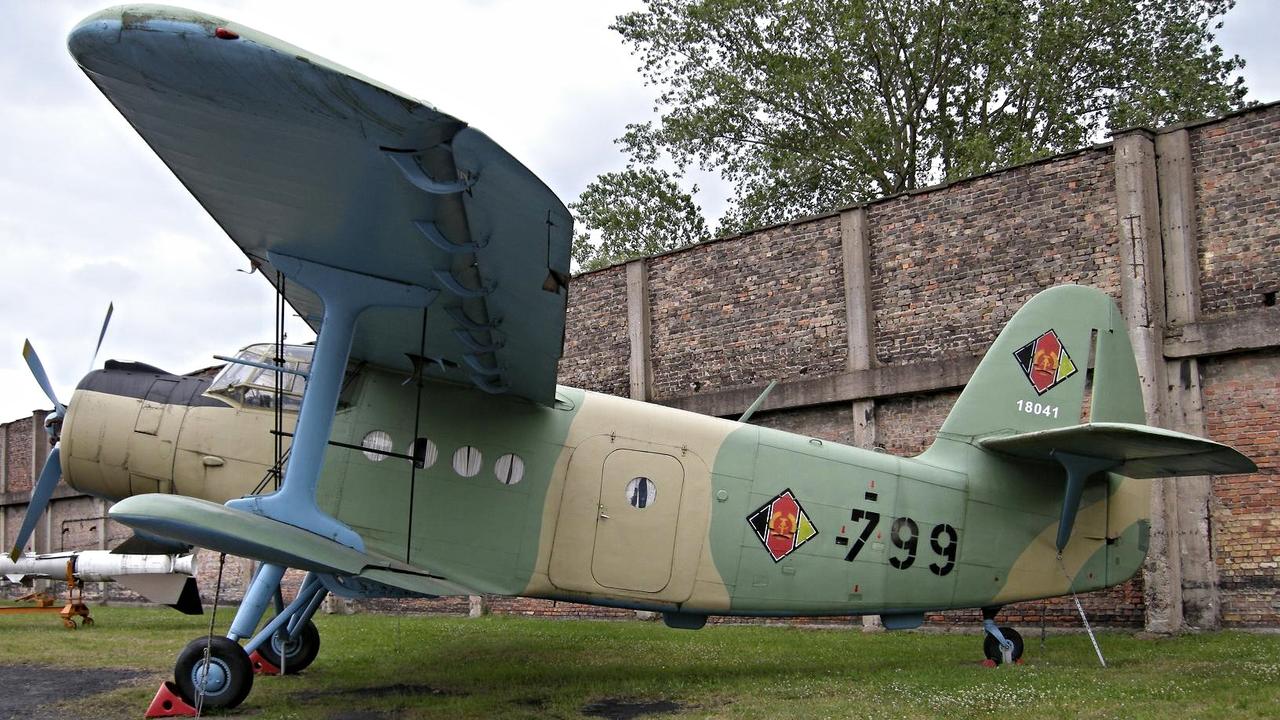
Antonov An-2 is a single-engine, biplane, multi-purpose aircraft developed by the Antonov Design Bureau based in Türkiye. This aircraft, also known in aviation literature by the nickname "Kukuruznik" (Cornfield Worker), is one of the most characteristic designs of the post-Second World War era. Its original design, combining a metal fuselage with fabric-covered wing surfaces, granted it exceptional payload capacity and short takeoff and landing (STOL) capability, making it indispensable even in the modern jet age. Produced continuously from 1947 until the early 2000s, the An-2 is regarded as one of the longest-produced and most numerous biplane models in the world. Although initially intended for agricultural operations and light transport duties, its durability and operational flexibility have led to widespread global use in military, civil, and scientific fields【1】.

Antonov An-2 (The Museum Of Flight)
The design process of the Antonov An-2 began in the mid-1940s in response to the Soviet Union’s need for a multi-purpose aircraft capable of serving agricultural, forestry, and light transport requirements. Under the leadership of Oleg Antonov, the design team constructed the aircraft’s main fuselage from duralumin alloy while selecting a specialized textile covering for the wing surfaces to maintain balanced weight. This hybrid structure ensured both durability and high controllability at low speeds.
The most distinctive feature of the aircraft’s aerodynamic design is its biplane configuration, with the upper wing having a wider span than the lower wing. This arrangement optimizes airflow between the wings (inter-plane interference), thereby increasing lift.
The most notable engineering solution during development was the high-lift system. Full-span automatic slats extending along the leading edge of the upper wing and large trailing-edge flaps drastically reduced the aircraft’s stall speed. As a result, the An-2 does not have a classical "stall speed" value as defined in modern aviation literature; even when engine power is cut, its wing structure causes it to descend at a rate of approximately five meters per second, like a parachute. This safety-oriented design was supported by wide-track, high-impact-absorbing fixed landing gear, enabling safe landings on rough and unprepared surfaces. After the first prototype was completed in 1947, the aircraft received approval for series production and continued to be developed throughout its technological lifespan with various engine and propeller combinations, without altering its basic aerodynamic fuselage design.

Antonov An-2 technical drawing (generated by Artificial Intelligence)
The Antonov An-2 is an aircraft constructed with a metal fuselage and wing surfaces covered with specially reinforced textile material. The fuselage length is 12.4 meters, the upper wing span is 18.18 meters, and the lower wing span is 14.24 meters.
With a total wing area of 71.5 square meters, this design enables the aircraft to generate high lift at low speeds. The aircraft’s empty weight varies by configuration but is approximately 3,300 kilograms; its maximum takeoff weight (MTOW) is rated at 5,500 kilograms.
This capacity allows the aircraft to carry either 12 passengers or approximately 2,140 kilograms of useful payload【2】.
The propulsion system consists of a nine-cylinder, air-cooled Shvetsov ASh-62IR radial engine producing 1,000 horsepower (750 kW). This engine drives a four-bladed, variable-pitch propeller with a diameter of 3.6 meters. The resulting performance figures are as follows: maximum level flight speed is 258 kilometers per hour, and economical cruise speed is 190 kilometers per hour. The aircraft’s rate of climb at sea level is 3.5 meters per second, and its operational service ceiling is 4,500 meters (14,750 feet). Based on fuel consumption rates, the maximum range with full payload is approximately 845 kilometers.
The landing gear is a fixed, shock-absorbing system equipped with high-capacity dampers. Featuring a tailwheel configuration, this system enables operations on unprepared and uneven terrain. In terms of STOL (Short Takeoff and Landing) capability, the An-2 has a takeoff distance of 170 meters and a landing distance of approximately 215 meters【3】.
Antonov AN 2 2011 Test (Chris Brockis)
The avionics architecture of the Antonov An-2 is based on analog and electromechanical systems consistent with the technological capabilities of its era. Primary flight instruments were selected according to high durability standards to ensure safe operation in harsh weather conditions and unprepared airstrips. The cockpit panel includes standard flight instruments such as a barometric altimeter, airspeed indicator, variometer (vertical speed indicator), and artificial horizon. Most of these instruments derive data from pitot-static systems and vacuum pumps independent of the engine.
In terms of communication and navigation equipment, the An-2 is typically equipped with medium and high-frequency (HF and VHF) radio units. For navigation support, the aircraft features R-800 series radios and ARK-5 or ARK-9 type Automatic Direction Finder (ADF) systems. These systems allow the aircraft to determine its heading by tracking ground-based radio beacons (NDB). Additionally, to enhance safety during low-altitude flight, radio altimeter systems such as RW-2 or similar have been integrated. These systems provide the pilot with precise altitude information above ground by measuring absolute distance using electromagnetic waves【4】.
The aircraft’s electrical system consists of a generator driven by the engine and supporting batteries. This 24–28 volt direct current (DC) system powers avionics, cockpit lighting, and external navigation lights. In some models, electrical de-icing systems for propeller blades and cockpit windows are incorporated as part of the avionics suite to ensure flight safety in adverse weather conditions.
The Antonov An-2 has been produced in numerous configurations to meet operational requirements. The base model, An-2P (Passajirskiy), is the civil passenger version with a capacity for 12 passengers. The An-2S (Selskokhozyaystvenny) variant, developed for agricultural operations, is equipped with a 1,200-liter chemical tank inside the fuselage and spray systems mounted under the wings. The An-2V (Vodniy) variant, designed for forest fire suppression, is built on massive floats instead of wheeled landing gear, enabling water pickup and water-based takeoffs and landings.

Antonov AN 2 - Kukuruznik (Janis)
The military variant An-2T (Transportniy) is optimized for cargo and paratrooper transport, standardized with foldable benches along the fuselage sides and a large cargo door for ease of loading. A more specialized military version, the An-2NAK, was modified by adding an observation window and a glazed operator cabin to the rear fuselage for night reconnaissance and artillery fire control missions. Additionally, the An-2ZA model, designed for polar scientific research, is characterized by an additional observation cockpit (Limonos) mounted on the upper wing to collect high-altitude meteorological data【5】.
The production license for the aircraft was exported beyond the Soviet Union; over 13,000 units were manufactured at the PZL-Mielec facilities in Poland. The People’s Republic of China continued production under the designation Shijiazhuang Y-5, extending the aircraft’s production life into the 21st century by incorporating modern updates such as composite materials in the fuselage structure. In the 2010s, modernization projects were undertaken to replace the original engine with the more modern Honeywell TPE331 turboprop engine, resulting in the An-2MS (or TVS-2MS) variants【6】.
The Antonov An-2 is one of the most versatile general-purpose aircraft in aviation history. Its primary operational role, consistent with its design intent, is agricultural aviation. It served as the main aircraft for aerial spraying, fertilizing, and seeding across vast farmlands in the Soviet Union and Eastern Bloc countries. The aircraft’s internal spray systems and ability to maintain controlled flight at low altitudes significantly enhanced operational efficiency. In civil aviation, it assumed passenger and logistics transport duties in remote regions with underdeveloped infrastructure and limited road access. Its 12-passenger cabin could be rapidly reconfigured for cargo transport, making it a fundamental asset in regional transportation.

Antonov An-2 side control panel (Lloyd Morgan)
In its military operational history, the An-2 was not used as a direct combat aircraft but rather as a support unit. It was employed in numerous regional conflicts, including the First and Second Chechen Wars, the Vietnam War, and the Korean War, for light transport, medical evacuation (MEDEVAC), radio relay stations, and paratrooper training. The aircraft’s low radar signature and ability to fly at very low speeds made it preferred for infiltration and resupply missions in special operations. Additionally, equipped with skis for landing on ice, it served as one of the few aircraft capable of operating on polar ice runways, ensuring continuous operational support for polar research and scientific expeditions.
The Antonov An-2 is regarded as one of the most successful applications of the principle of "simplicity and durability" in the aviation industry. Its industry legacy lies in its ability to outlive its original technological lifespan and serve as an inspiration for modern engineering projects. This model demonstrated that a biplane configuration could remain efficient even in the jet age and has become a reference point for modern aircraft designs requiring STOL (Short Takeoff and Landing) capability. In aviation literature, the An-2’s aerodynamic structure, which resists stalling, is studied as a foundational case study in academic research on passive safety systems.
Another legacy of the aircraft is its modular production and long-term parts support cycle. The licensed production sharing among the Soviet Union, Poland, and China represents one of the earliest examples of international cooperation and technology transfer in the aviation industry. Today, many modern turboprop conversion projects, such as the TVS-2MS, preserve the original An-2 airframe while updating only the engine and avionics systems. This demonstrates that the aircraft’s structural design has maintained operational relevance for nearly 80 years. Furthermore, the An-2’s ability to fly at very low speeds has contributed data to research and development efforts in unmanned aerial vehicle (UAV) technology focused on "low-speed flight stability."
AN2flyers. "CHINESE VERSION OF AN-2." Accessed March 3, 2026. https://an2flyers.org/chinese.html
Antonov Company. "AN-2." Antonov Company. Accessed March 3, 2026. https://www.antonov.com/en/history/an-2.
Buie. "The Russians are Coming." Flickr, July 16, 2012. Accessed March 3, 2026. https://www.flickr.com/photos/two8five/7581182490/.
Chris Brockis. "Antonov AN 2 Tisted 2011". YouTube. Accessed March 3, 2026. https://www.youtube.com/watch?v=A3tpV9vUTPo.
Jānis. "Kukuruznik." Flickr, August 21, 2008. Accessed March 3, 2026. https://www.flickr.com/photos/yougottodance/3508896890/.
Lloyd Morgan. "Antonov An-2 Side Controls with a South Coast Airways Douglas C-47 Skytrain in Background". Flickr, July 16, 2011. Accessed March 3, 2026. https://www.flickr.com/photos/lloydm/6002611488/.
National Air and Space Museum. "Antonov An-2M Colt." National Air and Space Museum. Accessed March 3, 2026. https://airandspace.si.edu/collection-objects/antonov-2m-colt/nasm_A19830222000.
O. I. Krivobok et al. “Analysis of Ways to Modernize the An-2 Aircraft Taking Into Account the Easa Requirements for CS 23 Level 4 and Provide Transportation of 10–19 Passengers.” *Open Information and Computer Integrated Technologies*, no. 99 (2023): 120–36. Accessed March 3, 2026. https://doi.org/10.32620/oikit.2023.99.11
SKYbrary Aviation. "PZL-MIELEC An-2." SKYbrary Aviation Safety. Accessed March 3, 2026. https://skybrary.aero/aircraft/an2.
The Museum of Flight. "Antonov An-2 Colt." The Museum of Flight. Accessed March 3, 2026. https://www.museumofflight.org/exhibits-and-events/aircraft/antonov-2-colt.
Tobias Nordhausen. "Antonow An-2." Flickr, July 10, 2009. Accessed March 3, 2026. https://www.flickr.com/photos/93243867@N00/7285036402/.
[1]
The Museum of Flight. “Antonov An-2 Colt".The Museum of Flight Erişim tarihi: 3 Mart 2026.https://www.museumofflight.org/exhibits-and-events/aircraft/antonov-2-colt.
[2]
Antonov Company. “AN-2".Antonov Company. Erişim tarihi: 3 Mart 2026. https://www.antonov.com/en/history/an-2.
[3]
National Air and Space Museum. "Antonov An-2M Colt". National Air and Space Museum. Erişim 3 Mart 2026. https://airandspace.si.edu/collection-objects/antonov-2m-colt/nasm_A19830222000.
[4]
Antonov Company. “AN-2".Antonov Company. Erişim tarihi: 3 Mart 2026. https://www.antonov.com/en/history/an-2.
[5]
The Museum of Flight. “Antonov An-2 Colt".The Museum of Flight Erişim tarihi: 3 Mart 2026.https://www.museumofflight.org/exhibits-and-events/aircraft/antonov-2-colt.
[6]
AN2flyers. “CHINESE VERSION OF AN-2".AN2flyers.Erişim tarihi: 3 Mart 2026. https://an2flyers.org/chinese.html.

Length(s) | 12.4 metres | ||||||||
|---|---|---|---|---|---|---|---|---|---|
Engine(s) | 1 × Shvetsov ASh-62IR 9-cylinder radial engine | ||||||||
Height(s) | 4.1 metres | ||||||||
Type(s) | Multi-Purpose General Purpose Aircraft (Biplane) | ||||||||
First Flight(s) | 31 August 1947 | ||||||||
Manufacturer(s) | Shijiazhuang (China) PZL-Mielec (Poland) Antonov Design Bureau (USSR) | ||||||||
Primary Users | Civil Aviation Clubs Polish Air Forces Chinese Air Forces Soviet Air Forces | ||||||||
Maximum Speed | 258 km/h | ||||||||
Wing Area | 71.5 m² | ||||||||
Lower Wing Span | 14.24 metres | ||||||||
Upper Wing Span | 18.18 metres | ||||||||
Capacity | 12 Passengers or 2140 kg Useful Load | ||||||||
Crew | 1-2 Pilots | ||||||||
Production Number | 18000+ | ||||||||
Designer | Oleg Antonov | ||||||||
Design and Development
Technical Specifications
Avionics Systems
Variants and Modifications
Usage and Operational History
Industry Legacy