

This article was automatically translated from the original Turkish version.
+1 More
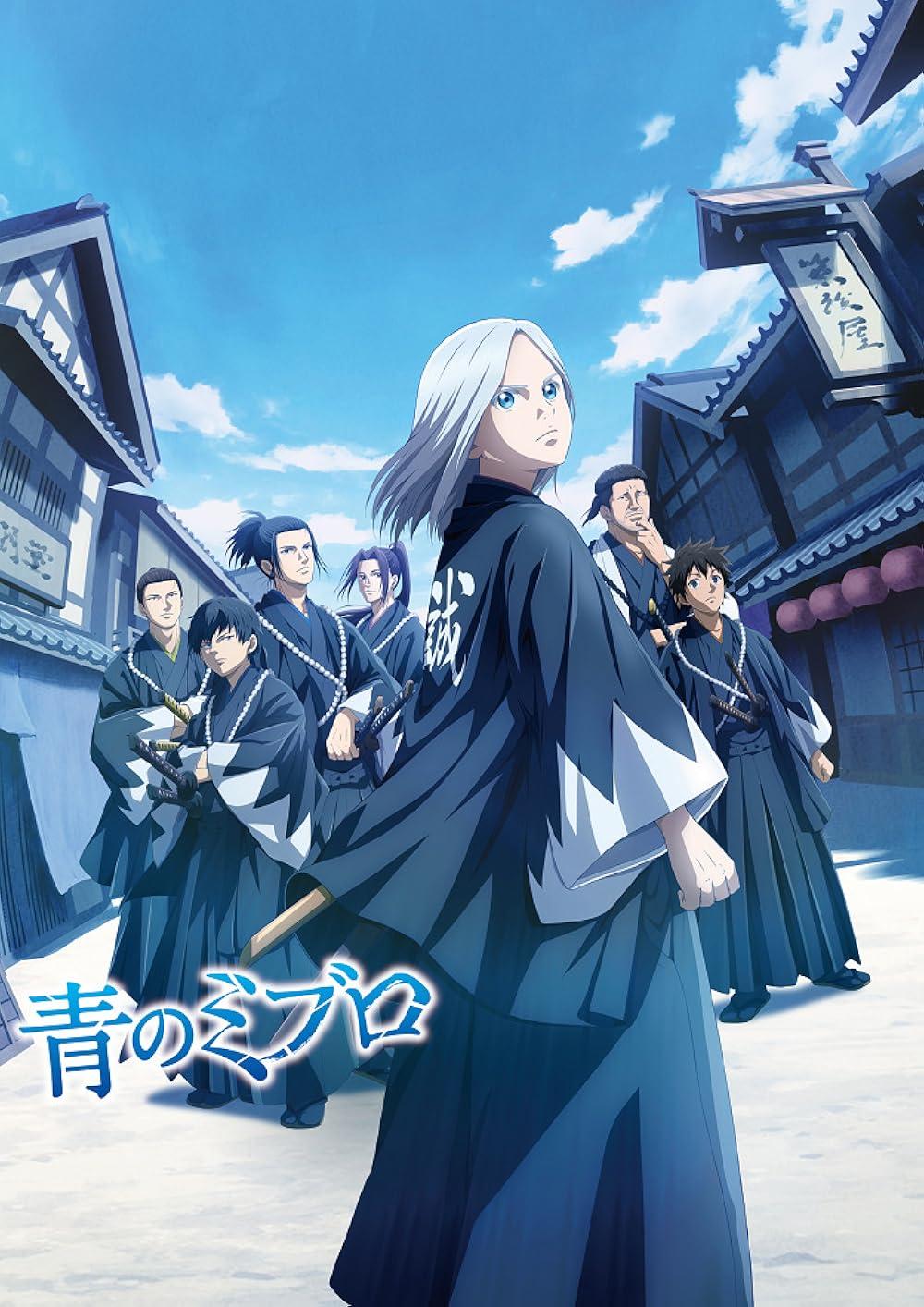
(IMDb)
Blue Miburo (Japanese: 青のミブロ, Romaji: Ao no Miburo, English: The Blue Wolves of Mibu) is a Japanese anime television series adapted from the manga series of the same name written and illustrated by Tsuyoshi Yasuda and produced by Maho Film studio. The production is directed by Kumiko Habara, with series composition and script supervision by Kenta Ihara. Character designs were created by Yūko Ōba and Miyako Nishida. The series’ music was composed by Yuki Hayashi.
The series features historical fiction, action, and samurai themes. Set during the Bakumatsu period of Japan, the anime centers on the activities of a group of ronin based in Kyoto near the end of the Tokugawa shogunate, originally known as the Roshigumi and later renamed the Shinsengumi.
”The Blue Wolves of Mibu” Official Trailer (Japan Anime YAGK)
Blue Miburo (Ao no Miburo) is the television anime adaptation of the manga series written and illustrated by Tsuyoshi Yasuda. The original manga has been serialized since October 2021 in Kodansha’s Weekly Shōnen Magazine. The animation production for the anime is handled by Maho Film studio.

Nio Chirinu (IMDb)
Blue Miburo is set during the final years of Japan’s Edo period, specifically the Bakumatsu era (circa 1863), a time of intense political upheaval. The primary setting is Kyoto, the imperial capital at the time, which became a hub for various political factions, masterless samurai (ronin), and revolutionaries.
The universe is grounded in real historical events: Japan’s forced opening to Western powers and the weakening authority of the Tokugawa shogunate. Security threats and assassinations orchestrated by anti-shogunate forces, particularly imperial loyalists in Kyoto, form the core political conflict of the narrative.
The series focuses on the Roshigumi, a group established by the shogunate to maintain order in Kyoto and stationed in the Mibu district. Known locally as Miburo (Mibu Ronin), this group is the historical precursor to the Shinsengumi. The story includes real historical figures who led and served in the group, such as Kondo Isami, Hijikata Toshizo, Okita Soji, and Serizawa Kamo.
Although heavily based on historical facts and real individuals, the narrative is framed through the perspective of a fictional protagonist named Nio. This fictional integration allows the series to convey the political atmosphere, power struggles, and samurai ideals of the era through the eyes of an outsider who later becomes a member.

Hijikata Toshizō, Okita Sōji, Nio Chirinu (IMDb)

Season 1 Episode 7 scene (IMDb)
At the heart of the series is the concept of “justice” and how it is defined and practiced by different characters and factions. Samurai loyalty (Bushido), camaraderie, and ideological divisions form the foundational pillars of the story. Through the fictional protagonist Nio, the series explores themes of youth, moral development, and the loss of innocence in a war-torn environment. Underlying this is a depiction of the social and political crises Japan faced as it moved away from its traditional isolationist policy (Sakoku).
The work combines historical fiction with shōnen (young male target audience) action dynamics. Real historical events and the origins of the Shinsengumi are told through the perspective of a fictional character (Nio). This technique enables viewers to learn about complex political conflicts and historical figures through the eyes of an outsider. Episodes are typically structured around sword-fighting choreography, flashbacks revealing characters’ pasts, and political power struggles.
Blue Miburo (Ao no Miburo), being a relatively new production that began its manga serialization in October 2021 and its anime television broadcast in October 2024, has not yet received any documented major awards or nominations from prominent anime industry organizations. However, its creator, Tsuyoshi Yasuda, won the “Best Shōnen Manga” award at the 40th Kodansha Manga Awards in 2016 for his previous manga series DAYS.
Accessed November 26, 2025. https://www.aa.com.tr/tr/kultur/ahlatta-acilan-kurslarla-geleneksel-tas-isciligi-yasatiliyor/3116279.
Accessed November 26, 2025. https://www.aa.com.tr/tr/kultur/ahlatta-acilan-kurslarla-geleneksel-tas-isciligi-yasatiliyor/3116279.
Accessed November 26, 2025. https://www.aa.com.tr/tr/kultur/ahlatta-acilan-kurslarla-geleneksel-tas-isciligi-yasatiliyor/3116279.
Blue Miburo - Awards. IMDb. Accessed March 22, 2026.
Blue Miburo - Episodes. IMDb. Accessed March 22, 2026.
Blue Miburo - Plot. IMDb. Accessed March 22, 2026.
Blue Miburo. IMDb. Accessed March 22, 2026.
Japan Anime YAGK. "The Blue Wolves of Mibu" Official Trailer 1. New anime starts October 2024. YouTube video, 1:33. Accessed March 22, 2026.
https://www.imdb.com/title/tt30523856/awards/
https://www.imdb.com/title/tt30523856/plotsummary/

(IMDb)
No Discussion Added Yet
Start discussion for "Ao no Miburo (Series)" article
Overview and Broadcast History
Broadcast Schedule and Distribution:
Universe and Story
Historical Background
Miburo (Mibu Wolves)
Fictional and Historical Integration
Main Characters and Voice Cast
Themes and Narrative Style
Themes
Narrative Style
Awards and Nominations