This article was automatically translated from the original Turkish version.
+2 More
Name of the Holiday | National Sovereignty and Children's Day | ||||||||
|---|---|---|---|---|---|---|---|---|---|
Date(s) | Every year on April 23 | ||||||||
First Celebration | 1921 – National Holiday | ||||||||
Official Status | In 1981 it gained legal definition as National Sovereignty and Children's Day | ||||||||
Institutional Actors | TRT (organizer of International Festivals) Türkiye Büyük Millet Meclisi Himaye-i Etfal Cemiyeti (today's Child Protection Institution) | ||||||||
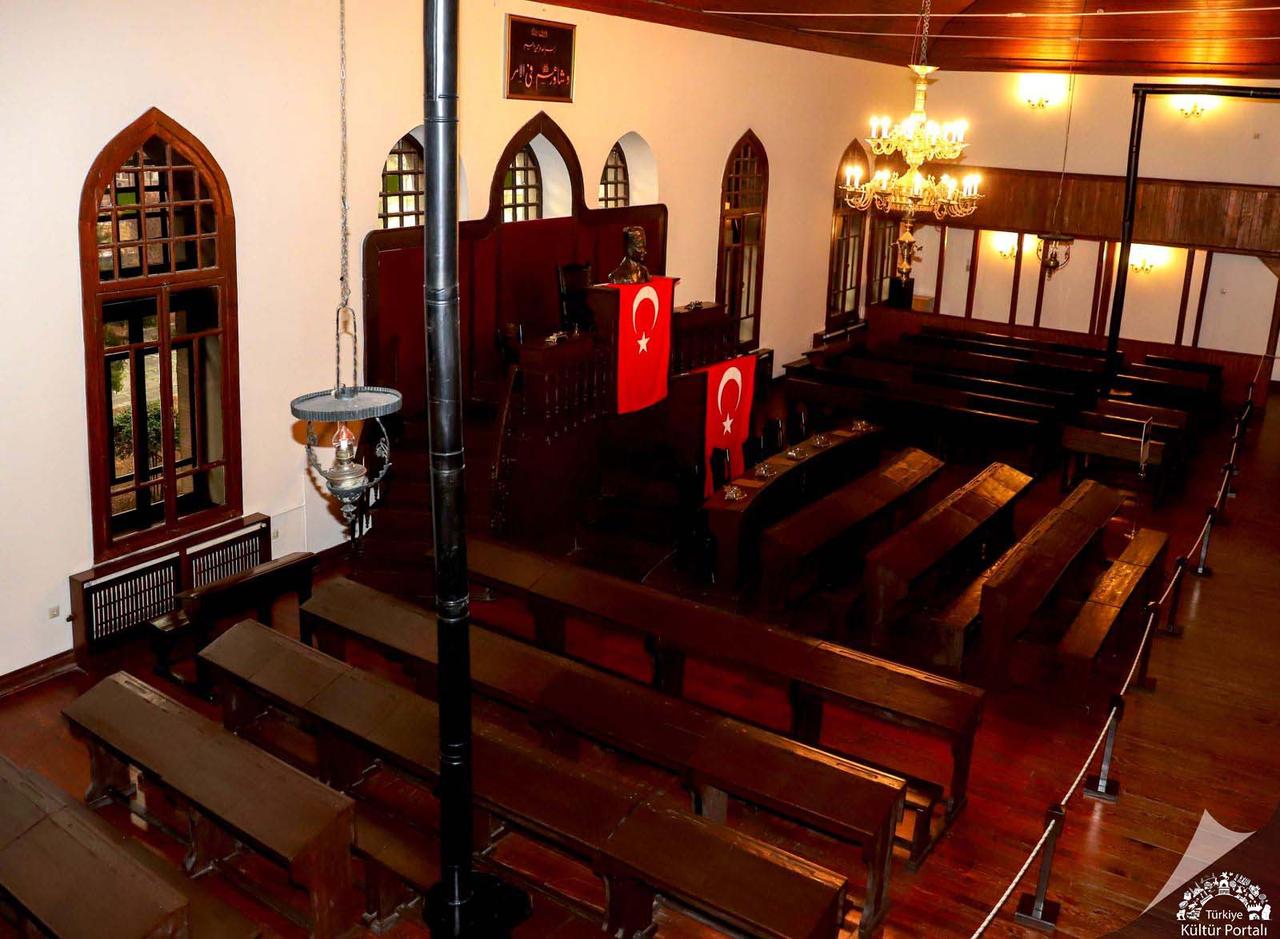
April 23 National Sovereignty and Children’s Day is a national holiday centered on the founding of the Grand National Assembly of Türkiye (TBMM) in Ankara on April 23, 1920, which became the new center of national will following the final Ottoman Chamber of Deputies.
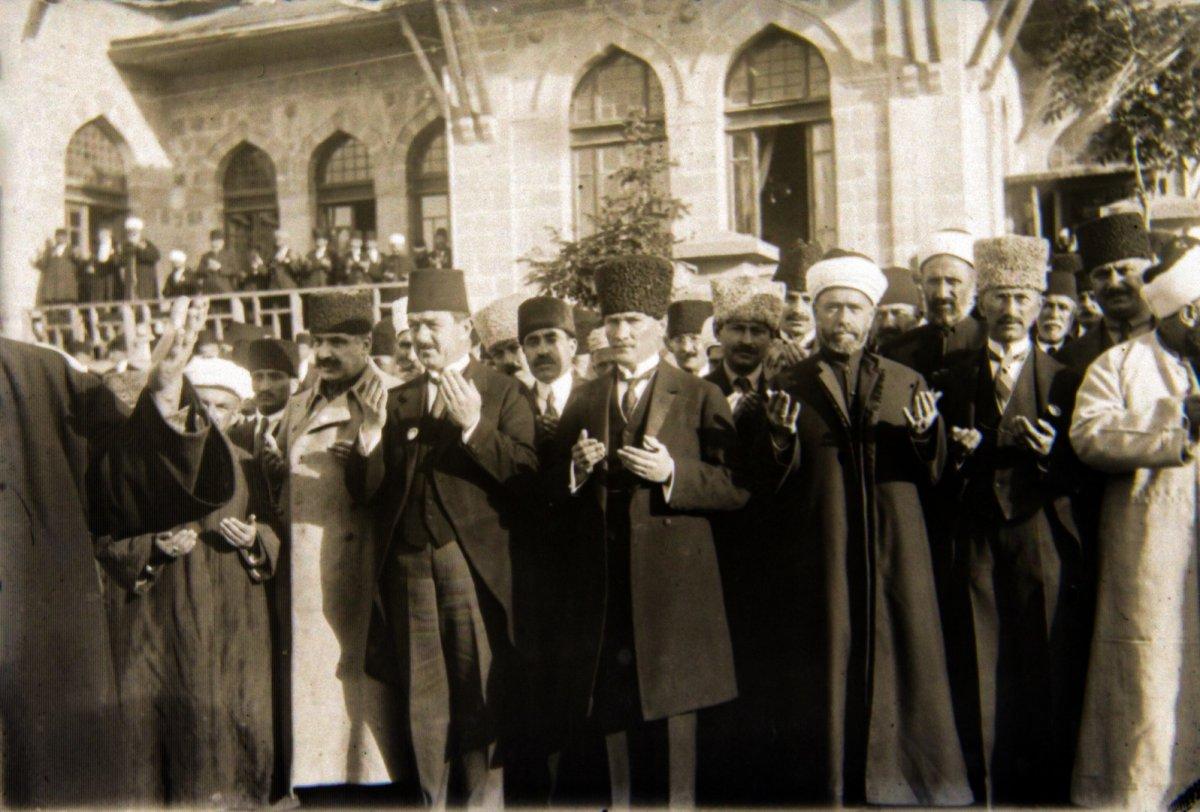
Prayer During the Opening of the Grand National Assembly of Türkiye (TBMM)
On its opening day, April 23, was recognized as a national holiday in 1921 following proposals submitted to the Assembly by Saruhan Deputy Refik Şevket (İnce) and İçel Deputy Şevki (Göklevent).【1】 The law enacted on May 2, 1921, designated the day as a "National Holiday," and it began to be celebrated in public life under names such as "Holiday of National Sovereignty," "Independence Day," and "Assembly Day."【2】 【3】 The Law on National Holidays and General Holidays enacted on May 27, 1935, changed the name of the holiday celebrated on April 23 to "National Sovereignty Holiday."【4】
From 1921 onward, the association of April 23 with children began through the activities of the Society for the Protection of Children (Himaye-i Etfal Cemiyeti, HEC).【5】 In 1924, the Society used its authorization to collect money by distributing badges worn on the public’s chest; newspapers of the time referred to April 23 as the "Badge Holiday."【6】 In 1925, the Society declared April 23 as "Himaye-i Etfal Day," thus for the first time two distinct holidays—the National Holiday and the Society’s declared Children’s Day—were celebrated on April 23. Previously celebrated as Children’s Day, April 23 was first officially commemorated as Children’s Day in 1927.【7】 By 1929, the celebrations were described as Children’s Week activities.
The traditional April 23 Children’s Day celebrations became integrated with the National Sovereignty Holiday in 1981, and the holiday’s official name became "National Sovereignty and Children’s Day."【8】 In 1985, through cooperation between the TBMM and TRT, the April 23 festivities acquired the character of symbolizing "World Peace," and through this long historical development, April 23 became a holiday gifted by Turkish children to children around the world.【9】
The proclamation of the Grand National Assembly of Türkiye on April 23, 1920, in the territories of Anatolia and Rumelia under foreign occupation, marked the beginning of the War of Independence and the National Struggle, and stands as one of the most pivotal turning points in Turkish democratic history. Following the developments of this period, April 23 was officially declared as the National Sovereignty Holiday.
After the Ottoman Empire’s defeat in the First World War, the Armistice of Mudros was signed. Its terms virtually dismantled the Ottoman defense system, opened all railways and ports to the Allied forces, and provided for the occupation of Ottoman territories as deemed necessary.【10】
The National Struggle against occupation began with the assignment of Mustafa Kemal Paşa as Inspector of the Ninth Army to Samsun to address security issues in the Black Sea region and ensure the full implementation of the Mudros Armistice.【11】 Decisions made at the Amasya Circular (June 22, 1919), the Erzurum Congress (July 23, 1919), and the Sivas Congress (September 4–11, 1919), with Mustafa Kemal Paşa’s participation, heightened national consciousness and laid the foundations of the National Struggle period.
After the elections held in autumn 1919, the Ottoman Chamber of Deputies convened on January 12, 1920, with 162 of its 168 members present. Mustafa Kemal Paşa, elected as a deputy from Erzurum, chose to remain in Ankara.【12】 This Assembly, dominated by deputies sympathetic to the Society for the Defense of the Rights of Anatolia and Rumelia, adopted the Misak-ı Milli on January 28, 1920, affirming the indivisibility of Ottoman territories.【13】 The Misak-ı Milli, declared as the Ottoman Parliament’s response to the Allied peace proposals, provoked strong opposition. On March 16, the Allies occupied Istanbul, dissolved the Assembly, arrested prominent deputies and intellectuals, and deported them to Malta.【14】
The Chamber of Deputies convened for the last time on March 18 and decided to suspend its sessions indefinitely.
On March 17, Mustafa Kemal Paşa, acting on behalf of the Representative Committee established at the Erzurum Congress and expanded at the Sivas Congress to cover the entire country, issued a proclamation announcing that the Assembly would convene in Ankara. On March 19, another circular detailed the principles governing the elections.【15】
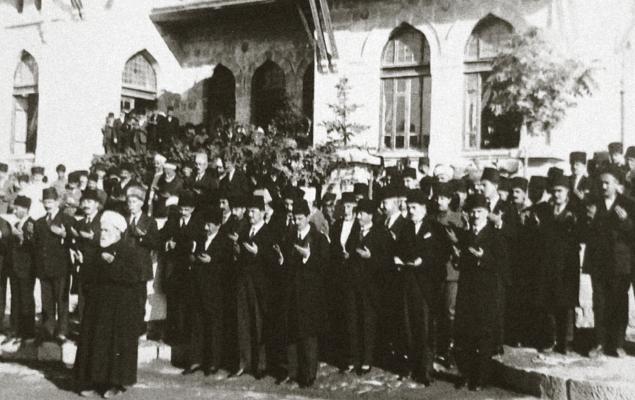
On April 16, 1920, Ankara’s Mufti Rıfat Börekçi issued a fatwa calling on the public to support the national resistance (İnönü Foundation)
The elections for the Grand National Assembly produced a democratic structure representing all segments of society. Of the members elected to the Assembly, 34.2% were civil bureaucrats, 24% were professionals, 13.2% were military personnel, 12.7% were local administrators, 8.6% were religious scholars, 4% were doctors and pharmacists, 1.2% were tribal chiefs, and 1% were technical experts.【16】
Although it was decided that five deputies should be elected from each electoral district, elections could only be held in certain areas under occupation.
Two days before the opening of the Grand National Assembly, on April 21, 1920, Mustafa Kemal Paşa sent a circular to all military and civilian authorities in Anatolia. The circular detailed the opening of the Assembly on Friday, April 23, specified the necessary preparations in each province, and outlined the procedures for the Assembly’s inauguration.
The Latin-script text of the April 21, 1920 circular and its simplified modern Turkish version read as follows:【17】
1- By the generous grace of God, on Friday, the 23rd of April, after Friday prayers, the Grand National Assembly will open in Ankara.
2- To honor the sacredness of this day, Friday prayers will be held at Hacı Bayram-ı Veli Mosque with all deputies present, so that we may benefit from the divine light of the Qur’an and the blessings of the Prophet. After the prayer, the Sacred Beard and the Sacred Standard will be carried to the Assembly. Before entering, a prayer will be recited and sacrifices will be offered. The Army Command will organize military units to accompany the procession from the mosque to the Assembly.
3- To preserve the sanctity of this day forever, from today onward, Qur’an recitations will be organized in all provincial centers under the direction of the Governors, and the complete recitation of Sahih al-Bukhari will be performed. The remaining portions will be completed before the Assembly on Friday after the prayers.
4- In every corner of our sacred and wounded homeland, the same practice will be observed: recitation of Sahih al-Bukhari (one of the six canonical hadith collections) and completion of Qur’an recitations. On Friday, before the prayers, the call to prayer will include blessings upon the Prophet. In the Friday sermon, the name of our exalted Sultan will be invoked, and prayers will be offered for the immediate liberation and happiness of our Sultan, his country, and its citizens. After Friday prayers, the recitations will be completed, and sermons will emphasize the importance, sanctity, and obligation of every individual and representative to contribute to the liberation of the exalted Caliphate and Sultanate and of every part of the homeland. Subsequently, prayers will be offered for the salvation, independence, and prosperity of our Caliph and Sultan, our religion and state, our homeland and nation. After these religious and national ceremonies, the public will visit provincial offices to offer congratulations on the opening of the Assembly. Additionally, before Friday prayers, the Mawlid al-Nabi will be recited in all places according to proper procedure.
5- All available means will be used to immediately publish and widely distribute this circular to the remotest villages, smallest military units, and all institutions and organizations in the country. This circular will also be printed as large posters and distributed free of charge to everyone.
6- We pray to God for our complete success.
On behalf of the Representative Committee, Mustafa Kemal
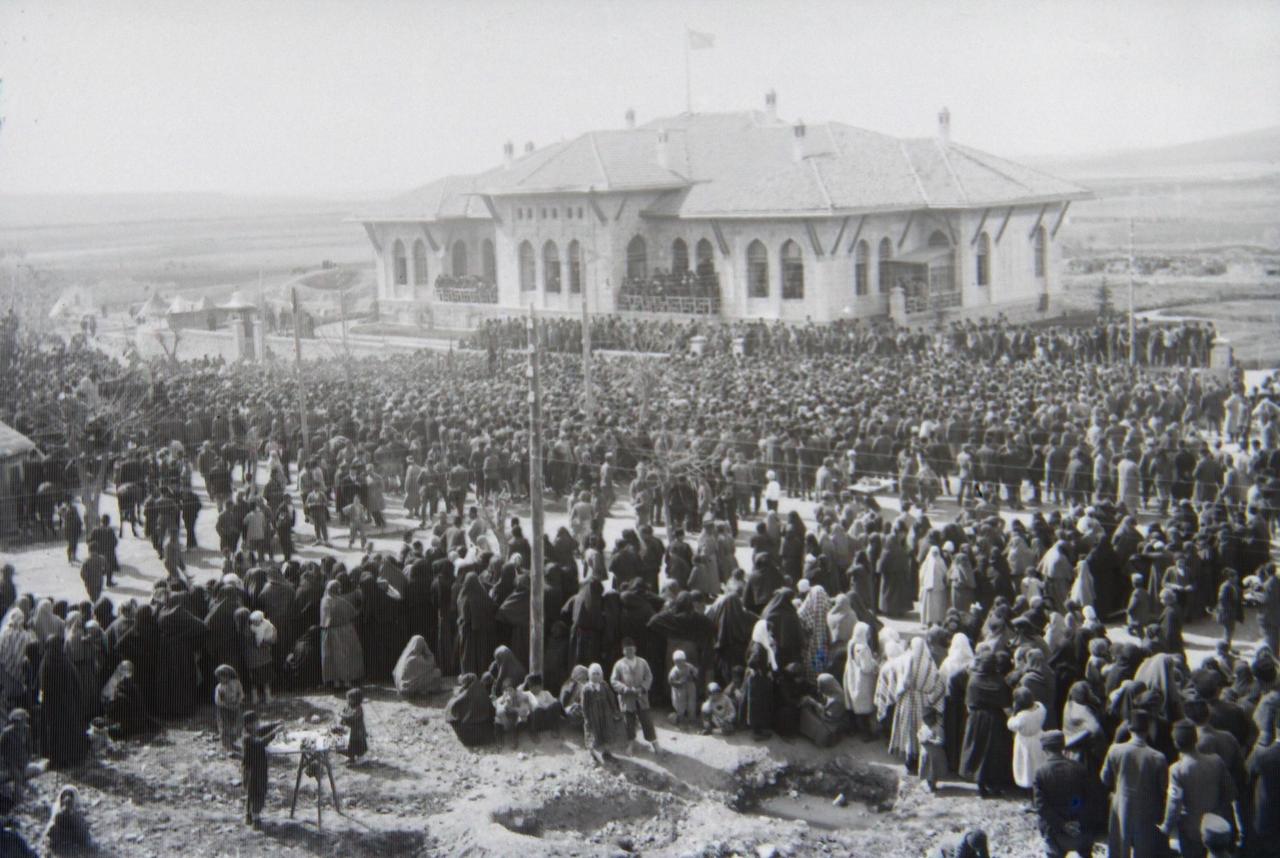
Crowds Gathering for the Opening of the Assembly on April 23 (TBMM)
On April 23, 1920, thousands gathered in a large crowd around the Assembly building awaiting its opening. After Friday prayers were held at Hacı Bayram Mosque and sacrifices were offered, the first Grand National Assembly of Türkiye opened in a building previously constructed as the Committee of Union and Progress Club in Ankara.【18】
On its opening day, the Assembly convened with approximately 115 deputies: those who had arrived from Istanbul and those elected through extraordinary powers granted by the March 19 circular. The oldest member, Şerif Bey of Sinop, who had been elected Speaker of the Assembly, delivered the opening address. On April 24, Mustafa Kemal Paşa delivered a lengthy speech outlining the events of the period and his political assessments. Following this, he was elected President of the Grand National Assembly with 110 votes.【19】
The War of Independence was carried out under the successful leadership of Gazi Mustafa Kemal and through decisions made by the First Grand National Assembly of Türkiye. Among these decisions were the adoption of the first constitution on January 20, 1921, the adoption of the Independence March on March 12, 1921, and the abolition of the Sultanate on November 1, 1922. Furthermore, the Treaty of Lausanne on July 24, 1923, the designation of Ankara as the capital of the Republic of Türkiye on October 13, 1923, and the proclamation of the Republic on October 29, 1923, followed by the election of Gazi Mustafa Kemal as President of the Turkish state, were all approved by this Assembly.
On April 23, 1921, Saruhan Deputy Refik Şevket (İnce) proposed that April 23, the day the Assembly opened, be celebrated as a national holiday. İçel Deputy Şevki (Göklevent) submitted a similar proposal. After discussions, a bill was introduced to declare April 23 a holiday, and it was adopted on the same day.【20】
According to the single-article law passed in the Assembly:
“The day of the first opening of the Grand National Assembly of Türkiye, April 23, is a National Holiday.”
Upon the announcement of April 23 being declared a holiday, the people of Ankara took to the streets in celebration, although the first official commemoration of the "National Holiday" took place in 1922.
In the 1922 celebrations, official and private institutions in Ankara were granted a holiday, and the public gathered at the Assembly to observe the ceremonies. Assembly President Mustafa Kemal Paşa accepted the celebrations and appeared on the balcony during the official parade to salute the soldiers and students.【21】
The first association of April 23 with children began with the Society for the Protection of Children’s efforts to raise funds for needy children in connection with the National Holiday.【22】 The Society for the Protection of Children, established in Istanbul on March 6, 1917, was founded specifically to support children affected by the war. On June 30, 1921, it was reestablished in Ankara with the support of Grand National Assembly President Mustafa Kemal Paşa and began its activities under the presidency of Fuat Umay.【23】

Cumhuriyet Newspaper, April 23, 1929 (Gaste Archive)
To generate income, the Society obtained the right to issue postage stamps in early 1922. During the April 23, 1924 celebrations, the Society collected funds by distributing badges worn on the public’s chest. The April 23, 1924 issue of Hakimiyet-i Milliye Newspaper encouraged the public to donate to the Society under the headline: "Today is the Badge Holiday for Our Children."【24】
In the 1924 celebrations, Latife Hanım, wife of Mustafa Kemal Paşa, served as the Society’s representative, and Mustafa Kemal Paşa’s open support for the Society brought it into the spotlight during the 1925 April 23 celebrations. Newspaper reports and commentaries of the time noted that April 23 was both the National Sovereignty Holiday and "Himaye-i Etfal Day."【25】
Although April 23 had previously been referred to as "Children’s Day" or "Children’s Holiday," it was officially celebrated for the first time under the name "Children’s Day" in 1927. On April 22, 1927, newspapers published a statement by the Society for the Protection of Children declaring April 23 as Children’s Day.【26】
For the first comprehensive Children’s Day celebrations, Mustafa Kemal Paşa donated one of his automobiles for the ceremonies and ensured that the Presidential Band performed at the Children’s Palace.
With government support, the Society for the Protection of Children’s "Children’s Day" celebrations were expanded from one day to a full week in 1929. Since the Society alone could not manage the expanded week-long celebrations, the organization of the 1929 festivities was entrusted to the Turkish Hearths. A ceremonial procession was organized, and in the afternoon a children’s ball was held at Ankara Palas, attended by President Mustafa Kemal Paşa, Assembly President Kazım Paşa, Prime Minister İsmet Paşa, and members of the Cabinet.【27】
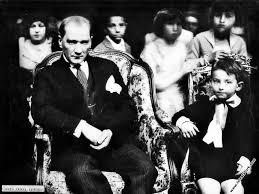
Atatürk at the April 23 Children’s Ball at Ankara Palas (Flickr)
A partial practice initiated in the same year became traditional from 1930 onward. Under this practice, children assumed the administrative duties of official and private institutions in the provinces for one week. During this period, various activities and festivities were organized in major cities as well as in Anatolian provinces such as Samsun, Sivas, Mersin, Adapazarı, Bursa, Edirne, and Kütahya.
The April 23 celebration in 1933, marking the 10th anniversary of the Republic, was more grandiose than previous years and moved to a stadium. Before the children’s synchronized gymnastics performance, the "Oath," written by then Minister of National Education Reşid Galip, was recited.【28】
The 1935 Law on National Holidays and General Holidays changed the name of the holiday celebrated on April 23 to "National Sovereignty Holiday," with no direct reference to children. However, through the continued efforts of the Society for the Protection of Children and the press, April 23 continued to be referred to as "Children’s Day."
In 1981, following the September 12, 1980 military takeover, the National Security Council decided to merge the National Sovereignty Holiday with Children’s Day. Law No. 2429 officially defined April 23 as "National Sovereignty and Children’s Day."【29】
Although it is widely believed that Atatürk gifted April 23 to children as a holiday, since it was first celebrated as a National Holiday in 1921, no concrete document supports this claim. It is presumed that the notion of April 23 being a gift from Atatürk to children entered public consciousness more prominently after the 1980s.【30】
However, it is known that Fuat Umay, president of the Society for the Protection of Children, proposed in a 1925 meeting that April 23 be declared Children’s Day, and that the Society formally adopted this designation.【31】 Therefore, Fuat Umay is regarded as the most important figure in establishing April 23 as a day or holiday for children.【32】
Nevertheless, Atatürk’s patronage and support were crucial in the first official celebration of April 23 as "Children’s Day" in 1927. The first comprehensive Children’s Day celebrations in 1927 were held under the patronage of President Mustafa Kemal Paşa, led by Assembly President Kazım Özalp and Society President Dr. Mehmet Fuat Umay. Atatürk’s attendance at the Children’s Ball held at Ankara Palas in 1929 further demonstrated his clear support for the Society and for children.
Today, April 23 National Sovereignty and Children’s Day is one of Türkiye’s most important national holidays, celebrated through official state ceremonies and extensive public children’s festivities.
Modern official ceremonies begin with a visit to Anıtkabir in the capital Ankara, attended by state authorities. Special sessions are held in the Grand National Assembly to reflect on the day’s meaning and significance. As part of the official ceremonies, civil administrators (the President, ministers, governors, and mayors) symbolically transfer their official seats to elementary school students. This tradition symbolizes the transfer of national sovereignty to future generations.

A Scene from April 23 Activities (Anadolu Agency)
Within the Ministry of National Education, all preschool and primary educational institutions play a central role in the celebrations. Modern celebration practices emphasize the following elements:
Today, the celebrations have evolved beyond official ceremonies into a children’s festival supported by civil society organizations and local administrations:
The international character of the holiday is strengthened by the participation of children from around the world. Led by TRT’s International April 23 Children’s Festival, children’s groups from different countries present cultural performances that emphasize world peace.
Alkan, Mehmet Ö. “23 Nisan’ın Gayri Resmî Tarihi: En Doğru Bildiğimizden Kuşkulanmak.” *Toplumsal Tarih* 208 (April 2011). Accessed Academia.edu. https://www.academia.edu/12041490.
Anadolu Ajansı. “23 Nisan Ne Zaman Çocuk Bayramı Oldu.” *AA*, April 22, 2018. https://www.aa.com.tr/tr/turkiye/23-nisan-ne-zaman-cocuk-bayrami-oldu/1125101.
Anadolu Ajansı. “TRT 47. Uluslararası 23 Nisan Çocuk Şenliği: 30 Ülkeden 600 Çocuk Başkentte Ağırlanacak.” *AA*, April 20, 2025. https://www.aa.com.tr/tr/gundem/trt-47-uluslararasi-23-nisan-cocuk-senligi-30-ulkeden-600-cocugu-baskentte-agirlayacak/3541238.
Aydoğan, Tolga. “Çocukları Koruyan Ruh: 23 Nisan’ın Unutulan Kahramanı Umay.” *Cumhuriyet*, April 21, 2023. https://www.cumhuriyet.com.tr/cumhuriyet-pazar/cocuklari-koruyan-ruh-23-nisanin-unutulan-kahramani-umay-2320340.
CNN Türk. “23 Nisan Atatürk Sözleri ve Resimleri: Resimli, Yazılı, Bayraklı 23 Nisan Mesajları! Atatürk'ün 23 Nisan İle İlgili Sözleri.” *CNN Türk*, April 23, 2025. https://www.cnnturk.com/turkiye/galeri/23-nisan-ataturk-sozleri-ve-resimleri-resimli-yazili-bayrakli-23-nisan-mesajlari-ataturkun-23-nisan-ile-ilgili-sozleri-2273805?page=1.
Dörtkol, Fahrettin. "23 Nisan Ulusal Egemenlik ve Çocuk Bayramı’nın Tarihçesi: Himaye-i Etfal Cemiyetinin Katkıları." Gaziantep Üniversitesi Sosyal Bilimler Dergisi 22, no. 1 (2023): 145–158.
Milliyet. "23 Nisan Atatürk Sözleri ve Resimleri: Mustafa Kemal Atatürk'ün Çocuklarla İlgili Sözleri ve Resimleri." *Milliyet*, April 23, 2025. https://www.milliyet.com.tr/galeri/23-nisan-ataturk-sozleri-ve-resimleri-mustafa-kemal-ataturkun-cocuklarla-ilgili-sozleri-ve-resimleri-7355970/12.
T24. “Tarihçi Doç. Dr. Mehmet Alkan: 23 Nisan’ı Çocuklara Atatürk Armağan Etmedi.” T24, April 23, 2011. https://t24.com.tr/haber/tarihci-doc-dr-mehmet-alkan-23-nisani-cocuklara-ataturk-armagan-etmedi,136681.
TDV İslâm Ansiklopedisi. “Meclis-i Meb‘ûsan.” İslâm Ansiklopedisi. Accessed [insert date if provided]. https://islamansiklopedisi.org.tr/meclis-i-mebusan.
TRT Haber. "TRT 46. Uluslararası 23 Nisan Çocuk Şenliği: 29 Ülkeden 500 Çocuğu Başkentte Buluşturuyor." TRT Haber, April 21, 2024. https://www.trthaber.com/trtden-haberler/trt-46-uluslararasi-23-nisan-cocuk-senligi-29-ulkeden-500-cocugu-baskentte-bulusturuyor-993.html.
TRT Haber. “TBMM 103 Yaşında: Hâkimiyet Kayıtsız Şartsız Milletindir.” TRT Haber, April 23, 2023. https://www.trthaber.com/haber/gundem/tbmm-103-yasinda-hakimiyet-kayitsiz-sartsiz-milletindir-761424.html.
Türk Maarif Ansiklopedisi. "Millî Bayramlar." *Türk Maarif Ansiklopedisi*. Accessed April 12, 2025. https://turkmaarifansiklopedisi.org.tr/milli-bayramlar.
Türkiye Büyük Millet Meclisi. Ulusal Bayram ve Genel Tatiller Hakkında Kanun. Kanun No. 2429. Date Enacted: March 17, 1981. Resmî Gazete, March 19, 1981, no. 17284.
Türkiye Büyük Millet Meclisi. Ulusal Bayram ve Genel Tatiller Hakkında Kanun. Kanun No. 2739. Date Enacted: May 27, 1935. Resmî Gazete, June 1, 1935, no. 3017.
Özçelik, Mücahit. "23 Nisan Çocuk Bayramı’nın Ortaya Çıkışı ve 1922–1929 Yılları Arasında 23 Nisan Kutlamaları." Gazi Akademik Bakış 5, no. 9 (January 2011): 265–84.
[1]
Tolga Aydoğan, "The Spirit That Protects Children: The Forgotten Hero of April 23," Cumhuriyet Newspaper, April 20, 2025, https://www.cumhuriyet.com.tr/cumhuriyet-pazar/cocuklari-koruyan-ruh-23-nisanin-unutulan-kahramani-umay-2320340
[2]
Coşku Ergül, "When Did April 23 Become Children’s Day?," Anadolu Agency, April 22, 2018, https://www.aa.com.tr/tr/turkiye/23-nisan-ne-zaman-cocuk-bayrami-oldu/1125101
[3]
Mehmet Ö. Alkan, “The Unofficial History of April 23 (Doubting What We Think We Know Best - 5),” Toplumsal Tarih, no. 208 (April 2011): 54 https://www.academia.edu/12041490/Mehmet_%C3%96_Alkan_23_Nisan%C4%B1n_Gayri_Resmi_Tarihi_En_Do%C4%9Fru_Bildi%C4%9Fimizden_Ku%C5%9Fkulanmak_5_Toplumsal_Tarih_No_208_Nisan_2011_
[4]
Ergül, "When Did April 23 Become Children’s Day?"
[5]
Makbule Sarıkaya, "The First Children’s Week in Republican Türkiye," Atatürk Research Center Journal 25, no. 75 (November 2009), https://atamdergi.gov.tr/tam-metin/212/tur
[6]
Alkan, "The Unofficial History of April 23," Page: 55
[7]
Aydoğan, "The Spirit That Protects Children."
[8]
"Law on National Holidays and General Holidays," Law No. 2429, Official Gazette, no. 17285 (March 19, 1981), https://www.mevzuat.gov.tr/mevzuat?MevzuatNo=2429&MevzuatTur=1&MevzuatTertip=5
[9]
Sarıkaya, "The First Children’s Week in Republican Türkiye,"
[10]
Cemil Öztürk, "Armistice of Mudros," TDV Islamic Encyclopedia, vol. 30 (Ankara: TDV Islamic Research Center, 2020), 271–273. https://islamansiklopedisi.org.tr/mondros-mutarekesi
[11]
Ufuk Erdem, "The Process Leading to the Opening of the Grand National Assembly of Türkiye and Its Opening Day (April 23, 1920)," Fırat University Journal of Social Sciences 31, no. 2 (May 2021): Page 1056 https://doi.org/10.18069/firatsbed.885945
[12]
Alp Özden, "From May 19, 1919 to the Opening of the TBMM," Anadolu Agency, April 22, 2019, https://www.aa.com.tr/tr/turkiye/19-mayis-1919dan-tbmmnin-acilisina/1459496
[13]
Cevdet Küçük, "Mîsâk-ı Millî," TDV Islamic Encyclopedia, vol. 30 (Ankara: TDV Islamic Research Center, 2020), 173–175. https://islamansiklopedisi.org.tr/misak-i-milli
[14]
Küçük, "Mîsâk-ı Millî," 174.
[15]
İhsan Güneş, "Grand National Assembly of Türkiye," TDV Islamic Encyclopedia, vol. 41 (Istanbul: TDV Islamic Research Center, 2012), 593–596. https://islamansiklopedisi.org.tr/turkiye-buyuk-millet-meclisi
[16]
Güneş, "Grand National Assembly of Türkiye," 594.
[17]
Murat Bardakçı, "Mustafa Kemal Ordered the Assembly to Be Opened with Prayers, Supplications, Recitations of the Qur’an, and Sacrifices on the Morning of April 23," Habertürk, April 23, 2016, https://www.haberturk.com/yazarlar/murat-bardakci/1229211-mustafa-kemal-meclisin-23-nisan-sabahi-namazlarla-dualarla-hatimlerle-ve-kurbanlarla-acilmasini-emretmisti
[18]
Özden, "From May 19, 1919 to the Opening of the TBMM."
[19]
Erdem, "The Process Leading to the Opening of the Grand National Assembly of Türkiye," Page: 1067
[20]
Aydoğan, "The Spirit That Protects Children."
[21]
Alkan, "The Unofficial History of April 23," Page: 54
[22]
Mücahit Özçelik, "The Emergence of April 23 Children’s Day and April 23 Celebrations Between 1922 and 1929," Gazi Academic Review 5, no. 9 (January 2011): Page 265, https://dergipark.org.tr/tr/pub/gav/article/86476
[23]
Sarıkaya, Makbule. "Turkey Society for the Protection of Children." Atatürk Encyclopedia. Presidency of Atatürk Research Center, November 10, 2020. https://ataturkansiklopedisi.gov.tr/detay/429/Türkiye-Himaye-i-Etfal-Cemiyeti
[24]
Veysi Akın, "The History of April 23 National Sovereignty and Children’s Day," Pamukkale University Journal of Education Faculty 3, no. 3 (January 1997): Page 92,
https://dergipark.org.tr/tr/pub/pauefd/article/133272
[25]
Özçelik, "The Emergence of April 23 Children’s Day," Page: 269
[26]
Alkan, "The Unofficial History of April 23," Page: 55
[27]
Özçelik, "The Emergence of April 23 Children’s Day," Page: 279
[28]
Alkan, "The Unofficial History of April 23," Page: 57
[29]
"Law on National Holidays and General Holidays." Law No. 2429
[30]
Alkan, "The Unofficial History of April 23," Page: 58
[31]
Alkan, "The Unofficial History of April 23," Page: 58
[32]
Veysi Akın, "Fuat Umay (1885-1963)," Atatürk Encyclopedia, Presidency of Atatürk Research Center, July 30, 2021, https://ataturkansiklopedisi.gov.tr/detay/458/Fuat-Umay-(1885-1963)


Name of the Holiday | National Sovereignty and Children's Day | ||||||||
|---|---|---|---|---|---|---|---|---|---|
Date(s) | Every year on April 23 | ||||||||
First Celebration | 1921 – National Holiday | ||||||||
Official Status | In 1981 it gained legal definition as National Sovereignty and Children's Day | ||||||||
Institutional Actors | TRT (organizer of International Festivals) Türkiye Büyük Millet Meclisi Himaye-i Etfal Cemiyeti (today's Child Protection Institution) | ||||||||
No Discussion Added Yet
Start discussion for "April 23 National Sovereignty and Children's Day" article
National Sovereignty Holiday
Political Situation After the First World War
The Process Leading to the Opening of the Grand National Assembly
April 21 Circular on the Opening of the Assembly
Opening of the Assembly and Key Activities
Declaration of April 23 as a National Holiday and the First Celebrations
The Process by Which April 23 Became Children’s Day
1923–1927: April 23 Celebrations as Himaye-i Etfal Society Day / Children’s Day
1927: April 23 Children’s Day Celebrations
1929: April 23 Children’s Week Celebrations
Laws of 1935 and 1981: Legislative Developments
Atatürk and April 23 Children’s Day
April 23 Celebrations Today
Official Celebrations and Protocol
Educational Institutions and Stage Performances
Socio-Cultural Activities and Festivals
International Representation