This article was automatically translated from the original Turkish version.
+1 More
Author(s) | Sücaattin Erdem | ||||||||
|---|---|---|---|---|---|---|---|---|---|
Publisher(s) | Dergah Yayınları | ||||||||
Publication Year | November 2021 (3rd Edition) | ||||||||
Number of Pages | 320 | ||||||||
Type(s) | Local History / Memoir / Study | ||||||||
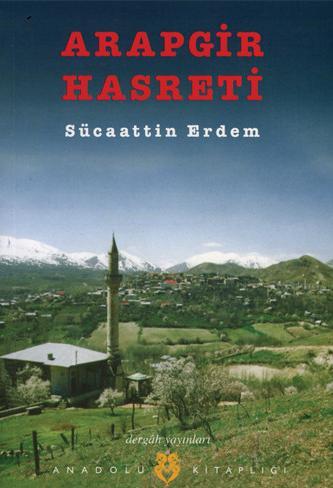
Arapgir Hasreti is a work by Sücaattin Erdem, published as part of Dergâh Yayınları’s “Anadolu Kitaplığı” series, offering a local historical and memoir-based study focused on Arapgir. The book centers on the author’s deep affection for the land of his birth and upbringing, his loyalty to his homeland, and his desire not to lose the sense of shared identity with his fellow townspeople. The first edition was published in July 2004, and the third edition was released in November 2021, comprising a total of 320 pages.
The central theme of Arapgir Hasreti is the literary expression of Sücaattin Erdem’s longing and attachment to his hometown of Arapgir. The book emphasizes that the most distinctive trait of Arapgir’s residents is their refusal to lose their love and sense of kinship for the place where they were born and raised. The author notes that this affection is woven into a “fabric” through elements such as geography, life journeys, loves, sorrows, and a difficult past.
The primary motivation behind the work is the author’s long-standing passion to write about Arapgir. By including various nicknames, reputations, and life stories associated with Arapgir, the book conveys the region’s cultural and social fabric to the reader.
In the “Preface,” the author humbly acknowledges that some details in the book may be incomplete or inaccurately recalled, and he expresses respect for the critiques of fellow townspeople who know Arapgir better. Throughout the book, it is underscored that Erdem has only recorded his personal experiences, observations, and feelings. Sücaattin Erdem states that with this work he aims particularly to guide the “Arapgir Uşahları” (young people from Arapgir) and encourage them to discover the many unwritten values of their homeland. In this context, the work can be regarded as a local historical study, a memoir, and a text of identity exploration.
The language and style of Sücaattin Erdem’s Arapgir Hasreti reflect his personal and intimate mode of narration. The book is written with a simplicity and fluency accessible to a general readership. While the author occasionally employs an emotional tone in recounting his memories and observations, he consistently maintains an objective framework. The text contains no promotional or eulogistic language; instead, it presents the longing for Arapgir and the region’s values with academic sensitivity, through an informative and descriptive approach. The narrative is enriched with vivid descriptions and anecdotal accounts that immerse the reader in the atmosphere of the work.
Through Arapgir Hasreti, Sücaattin Erdem has made a significant contribution to the cultural and social memory of his hometown, Arapgir. The work holds importance as one of the examples of local history studies and regional monographs in Turkish literature. The author’s effort to situate his personal experiences and observations within a broader framework, in order to understand the identity of a region and its people, renders this work particularly valuable.
Erdem, Sücaattin. *Arapgir Hasreti*. İstanbul: Dergah Yayınları, 2004. Accessed July 8, 2025. https://www.dergah.com.tr/kitaplar/arapgir-hasreti.

Author(s) | Sücaattin Erdem | ||||||||
|---|---|---|---|---|---|---|---|---|---|
Publisher(s) | Dergah Yayınları | ||||||||
Publication Year | November 2021 (3rd Edition) | ||||||||
Number of Pages | 320 | ||||||||
Type(s) | Local History / Memoir / Study | ||||||||
No Discussion Added Yet
Start discussion for "Arapgir Longing (Book)" article
Content and Thematic Structure
Language and Style
The Author’s Position and the Significance of the Work