This article was automatically translated from the original Turkish version.
+1 More
Location | Kırklareli | ||||||||
|---|---|---|---|---|---|---|---|---|---|
Historical Period | 6200–4700 BCE | ||||||||
Excavation Start | 1993 | ||||||||
Number of Layers | 9 archaeological layers | ||||||||
Economic Activities | Agriculture, Animal Husbandry, Hunting, Foraging | ||||||||
Artifacts | Jewelry Stone and bone tools Pottery Female figurines Wattle and daub structures | ||||||||
Open-Air Museum Elements | Natural Environment Arrangement Education and Experimental Archaeology Area Indoor Exhibition Time Tunnel Neolithic Village Village Reconstruction | ||||||||
Aşağıpınar Höyüğü is a prehistoric settlement located south of the Kırklareli provincial center, dated to between 6200 and 4700 BCE. This site is one of the rare centers in Thrace that provides uninterrupted evidence for the origin and development of agricultural village life, encompassing the Late Neolithic–Middle Chalcolithic phases in Anatolian chronology and the Early–Middle/Late Neolithic phases in Balkan chronology.
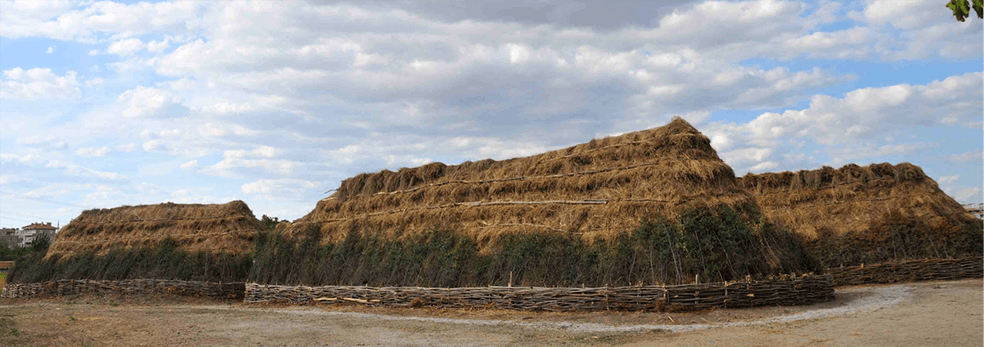
Environmental Arrangement at the Höyük (Kırklareli Project)
The höyük is situated on the southern slopes of the İstranca Mountains, north of the Ergene Basin, within the transition zone between mountain and plain. Its proximity to freshwater sources, easy access to raw materials, and favorable topography provided suitable conditions for settlement. The Haydardere Creek, which forms the northern boundary of the settlement, connects to the Ergene River via the Şeytandere. According to interaction zone analyses, an area of 30 hectares centered on the höyük has been divided into a “intensive interaction zone” within a one-hour walking distance and an “accessible zone” extending up to two hours. These areas offer distinct topographic features suitable for agriculture, animal husbandry, hunting, and gathering activities.
Nine stratigraphic layers have been identified at Aşağıpınar Höyüğü. The earliest settlement traces belong to Layer 8, but Layers 7 and 6 have been documented in greater detail in terms of architecture and material culture. Structures from these periods were built using wattle-and-daub techniques and consisted of rectangular dwellings containing hearths, silos, and work areas. Buildings in Layer 6 are exceptionally well preserved due to a severe fire. The transition between Layers 5 and 6, although limited in architectural data, is defined by changes in pottery production.
Layers 5 to 2 represent the second phase of settlement and are associated with the Karanovo III–IV, Veselinovo, and Vinča cultural phases of the Balkan Neolithic. During this period, structures were arranged in a more dispersed layout, and the settlement expanded toward the south and southwest. Pottery production featured dark-surfaced, open vessels decorated with incised, stamped, and carved motifs.
The subsistence economy at Aşağıpınar was based primarily on agriculture and animal husbandry. Domesticated animals included sheep, goats, cattle, pigs, and dogs, while wild mammals such as roe deer, red deer, fallow deer, wild boar, European bison, and common hare were hunted. Major cultivated plant species included einkorn and emmer wheat, lentils, bitter vetch, broad bean, and peas.
The topography within the settlement’s interaction zone is largely suitable for agriculture. Flat and gently sloping terrain covers more than 81 percent of the area, enhancing the region’s preference for farming and settlement. Steep slopes were used as pastures and forested areas. Aspect analysis indicates that the land faces south and west, conditions that maximize solar exposure and support agricultural productivity. The Haydardere Creek serves as the primary water source and significantly influenced the northward orientation of early settlement structures. Stream Power Index (SPI) and Topographic Wetness Index (TWI) analyses demonstrate the area’s high agricultural potential in terms of water regime and soil moisture.
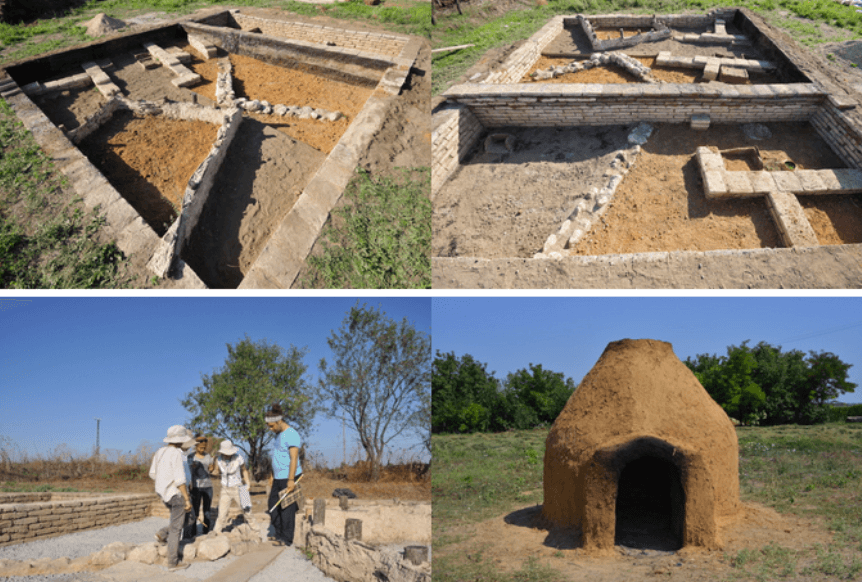
To preserve and present the findings from archaeological excavations at Aşağıpınar Höyüğü, an open-air museum project has been developed. This includes a reconstructed Neolithic village, a time tunnel, an indoor exhibition space, experimental archaeology zones, and educational areas. Structures built with inspiration from traditional architecture known as “needle-built” dwellings serve as complements to the remains from Layer 2 of the höyük. Exhibition areas focus on excavation methods, prehistoric lifestyles, technology, agriculture, and belief systems.
Aşağıpınar Höyüğü is a key site documenting the cultural development of prehistoric village settlements in Thrace and the interactions between Anatolia and the Balkans. It demonstrates that Thrace was not merely a transit corridor in the process of transmitting Neolithic lifeways to Europe, but also an original zone of synthesis.
Uyar, Özlem Yurtseven, and Hüseyin Turoğlu. “Aşağı Pınar (Kırklareli/Türkiye) Tarih Öncesi Yerleşiminin Coğrafi Veriler ve CBS Teknolojileriyle Yaşam Çevresi Analizi.” *Jeomorfolojik Araştırmalar Dergisi / Journal of Geomorphological Researches* 10 (2023): 78–90. Accessed July 10, 2025. https://dergipark.org.tr/en/download/article-file/2783825
“Aşağı Pınar Açık Hava Müze Projesi.” Kırklareli Projesi. Accessed July 10, 2025. https://kirklareliprojesi.org/toplum/asagi-pinar-acik-hava-muze-projesi/
“Aşağı Pınar.” *Kırklareli Projesi*. Accessed July 10, 2025. https://kirklareliprojesi.org/asagipinar/

Location | Kırklareli | ||||||||
|---|---|---|---|---|---|---|---|---|---|
Historical Period | 6200–4700 BCE | ||||||||
Excavation Start | 1993 | ||||||||
Number of Layers | 9 archaeological layers | ||||||||
Economic Activities | Agriculture, Animal Husbandry, Hunting, Foraging | ||||||||
Artifacts | Jewelry Stone and bone tools Pottery Female figurines Wattle and daub structures | ||||||||
Open-Air Museum Elements | Natural Environment Arrangement Education and Experimental Archaeology Area Indoor Exhibition Time Tunnel Neolithic Village Village Reconstruction | ||||||||
No Discussion Added Yet
Start discussion for "Aşağıpınar Höyüğü – Kırklareli" article
Geographical Location and Living Environment
Stratigraphy and Archaeological Finds
Economic Activities and Natural Resource Utilization
Geomorphological Features and Hydrography
Open-Air Museum and Archaeological Display
Significance