


This article was automatically translated from the original Turkish version.
+1 More
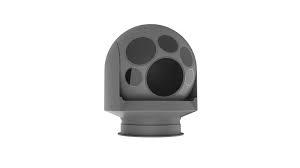
ASELFLIR-600
Developer(s) | ASELSAN (Türkiye) | ||||||||
|---|---|---|---|---|---|---|---|---|---|
Application Area(s) | Electro-optical reconnaissance targeting surveillance | ||||||||
First Flight(s) | May 2025 (Planned) | ||||||||
Series Production | End of 2025 (Planned) | ||||||||
The ASELFLIR-600 is an electro-optical reconnaissance, surveillance, and targeting system developed by ASELSAN for high-altitude long-endurance unmanned aerial vehicles (HALE-class UAVs/UCAVs), attack helicopters, and similar aerial platforms. Designed in line with Türkiye’s objective to reduce dependence on foreign imports in its defense industry, the system is described as a “game-changing” technology in terms of imaging capability and range.
In the past, Türkiye was heavily reliant on imported electro-optical camera systems for use on aerial platforms, particularly systems sourced from Canada. However, when procurement difficulties arose—especially due to export restrictions targeting UAV systems—ASELSAN initiated efforts to close this capability gap by developing the CATS system, followed by the ASELFLIR-500.
The ASELFLIR-500 achieved significant success, being exported to 16 different countries within a short period. Building on this success, the ASELFLIR-600 was developed with enhanced performance and advanced technological components to provide a superior solution for the Turkish Armed Forces and international users.
ASELFLIR-600 is an advanced electro-optical system with a multi-sensor configuration. Its key technical features are summarized below:
As a system developed for integration on aerial platforms such as UAVs, UCAVs, and helicopters, the ASELFLIR-600 has become a strategic asset for both domestic security and external operations. Thanks to advanced capabilities including long-range laser designation and multi-target tracking, it can perform high-precision target identification, tracking, and guidance missions.
Türkiye aims to establish a presence in the international market through the system’s export and to strengthen its goal of technological leadership in the defense industry.
ASELSAN positions the ASELFLIR-600 not merely as a camera system but as an integrated technological component critical to national security. Following completion of flight tests, the system will enter serial production, with expectations that it will be integrated into the inventory of the Turkish Armed Forces and exported abroad in the coming years.
ASELSAN. "ASELFLIR-600 Ürün Kataloğu (Ocak 2024)." Ankara, Aselsan, 2024. Accessed May 17, 2025. Accessed Adresi.
ASELSAN. "ASELFLIR-600." aselsan.com.tr. Accessed May 17, 2025. Accessed Adresi.
Akpınar, Metin. "ASELSAN, ASELFLIR 600 ile gökyüzünde devrim yapmaya hazırlanıyor." Accessed May 17, 2025. Accessed Adresi.
Aksan, Sertaç. "Tüm denklemleri değiştirecek: ASELFLIR 600 gökyüzüyle buluşuyor." Accessed May 17, 2025. Accessed Adresi.
Azman, Kaan. "ASELSAN'dan Yeni Elektro-Optik Sistemi ASELFLIR-600." DEFENCE TURK. Accessed May 17, 2025. Accessed Adresi.
Yılmaz, E. Mehmet. "ASELSAN'ın yeni kamerası ASELFLIR 600 Mayıs ayında gökyüzü ile buluşacak." Accessed May 17, 2025. Accessed Adresi.

ASELFLIR-600
Developer(s) | ASELSAN (Türkiye) | ||||||||
|---|---|---|---|---|---|---|---|---|---|
Application Area(s) | Electro-optical reconnaissance targeting surveillance | ||||||||
First Flight(s) | May 2025 (Planned) | ||||||||
Series Production | End of 2025 (Planned) | ||||||||
History and Development Process
Technical Specifications
General Features
Imaging Systems
Targeting and Laser Systems
Field of View
Communication
Strategic Importance and Applications
Future Perspective