


This article was automatically translated from the original Turkish version.
+1 More
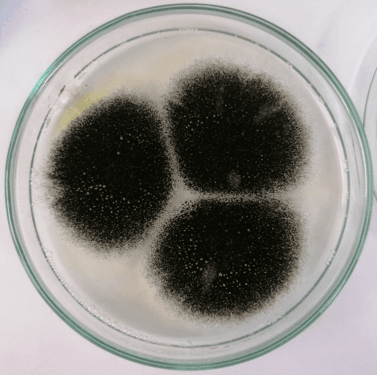
Aspergillus niger (Photo: Pınar Güner)
Scientific Name(s) | Aspergillus niger van Tieghem 1867 | ||||||||
|---|---|---|---|---|---|---|---|---|---|
Division | Ascomycota | ||||||||
Class | Eurotiomycetes | ||||||||
Optimum Temperature | 30–35°C | ||||||||
Growth pH Range | 2.0–8.0 | ||||||||
Industrial Use | Production of citric acid, gluconic acid, and enzymes (amylase, pectinase, phytase) | ||||||||
Aspergillus niger is a widespread, microscopic filamentous fungus belonging to the division Deuteromycota (Eumycota). It is commonly found in nature in soil, decaying plant material, and organic waste. This species is one of the best characterized and most industrially utilized microorganisms within the genus Aspergillus. A. niger exhibits saprophytic characteristics but can also act as a pathogen on certain plants or foods under suitable conditions. Its colonies typically produce black spore structures, which is the origin of its name “niger” (Latin for black).
The colonies of Aspergillus niger usually turn black within 4–7 days. Initially, a white cottony mycelium develops, followed by the formation of dark brown or black spore clusters on the surface. Microscopic examination reveals hyaline (transparent) hyphae, round or slightly ellipsoidal conidia, and long, unbranched conidiophores. At the tip of the conidiophore is a swollen structure called a vesicle, from which cells known as phialides produce conidia. These structures are typically arranged in a single layer, creating a characteristic “brush-like” appearance. The abundant production of spores enhances the environmental resilience of the species.
Aspergillus niger is widespread across tropical and temperate regions worldwide. It is frequently isolated from soil, cereals, nuts, fruits, vegetables, and food processing environments. It is also a common mold species detectable in indoor air. Industrial strains are typically isolated from soil or food-derived samples. First isolated in the late 19th century, this fungus later gained significant importance in both food technology and biotechnology.
This species can utilize a wide variety of carbon and nitrogen sources, making it metabolically highly flexible. The optimum growth temperature is generally around 30–35°C, and it can also grow within a pH range of 6–8. A. niger is an aerobic fungus that thrives under oxygen-rich conditions. It is industrially valuable due to its high efficiency in producing organic acids, particularly citric acid, gluconic acid, and malic acid. Additionally, it secretes various enzymes such as amylase, protease, pectinase, glucoamylase, and cellulase, which break down complex carbohydrates into simpler components.
Aspergillus niger is widely used in the food, pharmaceutical, and chemical industries. One of its most important applications is citric acid production, as the majority of the world’s citric acid is produced using this species. It is also employed in the biotechnological production of industrial enzymes such as glucoamylase, lactase, pectinase, and phytase. These enzymes function in starch-based sugar production, fruit juice clarification, improving phosphorus bioavailability in animal feed, and in the detergent industry. Genetically modified strains of A. niger are used to produce metabolites with high efficiency and safety.
Although generally saprophytic, A. niger can become an opportunistic pathogen in individuals with weakened immune systems. It can cause respiratory infections known as aspergillosis. These infections commonly affect the sinuses, ears, and lungs. Additionally, the oxalic acid produced by this fungus can lead to the formation of calcium oxalate crystals in certain tissue regions. However, its pathogenicity is generally lower compared to other Aspergillus species such as A. fumigatus or A. flavus.
Aspergillus niger can cause spoilage in stored foods and agricultural products. It thrives particularly under moist conditions in cereals, hazelnuts, coffee beans, and spices. Some strains have been reported to produce mycotoxins; compounds such as oxalic acid, malformins, and nigrin B may exhibit toxic effects. Therefore, it is essential that strains used in food production are selected from non-toxigenic, safe isolates.
Baker, S. E. “*Aspergillus niger* Genomics: Past, Present and into the Future.” *Medical Mycology* 44, suppl. 1 (2006): 17–21. Accessed October 19, 2025. https://doi.org/10.1080/13693780600921037
Driouch, H., B. Sommer, and C. Wittmann. “Morphology Engineering of Aspergillus niger for Improved Enzyme Production.” Biotechnology and Bioengineering 105, no. 6 (2010): 1058–1068. Accessed October 19, 2025. https://doi.org/10.1002/bit.22614

Aspergillus niger (Photo: Pınar Güner)
Scientific Name(s) | Aspergillus niger van Tieghem 1867 | ||||||||
|---|---|---|---|---|---|---|---|---|---|
Division | Ascomycota | ||||||||
Class | Eurotiomycetes | ||||||||
Optimum Temperature | 30–35°C | ||||||||
Growth pH Range | 2.0–8.0 | ||||||||
Industrial Use | Production of citric acid, gluconic acid, and enzymes (amylase, pectinase, phytase) | ||||||||
Morphological Characteristics
Ecological Distribution and Isolation Sources
Physiological and Biochemical Characteristics
Industrial and Biotechnological Importance
Health and Pathogenesis
Contamination and Food Safety