


This article was automatically translated from the original Turkish version.
+2 More
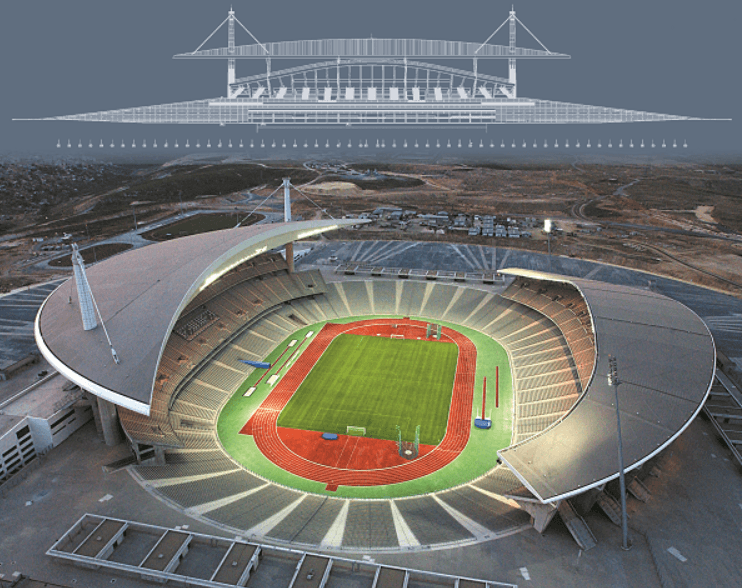
Atatürk Olympic Stadium
Closed-Circuit Camera System | Yes | ||||||||
|---|---|---|---|---|---|---|---|---|---|
Disabled Stand | Yes | ||||||||
Seating | All with seats | ||||||||
Lighting | Yes | ||||||||
Surface Type | Grass | ||||||||
Playing Field Dimensions | 68 x 105 | ||||||||
City(s) | Istanbul | ||||||||
Audience Capacity | 77563 | ||||||||
Playing Club | Solwıe Energy Fatih Karagümrük | ||||||||
Construction of the Atatürk Olympic Stadium in the İkitelli district of Istanbul began in 1999 and was completed in 2002. The Atatürk Olympic Stadium, the largest stadium in Türkiye, has a total capacity of 82,576 spectators, making it not only the largest stadium in Türkiye but also one of the largest in the world. It is equipped with infrastructure capable of hosting multi-purpose events including international competitions, educational activities and concerts.
The stadium’s architectural design was carried out by Michel Macary and Aymeric Zublena, the architects of the Stade de France. The roof is designed to resemble the bridges of the Bosphorus and appears as a crescent when viewed from above. The crescent-shaped roof above the tribunes is supported by a steel building elevated on two towers 80 meters high and four pillars. The stadium’s total capacity is approximately 80,000, with 48,500 seats located in the covered area.
The Atatürk Olympic Stadium was built on a site covering 50,000 square meters and is equipped with athletics facilities. Inside the stadium there is a six-story building, training classrooms, an amphitheater, a 2,000-seat media area for members and a large parking lot with capacity for 18,900 vehicles. Additionally, there are 85 turnstile providing electronic access and dedicated sections for spectators with disabilities.
The Atatürk Olympic Stadium was officially opened on 31 July 2002 with a match between Galatasaray and Olympiakos, setting a record attendance of 79,414 spectators. Stadium has also hosted international events such as the 2005 UEFA Champions League Final and numerous significant national sports events. These matches and events have contributed to the international recognition of Istanbul and Türkiye.
Atatürk Olympic Stadium - VINCI Construction Grands Projets. Accessed March 13, 2025. https://www.vinci-construction-projets.com/en/realisations/ataturk-olympic-stadium.
Atatürk Olympic Stadium – Dansuk Engineering. Accessed March 13, 2025. https://www.dansuk.com.tr/en.
Yüzüncü Yıl Galerisi |ATATÜRK OLİMPİYAT STADIUM. Accessed March 13, 2025. https://ataturkolimpiyatstadi.gov.tr.
İstanbul Gençlik ve Spor İl Müdürlüğü. Accessed March 13, 2025. https://istanbul.gsb.gov.tr.
“Atatürk Olimpiyat Stadi – StadiumDB.com.” Accessed March 13, 2025. https://stadiumdb.com/stadiums/tur/ataturk_olympiat_stadi.

Atatürk Olympic Stadium
Closed-Circuit Camera System | Yes | ||||||||
|---|---|---|---|---|---|---|---|---|---|
Disabled Stand | Yes | ||||||||
Seating | All with seats | ||||||||
Lighting | Yes | ||||||||
Surface Type | Grass | ||||||||
Playing Field Dimensions | 68 x 105 | ||||||||
City(s) | Istanbul | ||||||||
Audience Capacity | 77563 | ||||||||
Playing Club | Solwıe Energy Fatih Karagümrük | ||||||||
No Discussion Added Yet
Start discussion for "Atatürk Olympic Stadium" article
General Information
Architectural Design
Technical Features and Facilities
Important Events