

This article was automatically translated from the original Turkish version.
Atlas V Rocket
Engine(s) | RD-180 | ||||||||
|---|---|---|---|---|---|---|---|---|---|
Height(s) | 32.46 meters | ||||||||
Producer(s) | United Launch Alliance (ULA) | ||||||||
Scientific Missions | Landsat 8 (2013) Solar Orbiter (2020) New Horizons (2006) Mars 2020 – Perseverance Rover (2020) Mars Science Laboratory (MSL) – Curiosity Rover (2011) | ||||||||
Commercial Missions | and Inmarsat into GTO SES ViaSat Deployment of communication satellites belonging to companies such as Boeing Starliner CST-100 tests and missions | ||||||||
Defense and Exploration Missions | AEHF (Advanced Extremely High Frequency) GPS satellites National Reconnaissance Office (NRO) satellites | ||||||||
Diameter | 3.81 meters | ||||||||
Thrust | Approximately 3.83 million newtons (MN) | ||||||||
Propellant | RP-1 (refined kerosene) + liquid oxygen (LOX) | ||||||||
Successful Launches | 97 | ||||||||
Total Launches | 99 | ||||||||
First Launch | 21 August 2002 | ||||||||
Rocket Family | Atlas | ||||||||
Status | Active (but production is being phased out with transition planned to the Vulcan rocket) | ||||||||
Atlas V is a significant expendable launch system developed and operated by United Launch Alliance (ULA), based in the United States, and has been used since the early 21st century in a variety of satellite missions and space exploration endeavors. This rocket is a member of the Atlas rocket family developed by Lockheed Martin and was specifically designed with reliability and flexibility as key priorities.

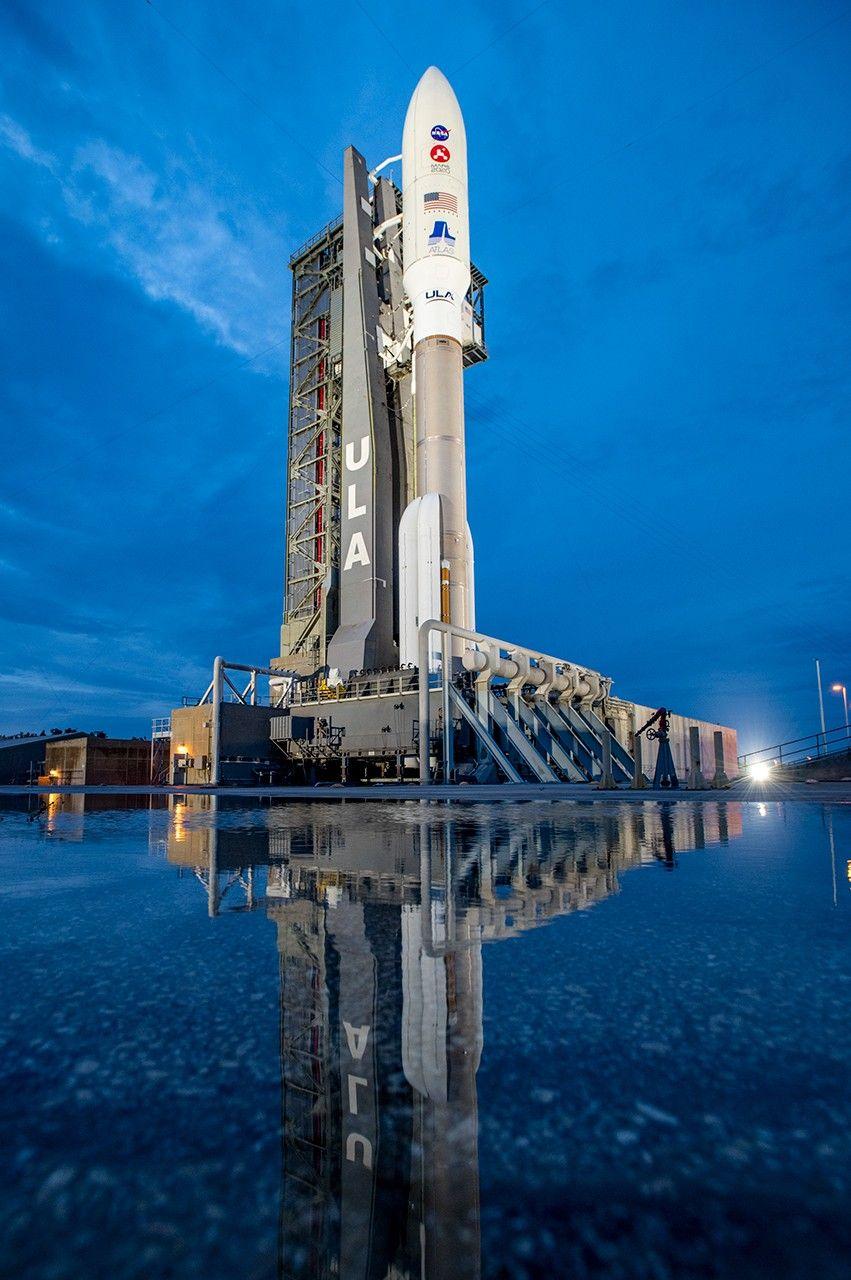
Atlas V under spotlights before the Perseverance Rover launch (NASA)
Atlas V originated as part of the Evolved Expendable Launch Vehicle (EELV) program developed by Lockheed Martin in the late 1990s. This program aimed to replace aging launch systems with cost-effective, modular rockets for the United States Air Force.

Atlas V on Launch Pad 41 with GOES-R (NASA)
Its first launch was conducted on 21 August 2002, after which it was employed in numerous civil, military, and scientific missions. In 2006, Lockheed Martin’s Atlas V program merged with Boeing’s Delta IV program to form ULA. Since then, Atlas V has continued to operate under ULA’s umbrella.
Atlas V features a modular design and can be launched in various configurations to meet different mission requirements. Its naming convention typically follows the format “Atlas V XYZ”:
The RD-180 engine is manufactured by NPO Energomash in Russia and provides Atlas V with high-efficiency propulsion.
Payload fairings are produced in different diameters (4 meters or 5 meters). The 5-meter version is preferred for larger satellites or missions requiring multiple payloads.
Atlas V has been used for numerous security missions conducted by the United States Department of Defense. These missions have typically involved launching classified satellites for the National Reconnaissance Office (NRO), communication satellites, and missile early warning systems.
NASA has employed Atlas V in many scientific missions, including:
ULA has also used Atlas V to launch communication and navigation satellites for various commercial customers. It has been particularly favored for its capability to place satellites into geosynchronous orbit (GEO).
Atlas V’s payload capacity varies depending on the configuration used. Some representative values include:
These figures demonstrate Atlas V’s adaptability to a wide range of mission types.
As of 2025, Atlas V has completed over 90 launches, with the vast majority successfully accomplished. Its launch success rate exceeds 98 percent, a figure widely regarded as a benchmark for high reliability among modern launch systems.

AI-generated visualization of an Atlas V liftoff.
In the 2020s, ULA developed the next-generation Vulcan Centaur rocket to replace Atlas V. Due to the Russian origin of the RD-180 engines, the U.S. government plans to retire Atlas V in the medium term. Vulcan is designed with lower costs and domestically produced components, aiming to assume Atlas V’s mission portfolio.
Atlas V has successfully served a wide array of space missions for over two decades, distinguished by its high reliability and modular design. It has played a vital role in both defense and scientific missions and is now preparing to be succeeded by next-generation rocket technologies. Nevertheless, it has left a lasting legacy in the history of space exploration as a long-lasting and strategic launch vehicle.
NASA. “Atlas V Ready to Launch GOES-R.” NASA, https://www.nasa.gov/image-article/atlas-v-ready-launch-goes-r/. Accessed June 20, 2025.
NASA. “Atlas V Rocket Engines Roar to Life.” NASA, https://www.nasa.gov/image-article/atlas-v-rocket-engines-roar-life/. Accessed June 20, 2025.
NASA. “Atlas V in the Spotlight before Perseverance Launch.” *NASA Science*, https://science.nasa.gov/resource/atlas-v-in-the-spotlight-before-perseverance-launch/. Accessed June 20, 2025.
NASA. “Atlas V with GOES-R Arrives at Space Launch Complex 41.” *NASA*, https://www.nasa.gov/image-article/atlas-v-with-goes-r-arrives-space-launch-complex-41/. Accessed June 20, 2025.
NASA. “GOES-R Launches Atop United Launch Alliance Atlas V Rocket.” NASA, https://www.nasa.gov/image-article/goes-r-launches-atop-united-launch-alliance-atlas-v-rocket/. Accessed June 20, 2025.
NASA. “Water-Side View of Atlas V Rocket.” *NASA Science*, https://science.nasa.gov/resource/water-side-view-of-atlas-v-rocket/. Accessed June 20, 2025.

Atlas V Rocket
Engine(s) | RD-180 | ||||||||
|---|---|---|---|---|---|---|---|---|---|
Height(s) | 32.46 meters | ||||||||
Producer(s) | United Launch Alliance (ULA) | ||||||||
Scientific Missions | Landsat 8 (2013) Solar Orbiter (2020) New Horizons (2006) Mars 2020 – Perseverance Rover (2020) Mars Science Laboratory (MSL) – Curiosity Rover (2011) | ||||||||
Commercial Missions | and Inmarsat into GTO SES ViaSat Deployment of communication satellites belonging to companies such as Boeing Starliner CST-100 tests and missions | ||||||||
Defense and Exploration Missions | AEHF (Advanced Extremely High Frequency) GPS satellites National Reconnaissance Office (NRO) satellites | ||||||||
Diameter | 3.81 meters | ||||||||
Thrust | Approximately 3.83 million newtons (MN) | ||||||||
Propellant | RP-1 (refined kerosene) + liquid oxygen (LOX) | ||||||||
Successful Launches | 97 | ||||||||
Total Launches | 99 | ||||||||
First Launch | 21 August 2002 | ||||||||
Rocket Family | Atlas | ||||||||
Status | Active (but production is being phased out with transition planned to the Vulcan rocket) | ||||||||
Development Process and Historical Background
Technical Specifications
Structure and Configurations
First Stage (Common Core Booster)
Second Stage (Centaur Upper Stage)
Payload Fairing
Mission Profiles and Applications
Military Applications
Civil and Scientific Applications
Commercial Missions
Performance Capacity
Reliability and Operational Success
The Future of Atlas V