


This article was automatically translated from the original Turkish version.
+1 More
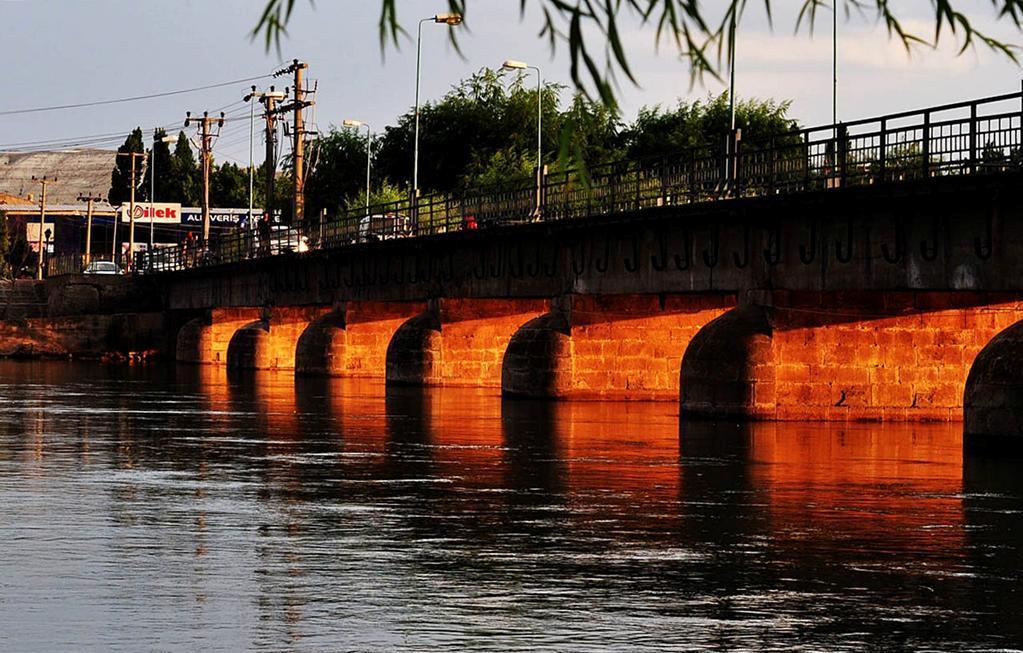
Avanos Historical Bridge
Location | Nevşehir Province Avanos District – on the Kızılırmak River | ||||||||
|---|---|---|---|---|---|---|---|---|---|
Construction Date(s) | Construction began in 1898 and was completed in 1900. | ||||||||
Architect(s) | Engineer of the Kayseri Province Mehmed Ali Bey | ||||||||
The district of Avanos is situated on both banks of the Kızılırmak River and has historically hosted various civilizations. The Avanos Historical Stone Bridge, constructed in the late 19th century by the Ottoman Empire, is a significant structure reflecting the engineering concepts and infrastructure policies of its time. The bridge represents a noteworthy example in the urban development of the region, both in terms of its historical function and structural characteristics.
Avanos is隶属于 Nevşehir Province and is built on both banks of the Kızılırmak River, making it one of the historic districts of the Cappadocia region. Evidence of human settlement in the area extends back approximately 4,000 years to the Hittite period.

Avanos Historical Stone Bridge (AVanos Subdistrict)
Military and infrastructure projects have played a vital role in the historical development of Avanos. The historical stone bridge connecting the eastern and western banks of the town is not merely a means of transportation but also an important engineering structure embedded in the city’s collective memory. The construction of the bridge must be understood within the context of the Ottoman modernization process of the 19th century.
The bridge project was designed by Mehmed Ali Bey, Civil Engineer of the Kayseri Liva. Initiated in the mid-1890s, the project aimed to provide a permanent solution to the transportation needs previously met by large boats. Archival documents reveal that the bridge’s location and technical specifications were meticulously determined, with topographic drawings, exploration logs, and tender specifications prepared accordingly.
Construction of the stone bridge began in 1898 and was completed in 1900 under the reign of Sultan Abdülhamid II, with state support and contributions from the local population. The bridge was built on a total of 11 stone piers and originally featured a wooden deck.
The stones used in the construction were sourced from nearby regions of Çeç and Karadağ. The durability of these stones over time is remarkable. To ensure a stable foundation, excavation works were carried out and wooden piles were driven into the ground. The piers were constructed from cut stone, with the stones secured using lead. The wooden superstructure was fastened with iron plates and coated with protective tar.
Originally, the bridge measured between 147 and 151 meters in length and approximately 7.5 meters in width. For the first 20 years of its operation, passage across the bridge was toll-based. By the 1920s, the wooden deck had deteriorated, prompting reinforced concrete conversion works that began in 1924 and were completed in 1926. These renovations were carried out by Hungarian master Wolf and several Turkish craftsmen; the project cost 60,000 liras under the economic conditions of the time.
Over time, the bridge has undergone various repairs. The pedestrian section was expanded in 1995. Today, the bridge remains open to traffic, with a reinforced concrete deck and iron railings. However, the original wooden superstructure and railings have not survived to the present day.
Avanos’s historical stone bridge is not merely a transportation structure but also a symbol embedded in the region’s historical and social memory. It stands as an important example of Ottoman-era engineering knowledge, social solidarity, and local resource utilization. It is also regarded as a successful product of administrative coordination and technical planning during its time.
Akdere, Suna, and Şenay Güngör. "Avanos’un Sakin Şehir Olma(ma) Sürecinin Değerlendirilmesi." In Kapadokya Araştırmaları: İnsan, Doğa ve Kültür, edited by Ali İmamoğlu, 75–93. Konya: Nüve Kültür Merkezi, 2021. Accessed May 10, 2025.
Aydın, Remzi. "Mühendis Mehmed Ali Bey’in Avanos’taki Projeleri." İstem 16, no. 32 (2018): 357–383. Accessed May 10, 2025.
Nevşehir Valiliği. "Avanos’un Tarihi." Yerel tanıtım metni. Accessed May 10, 2025.
T.C.Avanos Kaymakamlığı Governorship. “Avanos’un Tarihi Köprüleri.” Accessed May 10, 2025. http://www.avanos.gov.tr/avanosun-tarihi-kopruleri

Avanos Historical Bridge
Location | Nevşehir Province Avanos District – on the Kızılırmak River | ||||||||
|---|---|---|---|---|---|---|---|---|---|
Construction Date(s) | Construction began in 1898 and was completed in 1900. | ||||||||
Architect(s) | Engineer of the Kayseri Province Mehmed Ali Bey | ||||||||
No Discussion Added Yet
Start discussion for "Avanos Historical Bridge" article
Historical and Geographical Location of Avanos
Significance and Construction Process of the Historical Bridge
Construction Phase and Architectural Features
Dimensions and Renovation Works
Current Condition of the Bridge
Historical and Cultural Value