

This article was automatically translated from the original Turkish version.
+1 More
Registration Number | 1836 | ||||||||
|---|---|---|---|---|---|---|---|---|---|
Registration Date | 03.04.2026 | ||||||||
Province(s) | Denizli | ||||||||
Application Date | 09.12.2022 | ||||||||
Type of Geographical İndication | Signpost | ||||||||
Product / Product Group(s) | Processed and unprocessed fruits vegetables and mushrooms | ||||||||
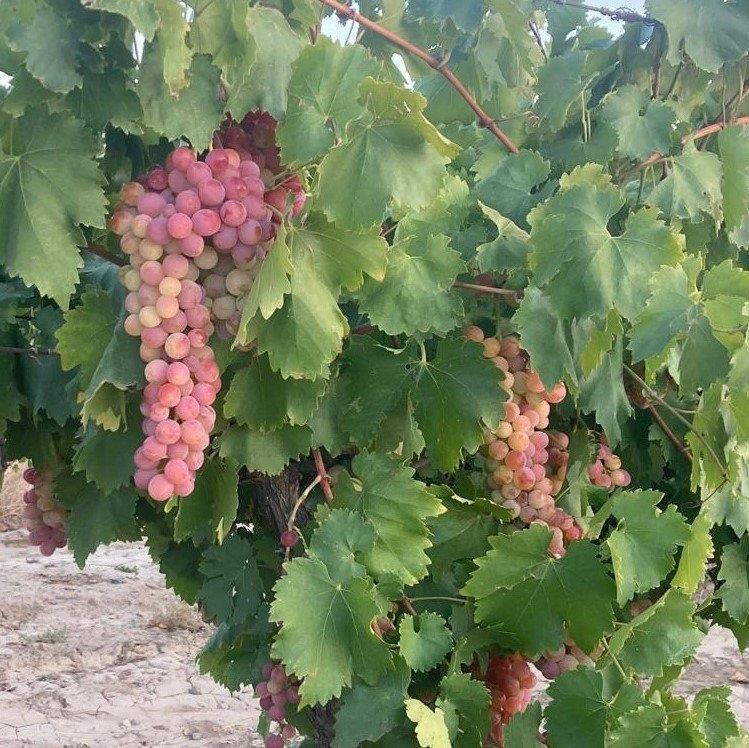
Avşar Grape is a grape variety unique to Avşar Neighborhood in the Acıpayam district of Denizli Province, known for its high sugar content and distinctive physical characteristics. This fruit is derived from the Vitis vinifera L. species of the order Rhamnales and the family Vitaceae, specifically the “pembe gemre” variety, and has been officially registered and protected under a geographical indication by the Turkish Patent and Trademark Office.
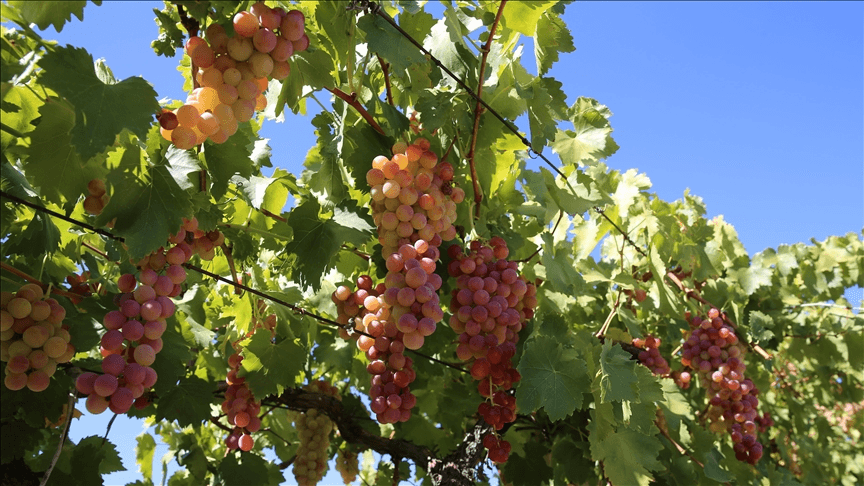
Avşar Grape (Anadolu Agency)
Avşar Grape is primarily cultivated for table consumption and has a long vegetative period due to its late-ripening nature. Its key distinguishing features are as follows:
The clusters are medium-sized and mostly cylindrical or slightly winged conical in shape. They have a compact structure with short peduncles. The average weight of a cluster ranges between 454 g and 656 g.
The berries are reddish in color, large, and broadly elliptical. The skin is of medium thickness, the flesh is crisp, juicy, and seeded. Each berry contains an average of 3 to 5 seeds.
The juice yield of the grape ranges from 40.05% to 47.56%. Its high sugar content of approximately 22.75% makes it particularly suitable for the production of pekmez.【1】
The quality of Avşar Grape stems from the unique conditions of its growing region, where continental and Mediterranean climates intersect. Rainfall even during summer months promotes berry size, while approximately 140 days of sunshine enable the fruit to reach its ideal sugar (Brix) level. The region’s sandy-loamy soil structure supports root development and allows cultivation without external irrigation.
Production areas are typically established on south-facing slopes to maximize sunlight exposure. During planting, grafting onto American vine rootstocks is used to confer resistance to pests.
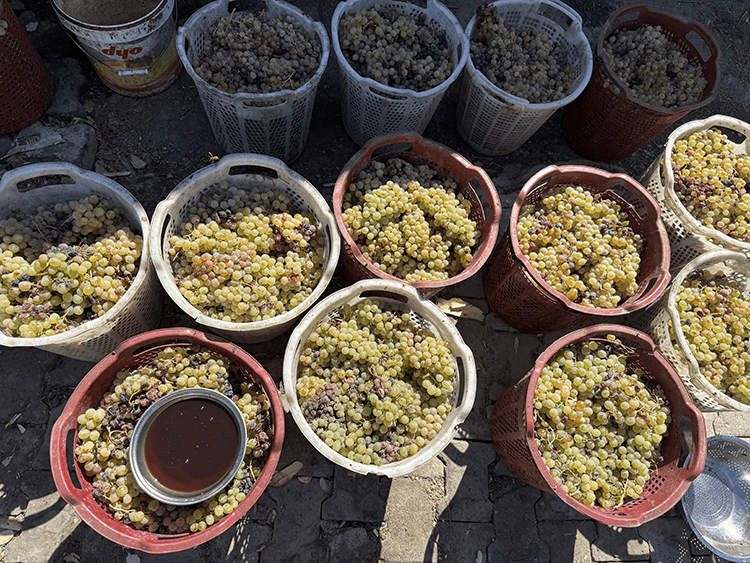
Avşar Grape Harvest (Anadolu Agency)
Harvested produce is stored in cold storage at using sulfur dioxide-treated protective paper and can retain freshness for approximately 95 to 100 days.【2】 Thanks to this storage capacity, Avşar Grape can be marketed until mid-February. This long-standing production activity forms one of the foundational pillars of Avşar Neighborhood’s economy.
Anadolu Ajansı. “Denizli'nin üzüm diyarı Avşar'da antik miras yaşatılıyor.” Accessed May 8, 2026. https://www.aa.com.tr/tr/kultur/denizlinin-uzum-diyari-avsarda-antik-miras-yasatiliyor/3375221
Turk Patent and Trademark Office. "Avşar Üzümü." Geographical Indications Portal. Accessed May 8, 2026. https://ci.turkpatent.gov.tr/cografi-isaretler/detay/8222
Turkish Patent and Trademark Office. "Avşar Üzümü Mahreç İşareti Sicil Belgesi." *Coğrafi İşaretler Portalı.* Accessed May 8, 2026. https://ci.turkpatent.gov.tr/Files/GeographicalSigns/4f91fed3-4d34-470e-b1f8-ab067edcb3f3.pdf
[1]
Turkish Patent and Trademark Office, ''Avşar Grape Geographical Indication Registration Certificate,'' Geographical Indications Portal, Access date: 8 May 2026, https://ci.turkpatent.gov.tr/Files/GeographicalSigns/4f91fed3-4d34-470e-b1f8-ab067edcb3f3.pdf.
[2]
Turkish Patent and Trademark Office, ''Avşar Grape Geographical Indication Registration Certificate.''

Registration Number | 1836 | ||||||||
|---|---|---|---|---|---|---|---|---|---|
Registration Date | 03.04.2026 | ||||||||
Province(s) | Denizli | ||||||||
Application Date | 09.12.2022 | ||||||||
Type of Geographical İndication | Signpost | ||||||||
Product / Product Group(s) | Processed and unprocessed fruits vegetables and mushrooms | ||||||||
Physical and Chemical Properties
Terroir and Climate Influence
Production and Harvesting Method
Storage and Economic Value