

This article was automatically translated from the original Turkish version.
+1 More
Type(s) | Historical Drama | ||||||||
|---|---|---|---|---|---|---|---|---|---|
Director(s) | Metin Günay | ||||||||
Screenwriter(s) | Serdar Özönalan | ||||||||
Producer(s) | Mehmet Bozdağ | ||||||||
Production Year | 2020 | ||||||||
Actors | Sevda Erginci Mehmet Özgür Hatice Şendil Ekin Koç Buğra Gülsoy | ||||||||
Number of Seasons | 1 | ||||||||
Number of Episodes | 34 | ||||||||
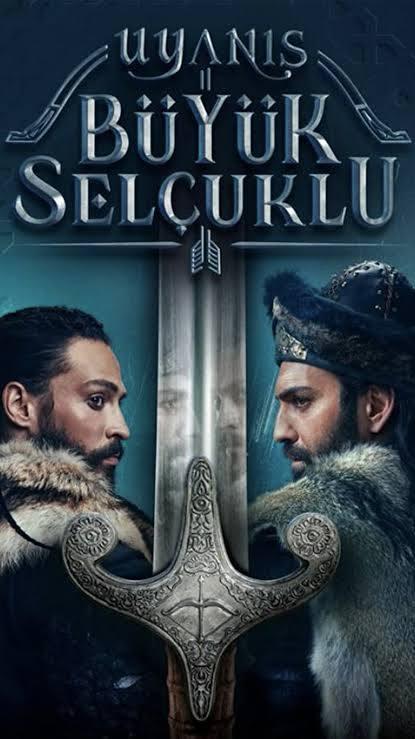
The historical television series “Resurrection: Great Seljuk”, which began broadcasting on TRT1 in 2020, centers on the Great Seljuk State, a major political power in the Islamic world. Although its screenplay is enriched with fictional elements, the narrative draws inspiration from historical realities.
The series focuses on the reign of Sultan Malik-Shah, who ascended the Seljuk throne after the death of Sultan Alp Arslan. During this period, the Seljuk State confronts internal unrest and threats from the Ismailis. The central storyline revolves around Malik-Shah’s secret son, Sanjar, who conducts intelligence operations on behalf of the state as a covert agent. In this context, the series explores court intrigues, Nizam al-Mulk’s role as the voice of state reason, and the political and philosophical dimensions of the struggle against the Ismailis.
Buğra Gülsoy (Sultan Malik-Shah)
A just, strategic, and powerful sultan seated on the Seljuk throne. A leader unafraid to make tough decisions for the future of the state.
Ekin Koç (Sanjar)
Malik-Shah’s secret son, raised as a state assassin. A sharp, courageous, and devoted character.
Leyla Lydia Tuğutlu (Elçin Hatun)
A princess from the Karakhanid lineage. A proud, headstrong, yet patriotic figure.
Sevda Erginci (Turna Hatun)
Sanjar’s great love. A woman of deep emotion who can also display a warrior’s spirit when necessary.
Hatice Şendil (Terken Hatun)
Malik-Shah’s wife. A clever and political figure who seeks to maintain control over the power dynamics within the palace.
Mehmet Özgür (Nizam al-Mulk)
The powerful vizier of the Great Seljuk State. He stands out for his wisdom and loyalty, functioning as the conscience of the state.
Gürkan Uygun (Hasan Sabbah)
The leader of the Ismailis. He conducts espionage and assassination campaigns against the Seljuk state. Charismatic and dangerous.
Sezin Akbaşoğulları (Zübeyde Hatun)
A respected woman in the palace, and the mother of Malik-Shah. She is in political competition with Terken Hatun.
Ali Gözüşirin (Tapar)
Malik-Shah’s son. He actively serves in the military wing of the state. Obedient but internally conflicted.
Leyla Feray (Gevher Hatun)
Tapar’s wife. A clever palace woman who seeks to have a voice in state affairs.
İsmail Ege Şaşmaz (Faysal)
A young character with an important role in the state’s internal structure, notable for his intelligence.
Director Metin Günay has developed a visual language that supports the historical context through careful scene planning. Wide-angle shots emphasize palace interiors, battle scenes, and natural landscapes, while dramatic lighting and shadow contrasts heighten emotional intensity. Costumes and sets are designed in accordance with the aesthetic sensibilities of the period. The battle choreography is one of the key production elements defining the series’ visual dynamism.
The series is structured around themes such as state survival, loyalty, betrayal, faith, and love. Nizam al-Mulk’s political philosophy, strategic decisions made in response to the Ismaili threat, and power struggles within the palace form the primary dramatic tensions. Criticisms have largely focused on the dramatization of historical events, the anachronistic portrayal of certain characters, and the weight given to fictional elements.
The series was produced by Bozdağ Film and premiered its first episode on September 28, 2020. The production process was extensive and carried out with the guidance of historical consultants. The first season consists of 34 episodes and dramatizes the political and social structure of the 11th century.
Since its debut, the series has achieved high viewership ratings and garnered a broad audience both within Türkiye and abroad. However, specific award records are not available in available sources. It has established itself as a significant entry among TRT1’s historical dramas.
Beyazperde. "Uyanış: Büyük Selçuklu Fotoğraflar." Beyazperde. Accessed April 23, 2025. https://www.beyazperde.com/diziler/dizi-31681/fotolar/
Beyazperde. "Uyanış: Büyük Selçuklu Oyuncuları (1. Sezon)." Beyazperde. Accessed April 23, 2025. https://www.beyazperde.com/diziler/dizi-31681/sezon-46865/oyuncular/
Beyazperde. "Uyanış: Büyük Selçuklu." Beyazperde. Accessed April 23, 2025. https://www.beyazperde.com/diziler/dizi-31681/
IMDb. “Uyanis: Büyük Selçuklu (TV Series 2020–2021).” IMDb. Accessed April 23, 2025. https://www.imdb.com/title/tt12632132/
TRT 1. "Uyanış: Büyük Selçuklu (Arşiv)." TRT 1. Accessed April 23, 2025. https://www.trt1.com.tr/arsiv/uyanis-buyuk-selcuklu

Type(s) | Historical Drama | ||||||||
|---|---|---|---|---|---|---|---|---|---|
Director(s) | Metin Günay | ||||||||
Screenwriter(s) | Serdar Özönalan | ||||||||
Producer(s) | Mehmet Bozdağ | ||||||||
Production Year | 2020 | ||||||||
Actors | Sevda Erginci Mehmet Özgür Hatice Şendil Ekin Koç Buğra Gülsoy | ||||||||
Number of Seasons | 1 | ||||||||
Number of Episodes | 34 | ||||||||
No Discussion Added Yet
Start discussion for "Awakening: The Great Seljuk (Series)" article
Plot
Cast
Direction and Cinematography
Themes and Criticisms
Production and Broadcast History
Commercial Success and Awards