


This article was automatically translated from the original Turkish version.
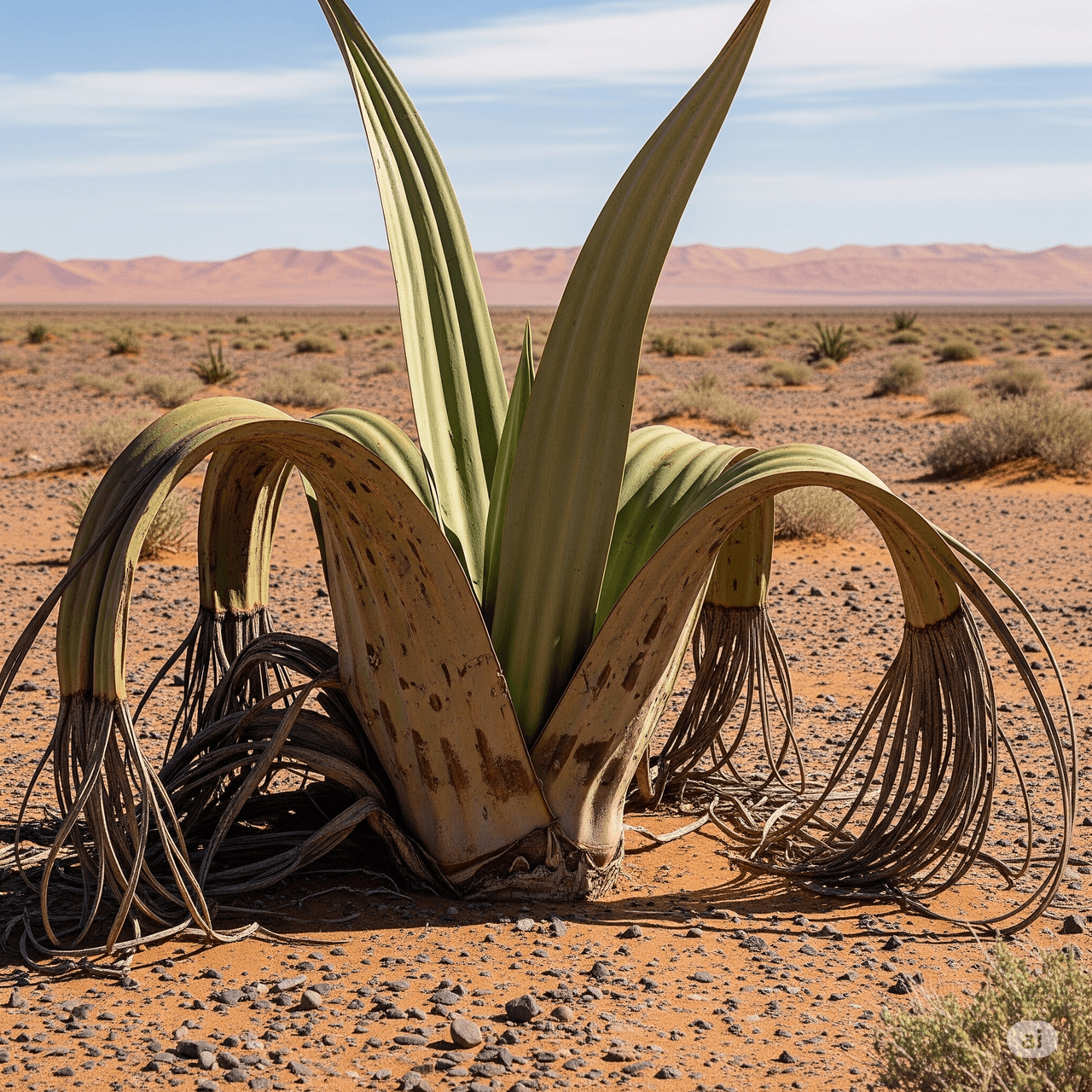
Taxonomy | Monocotyledonous plants of the family Welwitschiaceae | ||||||||
|---|---|---|---|---|---|---|---|---|---|
Habitat | Namib Desert Southwest Africa | ||||||||
Leaf Count | Only two continuously growing leaves | ||||||||
Morphology | Thick woody stem with strap-like torn leaves | ||||||||
Lifespan | Hundreds of years | ||||||||
Flower | Unisexual with separate male and female flowers on the same plant | ||||||||
Adaptation | Deep root system with water retention and fog moisture absorption ability | ||||||||
Conservation Status | Sensitive habitat under protection | ||||||||
Ecological Role | Soil stabilization, microhabitat creation, food source | ||||||||
Bambusa is a genus of perennial herbaceous plants belonging to the Poaceae family. This genus encompasses approximately 120 species and is widely distributed across tropical and subtropical regions of Asia, Africa, and the Americas. Bambusa species are particularly known for their rapid growth and durability. They play important roles in ecosystems and hold significant economic value. Members of the Bambusa genus naturally grow in various habitats, especially in moist forests, along riverbanks, and at mountain foothills. These plants are characterized by their herbaceous stems and thick, woody culms. Bamboo holds an important place in many societies both ecologically and culturally.
Bambusa species have upright, hollow-culmed stems. The stems are typically cylindrical and segmented, with nodes between the segments that provide structural integrity. The height of bamboo species can range from a few meters to thirty meters. Stem diameters vary by species and generally range from 2 to 20 centimeters. Leaves are usually long and narrow, with shades of green. The high photosynthetic efficiency of these leaves plays a key role in the rapid growth of bamboo.
Bambusa stands out in the plant kingdom for its growth rate. Some species can grow up to one meter per day. This rapid growth makes bamboo an attractive resource for sustainable forestry and biomass production. The woody structure of the stems provides strength and flexibility, making bamboo valuable in construction, furniture, and paper manufacturing. The root system of Bambusa species is extensive and deep, contributing to the prevention of soil erosion and enhancing the soil’s water retention capacity.

Bambusa (Generated by Artificial Intelligence)
Bambusa is especially concentrated in the tropical and subtropical regions of South and Southeast Asia. China, India, Indonesia, and the Philippines are countries with the highest bamboo diversity. However, Bambusa species are also found in certain tropical areas of Africa and the Americas. These plants typically thrive in humid climates and well-drained soils. Riverbanks, valleys, mountain slopes, and forest clearings provide suitable habitats for bamboo species.
Members of the Bambusa genus can grow in both lowland and mid-elevation areas. Some species can even survive at high altitudes. They exhibit flexibility in soil type, thriving in sandy, clayey, and organic-rich soils. However, they prefer environments with good drainage. Although these plants show some resistance to drought, their growth performance declines under prolonged water stress. The distribution of Bambusa has been shaped not only by natural conditions but also by human activity. Agricultural and forestry practices have led to the expansion or contraction of bamboo forests.
Bamboo forests are of great importance for biodiversity within the ecosystems they inhabit. Numerous animal species find shelter and food in these areas. Certain mammals, birds, and insect species are particularly dependent on bamboo habitats. Bamboo helps maintain soil moisture balance, prevents erosion, and contributes to climate regulation through its carbon sequestration capacity.
The rapid growth of Bambusa species enhances their carbon absorption capacity, making bamboo a strategic plant in combating global climate change. Additionally, bamboo is being researched as a renewable energy and biomaterial source. Bamboo forests provide important livelihood resources for local communities. Leaves and young shoots are used as animal feed, while stems are utilized for various purposes.
Bambusa has been used in various ways throughout human history. Due to its structural strength and flexibility, it has been preferred in construction for bridges, houses, and fences. Bamboo is also an important raw material in furniture and household goods production. In recent years, textiles made from bamboo fibers have become widespread in fashion and home textiles.
Bamboo is also gaining importance as an innovative material in paper and bioplastic production. Research in this field offers solutions aimed at reducing the environmental impact of bamboo-based products. In the food sector, bamboo shoots are consumed as a delicacy in some cultures.
The Bambusa genus is also involved in sustainable forestry practices and is supported in economic development projects. In this context, bamboo cultivation provides both environmental and economic benefits in developing countries. Furthermore, bamboo ecosystems are being considered for ecotourism potential.

The Place of Bamboo in Our Lives (Generated by Artificial Intelligence)
Bambusa species exhibit both sexual and asexual reproduction. While most commonly propagate through seeds, clonal reproduction via rhizomes is also widespread. Reproductive cycles vary among species, and some bamboo species flower at long intervals. This flowering period can sometimes extend to 30–60 years.
After flowering, some species experience mass die-offs, which affect bamboo population dynamics. Genetic studies have revealed significant diversity within the Bambusa genus. Genetic diversity enhances resistance to environmental stresses and adaptive capacity, enabling bamboo species to thrive across wide geographic ranges.
Bamboo ecosystems face threats such as habitat loss, overexploitation, and climate change. Rapid economic development and urbanization have particularly contributed to the decline of bamboo areas. Conservation programs aim to protect the genetic resources of bamboo species and ensure the sustainable management of their natural habitats.
Sustainable bamboo management is important both environmentally and socially. As a renewable resource, bamboo, when properly utilized, helps maintain ecosystem services. Projects involving local communities increase the economic value of bamboo while preserving ecological balance.
In conclusion, the Bambusa genus is a versatile group of plants of critical importance to both natural ecosystems and human economies. Its wide distribution, diversity, and multifaceted uses make bamboo indispensable in sustainable natural resource management.
Asipita, S. A., Ismail, M., Majid, M. Z. A., Majid, Z. A., Abdullah, C., & Mirza, J. (2013). Green Bambusa Arundinacea leaves extract as a sustainable corrosion inhibitor in steel reinforced concrete. *Journal of Cleaner Production*, *67*, 139–146. https://doi.org/10.1016/j.jclepro.2013.12.033
Muniappan, M., & Sundararaj, T. (2003). Antiinflammatory and antiulcer activities of Bambusa arundinacea. *Journal of Ethnopharmacology*, *88*(2–3), 161–167. https://doi.org/10.1016/s0378-8741(03)00183-1
Vu, T. H. M., Pakkanen, H., & Alén, R. (2003). Delignification of bamboo (Bambusa procera acher). *Industrial Crops and Products*, *19*(1), 49–57. https://doi.org/10.1016/j.indcrop.2003.07.001

Taxonomy | Monocotyledonous plants of the family Welwitschiaceae | ||||||||
|---|---|---|---|---|---|---|---|---|---|
Habitat | Namib Desert Southwest Africa | ||||||||
Leaf Count | Only two continuously growing leaves | ||||||||
Morphology | Thick woody stem with strap-like torn leaves | ||||||||
Lifespan | Hundreds of years | ||||||||
Flower | Unisexual with separate male and female flowers on the same plant | ||||||||
Adaptation | Deep root system with water retention and fog moisture absorption ability | ||||||||
Conservation Status | Sensitive habitat under protection | ||||||||
Ecological Role | Soil stabilization, microhabitat creation, food source | ||||||||
Morphology and Growth Characteristics
Distribution and Habitat
Ecological Role and Importance
Applications and Economic Value
Reproduction and Genetic Diversity
Conservation and Sustainability