

This article was automatically translated from the original Turkish version.
+1 More
Origin(s) | Central Asia and Africa | ||||||||
|---|---|---|---|---|---|---|---|---|---|
Fuel | Wood Charcoal Hazelnut Shell Oak Charcoal | ||||||||
Geography | Caucasus Middle East Balkans Türkiye | ||||||||
Cooking Technique | Grilling | ||||||||
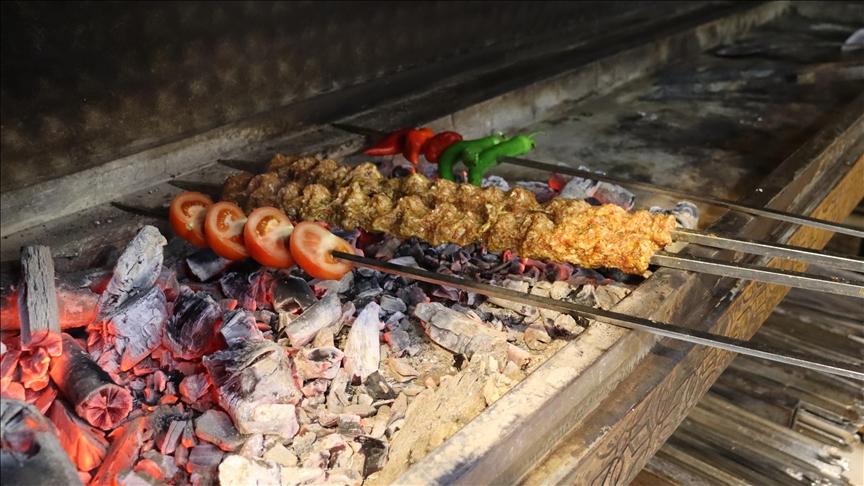
Mangal is a cooking method based on grilling meat, vegetables, and baked goods over wood charcoal or embers, typically conducted outdoors. It is also a social activity centered around this technique. In Türkiye, particularly during summer months, this practice is commonly carried out in gardens, balconies, or recreational areas and is regarded not only as a way of preparing food but also as a means of socializing and entertainment.
The mangal culture is an integral part of Türkiye’s social cohesion and leisure traditions. Although this cooking technique traces its origins to Central Asia and Africa and has become embedded in Turkish culinary culture, it is not historically unique to this region. While it shares similarities with the American “barbecue” culture, the American method typically involves roasting or smoking meat, whereas the Turkish mangal is based on the principle of direct grilling over embers.
In terms of social division of labor, lighting the mangal and cooking the meat are generally considered male responsibilities. However, preparatory stages such as sourcing the meat, marinating it, making kebabs, preparing salads, and setting the table are predominantly carried out by women.
The production techniques and material quality of mangals used for high-quality cooking are of great importance. In traditionally manufactured mangals, riveting is preferred over welding to enhance durability. In handcrafted grills, shaping metal with hammers is a common practice.
Mangal sizes vary according to need, with production ranging from 30 centimeters to 5.5 meters. Large mangals specifically designed for restaurants serving traditional Turkish kebabs and grilled dishes are exported to countries such as Japan, the United States, Germany, and France.
Preparation and cooking distance are critical parameters for achieving optimal flavor and texture in meat cooked on a mangal. It is recommended to marinate the meat before cooking. According to a common method, a mixture of three cups of water and one tablespoon of salt is prepared per kilogram of meat; the meat is then refrigerated in this solution for 24 hours and dried before cooking.
The following technical considerations should be observed during cooking:
Kaya, Miraç. "Hobi olarak başladı müşterilerinin deyimiyle 'mangal profesörü' oldu." Anadolu Ajansı, June 6, 2020. Accessed February 24, 2026. https://www.aa.com.tr/tr/yasam/hobi-olarak-basladi-musterilerinin-deyimiyle-mangal-profesoru-oldu/1867312.
Soysal, Sahrap. "Mangalın seyir defteri." *Hürriyet*, May 17, 2020. Accessed February 24, 2026. https://www.hurriyet.com.tr/yazarlar/sahrap-soysal/mangalin-seyir-defteri-41519176.
Uzunöz, Nazmiye. "Gaziantep's Forgotten Registered Delicacy: Simit Kebab." Anadolu Ajansı, January 15, 2025. Accessed February 24, 2026. https://www.aa.com.tr/tr/kultur/gaziantepin-unutulmaya-yuz-tutmus-tescilli-lezzeti-simit-kebabi/3450695.
Yaşin, Mehmet. "Mangal hakkında bilmeniz gereken her şey." *Hürriyet*, July 9, 2017. Accessed February 24, 2026. https://www.hurriyet.com.tr/yazarlar/mehmet-yasin/mangal-hakkinda-bilmeniz-gereken-her-sey-40513889.

Origin(s) | Central Asia and Africa | ||||||||
|---|---|---|---|---|---|---|---|---|---|
Fuel | Wood Charcoal Hazelnut Shell Oak Charcoal | ||||||||
Geography | Caucasus Middle East Balkans Türkiye | ||||||||
Cooking Technique | Grilling | ||||||||
Cultural Background and Social Structure
Structure and Production of Mangal
Cooking Techniques and Preparation Process