


This article was automatically translated from the original Turkish version.
Barbering is a profession focused on cutting, styling, and maintaining human hair and beards. Historically, it also encompassed various health services such as circumcision, dentistry, and cupping therapy. Current professional practices include hair coloring, blow-drying, and specialized hair and skin care services.
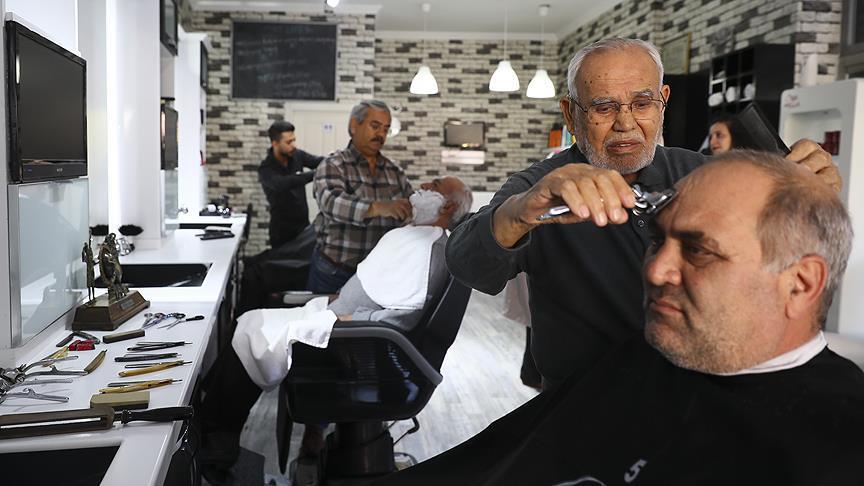
A Barber Shop in Türkiye (AA)
The term barbering entered Turkish from the Italian barbièr / barbiere (“one who shaves beards”).【1】 This word derives from the Italian barba (“beard”). Thus, etymologically, barbering refers to “one who attends to or cuts beards.” The word “berber” was adopted into Turkish from Persian.【2】 This connection aligns with the profession’s primary focus on facial hair care. Similar roots are found in Western languages (English barber, French barbier). Additionally, in the early 20th century, particularly with the spread of wig-making and Western-style hairstyling services, the profession was occasionally referred to by its French-derived term “Perükâr.”
The profession of barbering extends back to ancient civilizations including Ancient Egypt, Assyria, Phoenicia, and Hellenistic cultures. In these societies, barbers performed functions beyond mere aesthetic services, assuming religious, social, and even medical roles.
In medieval Europe, barbers expanded the medical dimensions of their profession:
During the Ottoman period, barbering became an integral part of social life. In early Ottoman times, men who cut hair and beards were known as halik or ser-teraş.【3】 Initially serving in the corners of coffeehouses, barbers moved to independent shops after IV. Murat ordered the closure of coffeehouses. In the post-Tanzimat era, specialization increased; some groups branched off into medical professions such as surgery, dentistry, and pharmacy.
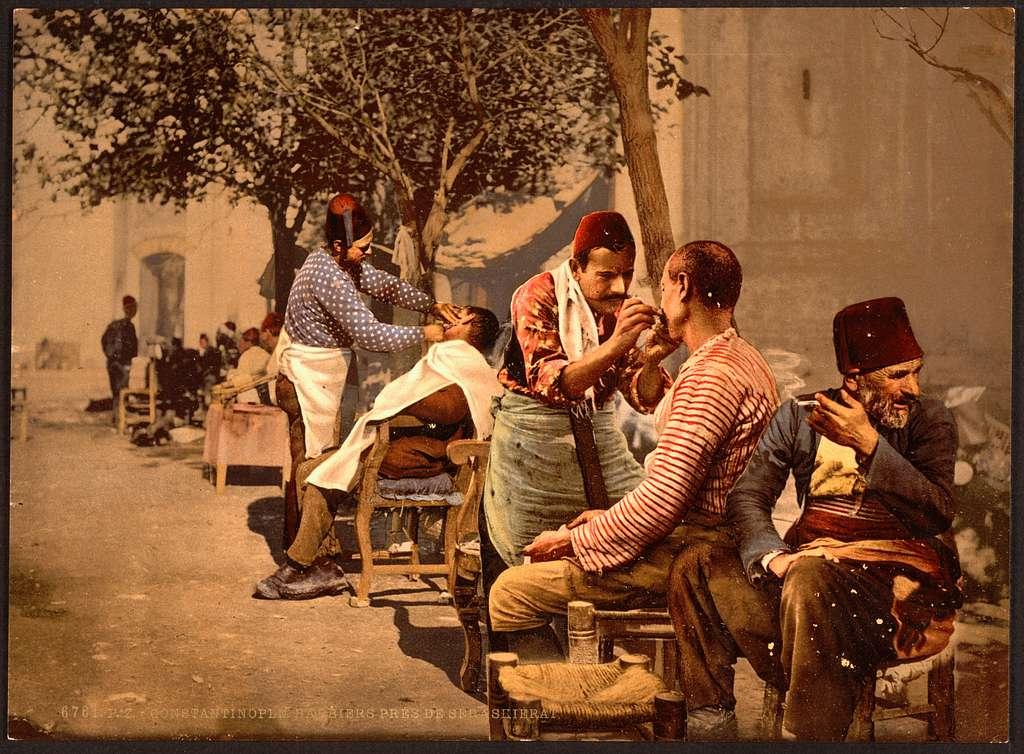
Barbering During the Ottoman Period (picrly)
From the reign of II. Abdülhamid onward, Western-style barber shops opened, known as “perukar,” featuring modern furniture and equipment. These establishments also sold products such as cologne, hair dye, canes, and umbrellas. During the Republican era, the term “perukar” fell out of use and “berber” was once again widely adopted.
Modern barbering has expanded to focus on personal aesthetics and care.

A View of a Contemporary Barber Shop pexels)
In the Republic of Türkiye, practicing barbering is subject to legal requirements and specific educational standards.
"Berber." *Nişanyan Sözlük*. Accessed November 19, 2025. https://www.nisanyansozluk.com/kelime/berber
"Berber." *Türk Dil Kurumu Güncel Türkçe Sözlük*. Accessed November 19, 2025. https://sozluk.gov.tr/?ara=BERBER
Anadolu Ajansı. "250 yıldır berberlik yapan aile." Accessed November 19, 2025. https://www.aa.com.tr/tr/yasam/250-yildir-berberlik-yapan-aile/960633.
Kalyoncu, Hülya. “Görsel Sanatlarda Eski İstanbul Yaşamının Berberlik Mesleği ve Berberlerin Kullanım Malzemeleri.” *Eurasian Academy of Sciences Social Sciences Journal* 35, (2021): 124–45. Accessed November 19, 2025. https://doi.org/10.17740/eas.soc.2021.V35-07.
Ministry of National Education of Türkiye. "Erkek Kuaförlüğü ve Berberlik Meslek Tanımı ve Yeterlilikleri." Professional Competencies Authority Publications. Accessed November 19, 2025.
Pexels. “A Man at a Barbershop.” Accessed November 19, 2025. https://www.pexels.com/photo/a-man-at-a-barbershop-7518736/
Picryl. "Barbers near Seraskierat (i.e., Seraskerat) Constantinople, Türkiye." Picryl. Accessed November 19, 2025. https://picryl.com/media/barbers-near-seraskierrat-ie-seraskerat-constantinople-turkey
Yılmaz, İbrahim. "OSMANLI SON DÖNEMİNDE BERBERLİK." *İnönü Üniversitesi Uluslararası Sosyal Bilimler Dergisi* 11, no. 2 (2022): 396–408. Accessed November 19, 2025. https://doi.org/10.54282/inijoss.1135743.
[1]
“Berber,” Nişanyan Sözlük, Son Erişim 23 Aralık 2025, https://www.nisanyansozluk.com/kelime/berber.
[2]
Hülya Kalyoncu, “Görsel Sanatlarda Eski İstanbul Yaşamının Berberlik Mesleği ve Berberlerin Kullanım Malzemeleri,” Eurasian Academy of Sciences Social Sciences Journal 35, (2021): syf.124, https://doi.org/10.17740/eas.soc.2021.V35-07.
[3]
A.e., syf. 124-125

Etimology
Historical Development of the Profession
Origins in Ancient Civilizations
Barber-Surgeons in the Middle Ages
Barbering in the Ottoman Empire and Its Social Role
Modernization and Change
Current Service Scope
Entry into the Profession and Qualification Certificates