


This article was automatically translated from the original Turkish version.
Region(s) | Bartın | ||||||||
|---|---|---|---|---|---|---|---|---|---|
Material(s) | Natural stone blocks | ||||||||
Production Method | Traditional stone craftsmanship (cutting, carving, smoothing) | ||||||||
Application Area(s) | For baking dough products such as ekmek and bazlama | ||||||||
Registration Status | Geographical Indication Product | ||||||||
Cultural Significance | One of the traditional handicrafts of the Bartın region | ||||||||
Stone Griddle Making is one of the traditional crafts unique to the Bartın region. Master artisans in the area shape stones extracted from large rock masses into flat griddles used for cooking. This traditional production method holds an important place in Bartın’s cultural heritage and has been officially protected through geographical indication registration.
The history of stone griddle production is closely linked to Bartın’s long-standing tradition of stonemasonry. This practice, passed down from generation to generation over centuries, has become a significant craft in the region. In earlier times, stone griddles were used in homes and summer pastures to bake bread, bazlama, and other dough-based foods, making a vital contribution to the local culinary culture.

Stone Griddle (Culture Portal)
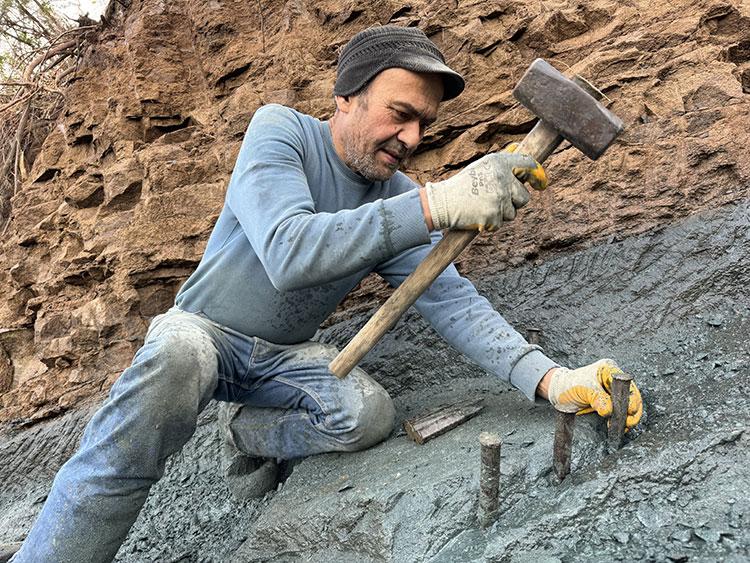
The primary material used in stone griddle production is natural stone blocks extracted from local quarries. Artisans break these stones using traditional methods to achieve the desired size. The surface of the stone is then shaped, leveled, and polished until it becomes suitable for cooking. The stone’s thermal resistance and ability to form a smooth surface enhance the durability and lifespan of the griddle.

Preparation for Stone Griddle Making (Anadolu Agency)
Today, stone griddle making is sustained by only a small number of master artisans in Bartın. Its geographical indication status ensures the preservation and promotion of this craft using traditional methods. Local authorities and cultural organizations are actively promoting this handicraft, particularly supporting its use within gastronomy tourism initiatives.
Stone griddle making is an essential component of Bartın’s intangible cultural heritage. This distinctive regional craft helps preserve traditional cooking methods and contributes to the local economy. Stone griddles, valued by tourists as culturally significant artifacts, serve both functional and decorative purposes as memorable souvenirs.
Local authorities and civil society organizations are organizing various training programs and workshops to ensure the transmission of stone griddle making to future generations. Efforts are ongoing to support artisans, sustain traditional production techniques, and raise awareness of this craft.
Although originally a regional production method, stone griddle making has attracted growing interest across a broader geographical area. As demand for the product increases, local producers are taking steps to introduce stone griddles to markets beyond the region. In this way, this traditional craft is gaining opportunities for recognition beyond Bartın’s borders.
Anadolu Ajansı. “Dev Kayalardan Bilek Gücüyle Çıkardığı Parçaları Coğrafi İşaretli Taş Saca Dönüştürüyor.” Accessed June 23, 2025. Accessed adresi
Bartın Valiliği. "Taş Sac Yapımı." Accessed June 23, 2025. http://www.bartin.gov.tr/tas-sac-yapimi
Bartın İl Directorate of Culture and Tourism. "El Sanatları." Accessed June 23, 2025. https://bartin.ktb.gov.tr/TR-68993/el-sanatlari.html
Culture Portal. "Taş Sac Yapımı." Accessed June 23, 2025. https://www.kulturportali.gov.tr/turkiye/bartin/kulturatlasi/tas-sac-yapimi

Region(s) | Bartın | ||||||||
|---|---|---|---|---|---|---|---|---|---|
Material(s) | Natural stone blocks | ||||||||
Production Method | Traditional stone craftsmanship (cutting, carving, smoothing) | ||||||||
Application Area(s) | For baking dough products such as ekmek and bazlama | ||||||||
Registration Status | Geographical Indication Product | ||||||||
Cultural Significance | One of the traditional handicrafts of the Bartın region | ||||||||
Historical Background
Materials and Production Process
Current Situation
Cultural and Touristic Significance
Future-Oriented Initiatives
Potential for Wider Adoption