


This article was automatically translated from the original Turkish version.
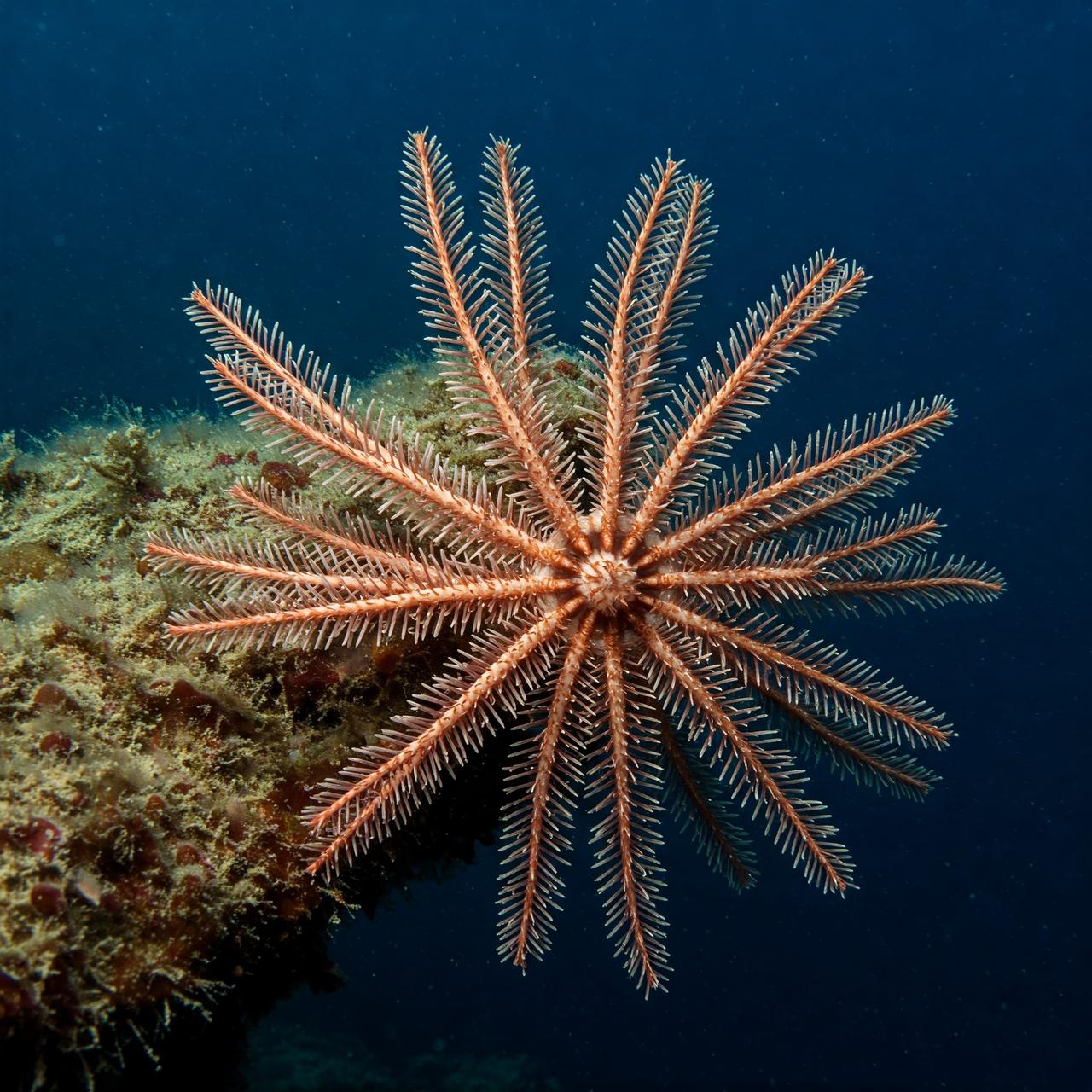
The Basket Star is a marine animal belonging to the class Ophiuroidea of starfish, known for its intricate, branching arms and its habitat in deep seas. These creatures are primarily active at night, spreading their arms like nets to capture plankton and small organisms. Basket stars play an important role in marine ecosystems and attract scientific interest due to their unique morphology.
Basket stars are marine animals characterized by a central disc from which numerous branched arms extend. These arms form a net-like structure used to capture food. The length of the arms varies by species, with some reaching up to one meter. The central disc can grow up to 14 centimeters in diameter.
Small spines and hooks at the tips of the arms facilitate prey capture. The body structure of basket stars is flexible and durable, enabling them to survive in harsh marine conditions. Additionally, they possess the ability to regenerate lost arms.
Basket stars are typically found in waters deeper than 50 meters, with some species living at depths of thousands of meters. They have a wide distribution ranging from the North Pole to the South Pole and are more common in cold, nutrient-rich waters. These animals prefer rocky seabeds, coral reefs, and areas among sponges. In regions with strong ocean currents, they position their arms to face the current to maximize food capture.
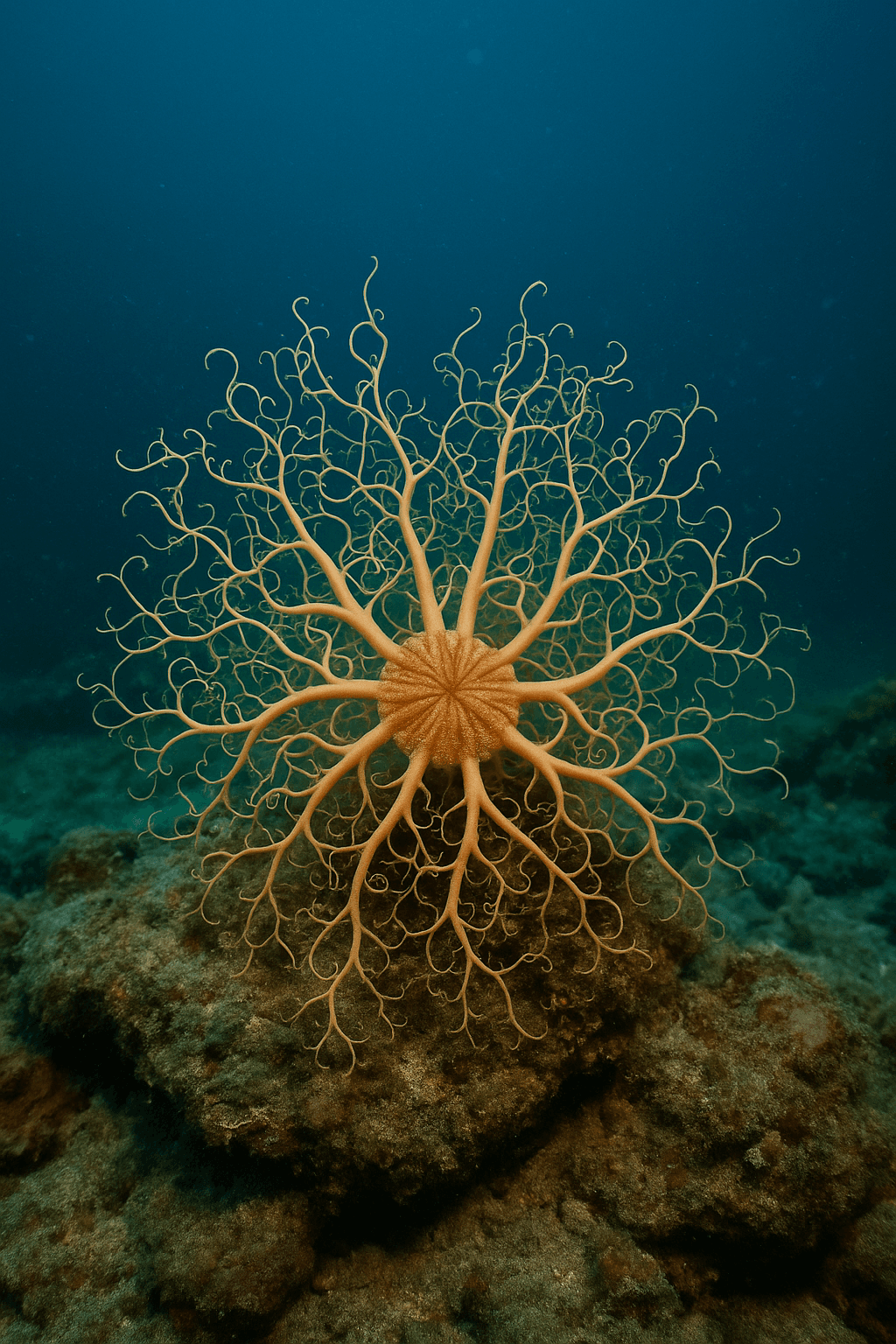
This image was generated by artificial intelligence.
Basket stars are generally nocturnal. During the day, they tightly curl their arms to protect themselves and remain hidden. At night, they extend their arms to begin feeding. This behavior is crucial for avoiding predators and conserving energy. Limited information exists regarding their social structure, but they are typically observed to live solitary lives. Some species form symbiotic relationships with specific coral types, living on their surfaces.
Basket stars are suspension feeders, capturing plankton and other small organisms suspended in the water column using their arms. Fine structures on their arms filter food particles and direct them toward the mouth. During feeding, they orient their arms against the current to increase the likelihood of capturing food. This strategy is particularly effective in regions rich in plankton. Some species also feed on detritus and small invertebrates.
Basket stars reproduce through external fertilization. Male and female individuals release eggs and sperm into the water, where gametes unite to form fertilized eggs. These fertilized eggs develop into free-swimming larvae that lead a planktonic existence. After a certain period, the larvae settle on the seafloor and metamorphose into adults. In some species, asexual reproduction has been observed through regeneration of detached arms.
Basket stars face environmental threats such as climate change, rising sea temperatures, and ocean acidification. These factors can negatively impact larval survival rates and growth speeds. Additionally, human activities including deep-sea mining and trawling threaten their habitats. Therefore, establishing marine protected areas and promoting sustainable fishing practices are essential for the conservation of this species.
Basket stars generally have no direct interaction with humans. However, they are studied with interest by aquarium enthusiasts and marine biologists. Some species serve as biological indicators of marine ecosystem health. During tourism and diving activities, it is important to avoid damaging their habitats. To enable these animals to maintain their natural behaviors, they should be encouraged to live in protected, undisturbed areas free from human interference.
"Basket Star." Monterey Bay Aquarium. Accessed May 12, 2025. https://www.montereybayaquarium.org/animals/animals-a-to-z/basket-star
"Basket Star." Seattle Aquarium. Accessed May 12, 2025. https://www.seattleaquarium.org/animal/basket-star
"Basket Stars." The Marine Detective. Accessed May 12, 2025. https://themarinedetective.com/2023/09/25/basket-stars/
"Chilean Basket Star." Oceana.
"Creatures of the Deep: Basket Star." Ocean Today. Accessed [Date]. https://oceantoday.noaa.gov/creaturesofthedeep_basketstar/
Basket Star. Monterey Bay Aquarium Research Institute (MBARI). Accessed [Date]. https://www.mbari.org/animal/basket-star/
Brittle and Basket Stars: Ophiuroidea." Encyclopedia.com.

Physical Characteristics
Habitat and Distribution
Behavior and Social Structure
Feeding Habits
Reproduction and Larvae
Threats and Conservation Efforts
Relationships with Humans