


This article was automatically translated from the original Turkish version.
+1 More
Bayesian statistics is defined as a branch of statistics that relies on Bayes’ Theorem to model probabilities and uncertainties. Unlike classical statistics, it aims to produce more accurate predictions by updating existing knowledge (pioneer probability) with newly obtained data.
Thomas Bayes (1701–1761) was an English mathematician known for his contributions to statistics and probability theory. His eponymous Bayes’ Theorem has had a profound impact on Bayesian statistics. The work containing this theorem, titled An Essay Towards Solving a Problem in the Doctrine of Chances, was published posthumously in 1763 by his friend Richard Price.
The computational method and necessary explanations regarding Bayes’ Theorem are provided below place.
Naive Bayes: The theorem illustrates the relationship between conditional probabilities and overall probabilities within a probability distribution for a random variable. Algorithm calculates the probability of each possible state for an element and classifies it according to the state with the highest probability.
Bayes’ Theorem is applied across numerous distinct fields. Below are specific examples of its use in various domains, particularly in decision support systems and predictive modeling.
The Probability Integral Transform is a statistical technique used to convert random variables into a specified distribution. It is particularly employed in random number generation, hypothesis tests, and statistical modeling.
Within the scope of Transformation, it is applied to construct an equivalent values set, after which a test is performed to determine whether the newly created data set conforms to a standard distribution.
A second application of the transform is to reduce complexity in multivariate datasets by working with variables assumed to follow a standard distribution.
A third application relies on the inverse of the probability integral transform, which converts random variables from a standard distribution into a desired target distribution uniform.
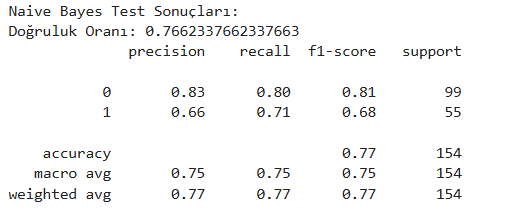
Below are the metric values calculated after running the model in studies conducted under Machine learning. An example painting resulting from a machine learning study is presented below.
A. Gelman, J. B. Carlin, H. S. Stern, D. B. Dunson, A. Vehtari, and D. B. Rubin, Bayesian Data Analysis, 3rd ed. Boca Raton, FL: CRC Press, 2013.
D. S. Sivia and J. Skilling, Data Analysis: A Bayesian Tutorial, 2nd ed. Oxford, UK: Oxford University Press, 2006.
J. E. Gentle, Computational Statistics, New York, NY: Springer, 2009.
P. J. Bickel and K. A. Doksum, Mathematical Statistics: Basic Ideas and Selected Topics, 2nd ed. Upper Saddle River, NJ: Pearson, 2006.
T. Bayes, An Essay towards Solving a Problem in the Doctrine of Chances. London, UK: Philosophical Transactions of the Royal Society, 1763.

Applications
Probability Integral Transform
Example Table