

This article was automatically translated from the original Turkish version.
+1 More
Bayramören Bridge
Location | Bayramören Türkiye Çankırı | ||||||||
|---|---|---|---|---|---|---|---|---|---|
Water It Crosses | Melan Çayı | ||||||||
Construction Material | Wood | ||||||||
Purpose of Use(s) | Pedestrian Access | ||||||||
Cultural Characteristic | Tangible Cultural Heritage | ||||||||
Current Condition | In Use | ||||||||
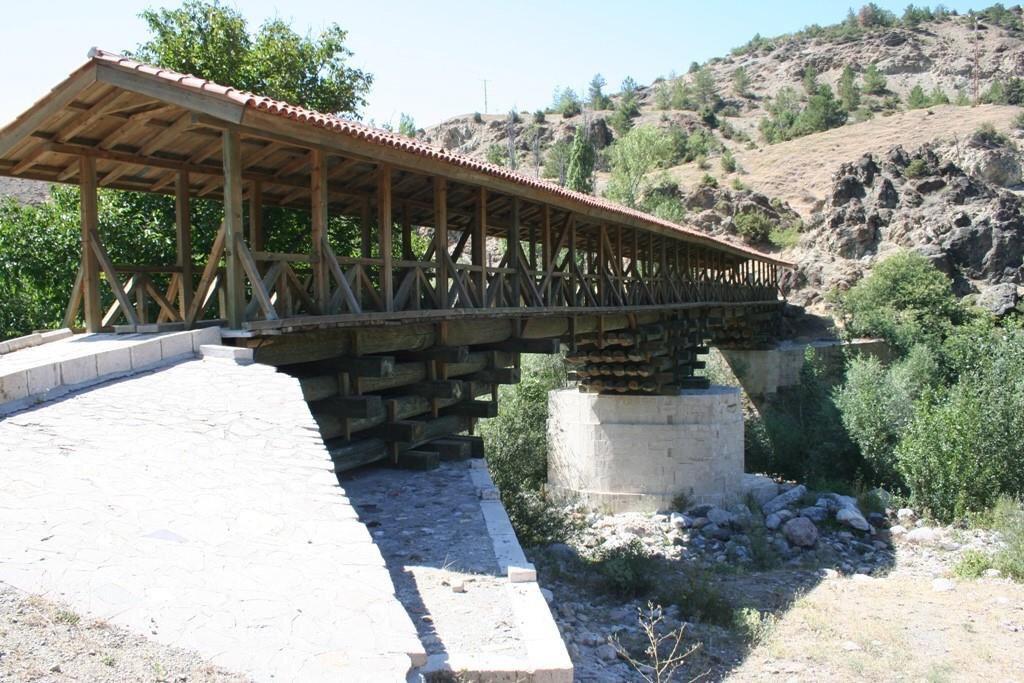
Bayramören Bridge is a historical bridge located in the Bayramören district of Çankırı Province, constructed using a combination of wood and stone materials. Reflecting traditional building techniques, the bridge was erected to meet regional transportation needs and is regarded as a tangible example of local architectural understanding.
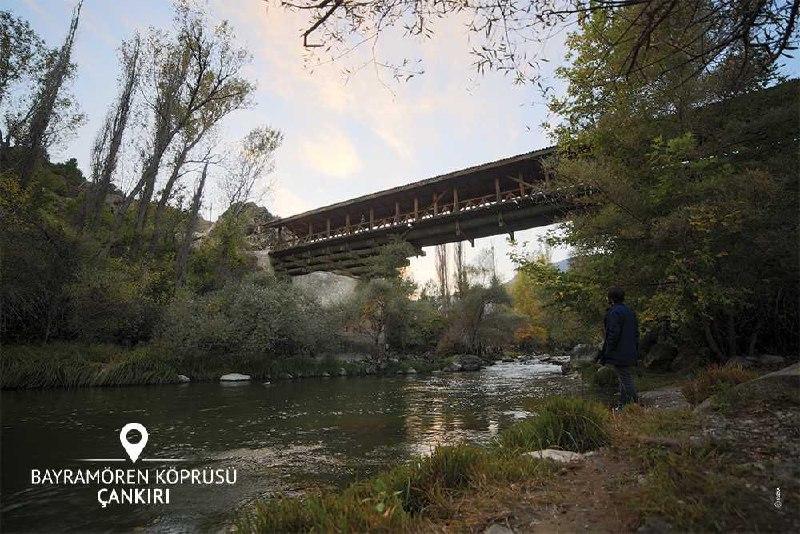
Bayramören Köprüsü (Culture Portal)
No written document confirms the exact construction date of Bayramören Bridge. It is known that the structure was built in the past to serve the daily transportation needs of the local population. Over time, it has undergone various repairs due to natural factors and usage. Restoration efforts have been carried out to preserve its original architectural character, allowing the bridge to survive to the present day.
The bridge consists of two spans. Its supporting piers are constructed from cut stone, while the superstructure is made of wooden elements. The wooden components are assembled using thick beams joined by traditional methods. The entire structure is covered by a gabled tile roof, designed to protect wooden bridge elements from rain and environmental exposure. This architectural arrangement has contributed significantly to the bridge’s long-term durability.

Bayramören Köprüsü (Culture Portal)
During its construction period, Bayramören Bridge was used to facilitate pedestrian and animal passage. It served as a vital link between settlements for agricultural activities and daily life. Today, it continues to exist not only as a functional transportation structure but also as a historical monument.
The bridge is an important cultural heritage element in Bayramören district, reflecting traditional building concepts. As a concrete example of local architectural techniques and the wooden construction tradition, it embodies the historical identity of the region. It is also among the structures preserved in the district’s cultural memory.
Anadolu Ajansı. “Melan Çayı Üzerindeki Tarihi Ahşap Köprü Yıllardır Yaya Ulaşımını Sağlıyor.” AA, November 1, 2022. Accessed January 12, 2026. https://www.aa.com.tr/tr/yasam/melan-cayi-uzerindeki-tarihi-ahsap-kopru-yillardir-yaya-ulasimini-sagliyor/2726346#
Ministry of Culture and Tourism of the Republic of Türkiye.Bayramören Köprüsü – Historical Wooden Bridge. Culture Portal. Accessed January 12, 2026. https://www.kulturportali.gov.tr/turkiye/cankiri/gezilecekyer/tarihi-ahsap-kopru
T.C. Ministry of Culture and Tourism,Çankırı İl Directorate of Culture and Tourism. Köprüler. Accessed January 12, 2026. https://cankiri.ktb.gov.tr/TR-70623/kopruler.html
T.C.Çankırı Valiliği.Bayramören Tarihi Wooden Bridge. Accessed January 12, 2026. https://cankiri.gov.tr/bayramoren-tarihi-ahsap-koprusu

Bayramören Bridge
Location | Bayramören Türkiye Çankırı | ||||||||
|---|---|---|---|---|---|---|---|---|---|
Water It Crosses | Melan Çayı | ||||||||
Construction Material | Wood | ||||||||
Purpose of Use(s) | Pedestrian Access | ||||||||
Cultural Characteristic | Tangible Cultural Heritage | ||||||||
Current Condition | In Use | ||||||||
History
Architectural Features
Purpose and Function
Cultural and Local Significance