This article was automatically translated from the original Turkish version.
Bee Maya (Cartoon)
Publication Date | 1975 (Original), 2012 (Modern Adaptation) | ||||||||
|---|---|---|---|---|---|---|---|---|---|
Type(s) | Comedy Adventure Animation | ||||||||
Number of Seasons | 78 episodes) 2 (2012 version: 1 season | ||||||||
Channel(s) | TRT Çocuk | ||||||||
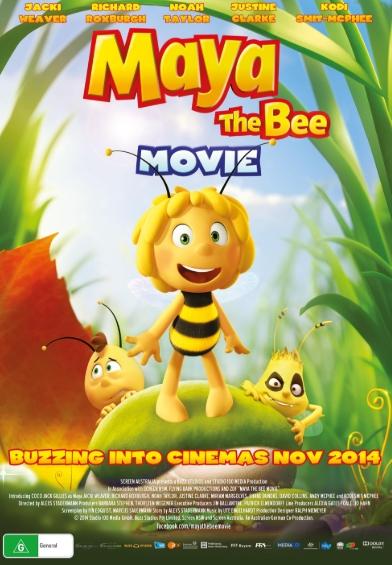
Maya the Bee is an animated television series originally broadcast in Japan in 1975 on TV Asahi, adapted from Waldemar Bonsels’ 1912 novel Die Biene Maja. In Türkiye, the series was aired on TRT Çocuk and was re-adapted in 2012 by Studio 100 as a 3D animated version. This modern adaptation consists of 78 episodes, each 13 minutes long, and is available on the Tabii platform. Directed by Alexs Stadermann, the series falls within the adventure and comedy genres aimed at child audiences. It revolves around the adventures of a bee hive and its surrounding natural environment.
Maya the Bee Theme Song (YouTube)
The series follows the adventures of Maya, a young and curious bee who defies the rigid rules of the hive and possesses an independent spirit. Alongside her closest friend Willy, she explores nature and attempts to solve the problems they encounter in each episode. The story highlights Maya’s interactions with wild bees, spiders, and other creatures of the natural world. The 2012 version focuses on Maya’s escapades beyond the hive, her friendships, and her learning experiences. The series explores Maya’s journey of self-discovery and her contributions to her community.
The series addresses themes of curiosity, courage, friendship, love of nature, and individual freedom. Maya’s defiance of hive rules underscores the importance of individuality and personal liberty. Her interactions with other creatures of nature emphasize environmental awareness and solidarity. The problem-solving processes of Maya and her friends reflect the concepts of learning and growth. Friendship, particularly the bond between Maya and Willy, is one of the central elements of the narrative. The series delivers messages to children about protecting nature and respecting differences.
As a television series, Maya the Bee does not have box office performance figures. Regularly broadcast on TRT Çocuk, the series has reached a wide audience among child viewers. All episodes are accessible on the Tabii platform and have garnered millions of views on social media, particularly on X, through promotional videos. Information on Beyazperde.com notes that the 2012 version attracted child audiences with its colorful visuals and educational content. The series has been a core program in TRT Çocuk’s broadcast lineup.
The series was originally produced in Japan in 1975 by Nippon Animation and re-adapted in 2012 by Studio 100 as a 3D animated version. The 2012 version was created using digital animation studios, featuring detailed visual designs for nature-themed scenes. The screenplay was written by Fin Edquist. The music, composed by Fabian Koci, creates a cheerful and adventurous atmosphere suited to the series. In Türkiye, it was specially dubbed for TRT Çocuk and released on the Tabii platform. The production aimed to deliver educational and entertaining content for child audiences.
The series features a vibrant cast of characters. The main characters and their Turkish voice actors are as follows:
The Turkish dubbing was produced specifically for TRT Çocuk. The voice performances by Dilara Kürküt and Onur Akgülgil emphasize the energetic and sincere nature of the characters. Voice actor information for some supporting characters has not been documented in available sources.
“Arı Maya Görseli.” IMDb. Accessed July 3, 2025. https://www.imdb.com/title/tt3336368/mediaviewer/rm144440064/?ref_=tt_ov_i.
“Arı Maya Tanıtım Videosu.” YouTube. Accessed July 3, 2025. https://www.youtube.com/watch?v=f9eXeZBHrn8.
“Arı Maya Ödülleri.” IMDb. Accessed July 3, 2025. https://www.imdb.com/title/tt3336368/awards/?ref_=tt_awd.
“Arı Maya.” TRT Çocuk. Accessed July 3, 2025. https://www.trtcocuk.net.tr/ari-maya.

Bee Maya (Cartoon)
Publication Date | 1975 (Original), 2012 (Modern Adaptation) | ||||||||
|---|---|---|---|---|---|---|---|---|---|
Type(s) | Comedy Adventure Animation | ||||||||
Number of Seasons | 78 episodes) 2 (2012 version: 1 season | ||||||||
Channel(s) | TRT Çocuk | ||||||||
Plot
Themes
Box Office Performance
Production
Characters and Voice Cast