+1 More

Benito Mussolini, a journalist, politician, and statesman, served as Prime Minister of Italy from 1922 to 1943 and as Head of State of the Italian Social Republic from 1943 to 1945. He began his political career within the socialist movement but broke away during the First World War to develop fascist ideology. After the March on Rome in 1922, he assumed control of the state under the title of "Duce". During the Second World War, he aligned with the Axis Powers and was killed in 1945 by Italian resistance fighters following military and political collapse.
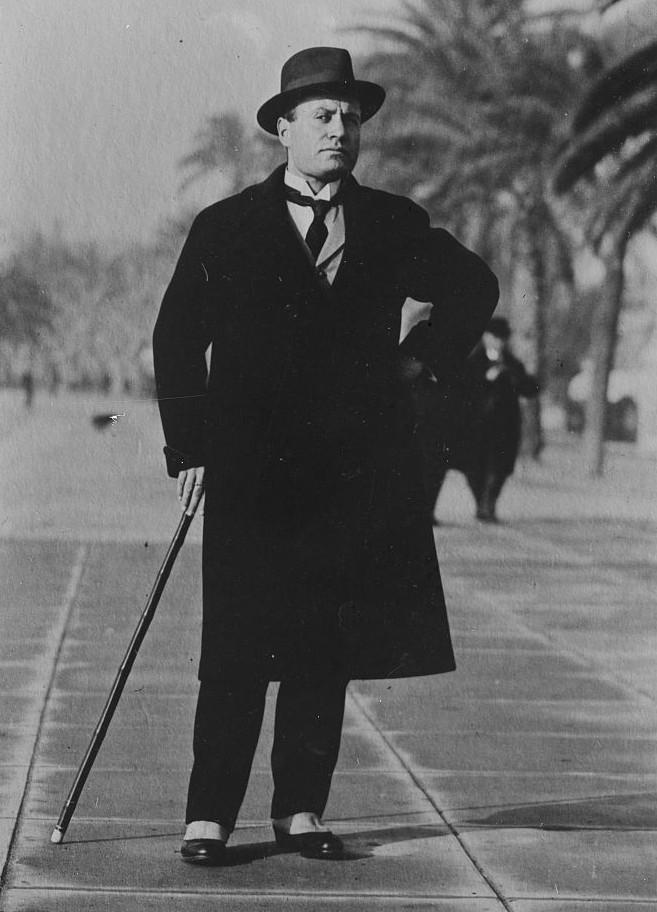
Benito Amilcare Andrea Mussolini was born on 29 July 1883 in the town of Dovia di Predappio, near Forlì in Italy. His father, Alessandro Mussolini, was a blacksmith and a socialist activist; his mother, Rosa Maltoni, was a schoolteacher. Mussolini completed his education in 1901 with a teaching diploma and worked briefly as a teacher before traveling to Switzerland in 1902 to evade compulsory military service.
During his time in Switzerland, he became acquainted with socialist ideas, participated in various union activities, and began writing political articles. In 1904, he returned to Italy to complete his military service and then intensified his activities in journalism and politics.【1】 In 1912, he was appointed editor-in-chief of Avanti!, the official newspaper of the Italian Socialist Party (PSI).

Mussolini’s Youth (World History Encyclopedia)
At the outbreak of the First World War, Mussolini initially supported the PSI’s policy of “absolute neutrality”, but soon changed his position and began advocating for Italy’s entry into the war on the side of the Allied Powers. Due to this ideological split, he was expelled from Avanti! and the Socialist Party. In response, on 15 November 1914, he founded the newspaper Il Popolo d'Italia to promote interventionist ideas.
After the war ended, on 23 March 1919, he launched the movement “Fasci Italiani di Combattimento” (Italian Combat Leagues) at a meeting in Milan. This movement was institutionalized in 1921 as the National Fascist Party (Partito Nazionale Fascista – PNF). Its early political platform was shaped by the economic crisis, social unrest, and the perception of a “mutilated victory” (vittoria mutilata) following the First World War.
The economic instability and social upheaval in Italy after the First World War created favorable conditions for the rise of the National Fascist Party (PNF). Under Mussolini’s leadership, the fascist movement, through paramilitary groups known as the “Blackshirts” (Camicie Nere), began seizing control of local administrations and trade unions. In the 1921 elections, the PNF won 35 seats in parliament and, as the political crisis deepened, began demanding direct control of the government.
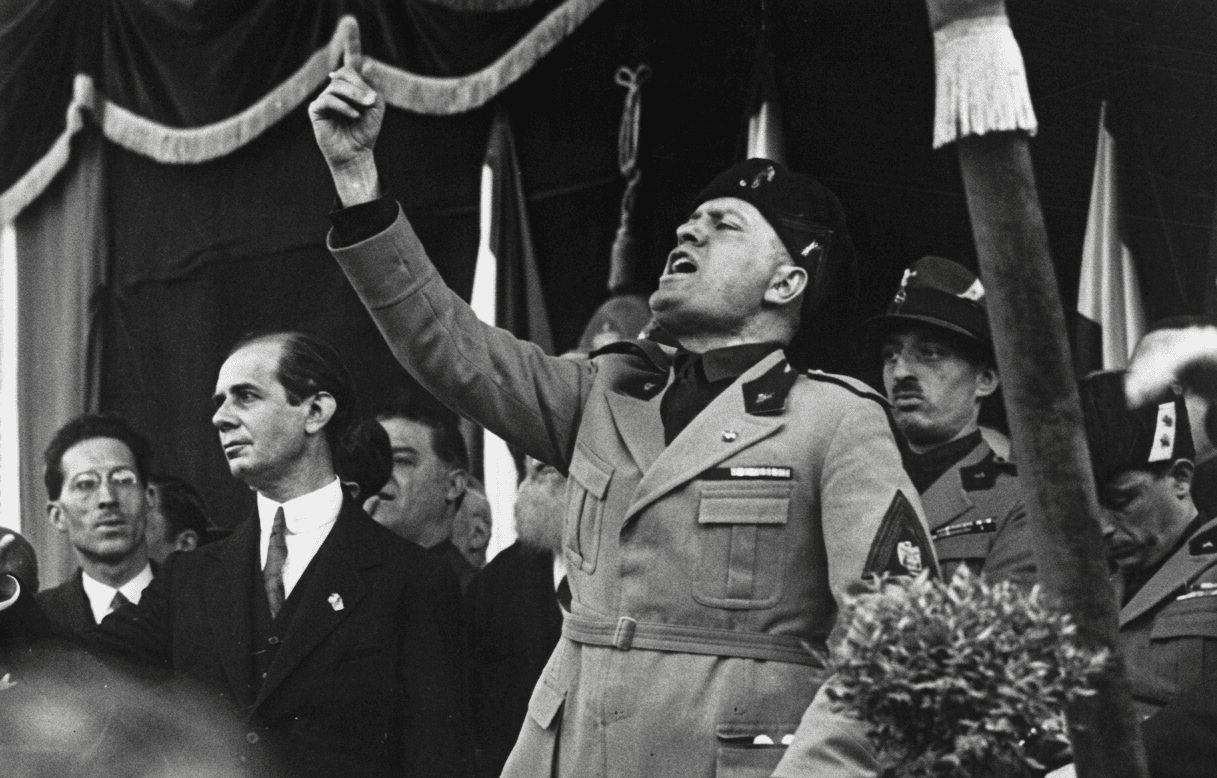
At a large Fascist Congress held in Naples on 24 October 1922, Mussolini declared: “If the government does not give us power, we will take it by marching on Rome.”【2】 Following this declaration, thousands of Blackshirts from across Italy launched the “March on Rome” (Marcia su Roma) between 27 and 28 October 1922. Prime Minister Luigi Facta requested a state of emergency, but King Victor Emmanuel III refused to sign it, fearing civil war.
Considering the support of the army and conservative circles, the King invited Mussolini by telegram to Rome on 29 October 1922 and appointed him to form a government. Mussolini arrived in Rome on 30 October and established a coalition government that included fascists as well as nationalists, liberals, and Catholics. This event marked the beginning of the gradual dismantling of Italy’s parliamentary system and the construction of an authoritarian regime.
Italian fascism rejected liberalism, which prioritized individual interests over the state, and socialism, which centered on class struggle. Instead, it embraced the principle that “everything within the state, nothing outside the state, nothing against the state.” This ideological framework established the absolute authority of the state and upheld national unity against all forms of division.
Institutional State Structure (Corporatism): The fascist economic model was built on a “corporatist” system designed to eliminate class conflict. Under this system, workers and employers were organized into state-controlled “corporations” (professional associations). The Carta del Lavoro (Labour Charter), proclaimed in 1927, formalized this structure, banning strikes and lockouts and aiming to coordinate all economic activity according to national interests.

Mussolini at a Congress (World History Encyclopedia)
Production Policies and Autarky: The regime adopted a policy of “autarky” (self-sufficiency). In particular, the “Battle for Grain” (Battaglia del Grano), launched in 1925, declared a state of emergency in agriculture to reduce Italy’s dependence on food imports. In industry, strategic sectors were brought under state control, and the state’s share of the economy was expanded through the creation of the IRI (Institute for Industrial Reconstruction) in 1933. These policies aimed to transform Italy into a self-reliant military power insulated from foreign trade.
Social Goals: The regime’s social objective was to create a “new man.” To this end, youth organizations such as the Balilla were heavily promoted, and the education curriculum was restructured according to fascist principles. Campaigns such as the “Battle for Births” encouraged population growth to supply the manpower needed for military and economic power. Women’s social roles were defined primarily in terms of family and motherhood, while leisure activities were monitored through state-controlled institutions such as the Opera Nazionale Dopolavoro.
The fascist regime’s foreign policy was based on the goal of reviving the glory of the Roman Empire and establishing Italy as a world power. Central to this strategy was the vision of “Mare Nostrum” (Our Sea), aiming to turn the Mediterranean into an Italian lake.【3】
Italy’s expansionist policy focused particularly on Africa and the Balkans. One of the most critical phases of this strategy was the Invasion of Abyssinia (Ethiopia), which began in 1935. Mussolini argued that the promises made to Italy after the First World War had been broken and that his country deserved the colonies it had been denied. Despite sanctions imposed by the League of Nations, the invasion was carried out, and in 1936 the Italian Empire of East Africa was proclaimed.
In line with the “Mare Nostrum” policy, Italy claimed sovereignty over strategic islands and coastlines in the Mediterranean. Influence in Albania was increased, and the country was formally invaded and annexed in 1939. Italian control over the Dodecanese Islands was also strengthened, creating a military presence in the Eastern Mediterranean that alarmed both Türkiye and Greece.
Mussolini adopted a revisionist stance against the Versailles system, which defined the post-war international order and borders. He sought closer ties with Germany, which shared similar goals, and attempted to reshape the balance of power in Europe in favor of colonial ambitions. Foreign policy was used as a tool to consolidate nationalist sentiment domestically and secure raw material sources for autarky.
Until the mid-1930s, Italy pursued a policy of preserving the European status quo and defending Austria’s independence. However, after the invasion of Abyssinia, its relations with Western powers (Britain and France) deteriorated, prompting a strategic shift in foreign policy.【4】
Germany’s refusal to join sanctions against Italy during the Abyssinian crisis laid the foundation for closer relations between the two regimes. In October 1936, a series of agreements established the “Rome-Berlin Axis” (Asse Roma-Berlino). This alignment was formalized into a military alliance with the signing of the “Pact of Steel” (Patto d’Acciaio) on 22 May 1939, which obligated both countries to provide mutual military support in the event of war.
Italy joined the Anti-Comintern Pact, originally signed by Germany and Japan on 6 November 1937. This bloc, formed to oppose communism and the expansion of the Soviet Union, transformed ideological solidarity into an international alliance. In December of the same year, Italy officially withdrew from the League of Nations in protest against the sanctions imposed over the invasion of Abyssinia.

Mussolini (left) and Hitler (World History Encyclopedia)
During the lead-up to the Second World War, Mussolini attempted to assume the role of a mediator. At the Munich Conference of 1938, which addressed the Czechoslovak crisis, he acted as a diplomatic intermediary between Britain, France, and Germany, helping to delay the outbreak of war. However, during this period, Italy continued to deepen its strategic dependence on Germany to complete its military preparations and consolidate its dominance in the Mediterranean.
Italy declared itself “non-belligerent” at the outbreak of the Second World War on 1 September 1939 due to insufficient military preparedness. However, emboldened by Germany’s rapid advance against France, Mussolini declared war on Britain and France on 10 June 1940 and joined the Axis Powers to secure a share of the spoils.
Italy’s war strategy focused on breaking British dominance in the Mediterranean and North Africa. The September 1940 invasion of Egypt from Libya initially achieved limited gains but ended in retreat after British counterattacks. In East Africa (Eritrea and Ethiopia), Italian forces were defeated by 1941 by British-supported local troops, ending Italian presence in the region.
To counter German influence in the Balkans, Mussolini launched an invasion of Greece on 28 October 1940. However, the Italian army, hampered by logistical problems and harsh weather, failed to overcome Greek resistance and was forced to retreat to the Albanian border. This failure prompted German intervention in the Balkans and stripped Italy of operational independence in the region.
The defeat at El Alamein at the end of 1942 and the subsequent Allied capture of all of North Africa marked a strategic turning point for Italy. On 10 July 1943, Allied forces landed on Sicily (Operation Husky), directly threatening the Italian mainland. These military failures intensified internal unrest within the fascist regime and undermined its authority.【5】
Following the Allied landing on Sicily, opposition within the fascist regime mobilized. During the night of 24–25 July 1943, the Grand Council of Fascism approved a motion proposed by Dino Grandi, stripping Mussolini of his powers and returning them to the King. Subsequently, Mussolini was dismissed by King Victor Emmanuel III, arrested, and imprisoned at the Campo Imperatore hotel on Gran Sasso.
On 12 September 1943, Mussolini was rescued by German commandos in Operation Oak (Eiche). With Hitler’s support, he established the Republican Fascist Party and proclaimed the Italian Social Republic in northern Italy. Because its administrative center was in the town of Salò, this regime was also known as the “Republic of Salò.” However, it was effectively under German military control and continued to lose territory to the advancing Allied forces and local partisan resistance.
In April 1945, as Allied forces entered the Po Valley and partisans launched a general uprising, Mussolini fled Milan in an attempt to reach Switzerland. On 27 April 1945, while traveling with a German military convoy near the village of Dongo on Lake Como, he was captured by Italian partisans (the 52nd Garibaldi Brigade).
On 28 April 1945, Mussolini was executed by firing squad in Giulino di Mezzegra alongside his mistress Claretta Petacci and several fascist officials. Their bodies were taken to Milan and publicly displayed in Piazzale Loreto, marking the official end of the fascist regime in Italy.
[1]
Ayşe Çelik, "Benito Mussolini ve Faşizm Adlı Eserin Transkripsiyonu ve Değerlendirilmesi" (Yüksek Lisans Tezi, Marmara Üniversitesi, 2019), 6. https://tez.yok.gov.tr/UlusalTezMerkezi/TezGoster?key=T1mWGp9MngYYkCSgiJvtVrvVNI9xN1nU0cb10Cy4C-L17RnA_XwYzZsowjRxozix
[2]
Ayşe Çelik, "Benito Mussolini ve Faşizm Adlı Eserin Transkripsiyonu ve Değerlendirilmesi" (Yüksek Lisans Tezi, Marmara Üniversitesi, 2019), 33. https://tez.yok.gov.tr/UlusalTezMerkezi/TezGoster?key=T1mWGp9MngYYkCSgiJvtVrvVNI9xN1nU0cb10Cy4C-L17RnA_XwYzZsowjRxozix
[3]
Dilek Toprak, "Türk Basınında Mussolini (1926-1939)" (Yüksek Lisans Tezi, Yozgat Bozok Üniversitesi, 2024), 46-47. https://tez.yok.gov.tr/UlusalTezMerkezi/TezGoster?key=UjlM15wKZGQW6TLC0pvCt0Lkoz3OQgV6ncRklVZpR5EIPN3yekGDugS4tUgS_fjK
[4]
Emine Göztaş, "Türk Basınında Mussolini İtalya’sı (1922-1945)" (Doktora Tezi, Selçuk Üniversitesi, 2024), 162-163. https://tez.yok.gov.tr/UlusalTezMerkezi/TezGoster?key=cr4SkWLaRMhkDRBjqthpsWC-lAsltXavvJnGxrtlriqhCpf7yFYcwF3zfKaLctEE
[5]
Ayçin Demir, "Türk Basınında Mussolini İtalyası (1939-1945)" (Yüksek Lisans Tezi, Marmara Üniversitesi, 2016), 92. https://tez.yok.gov.tr/UlusalTezMerkezi/TezGoster?key=Br_XTptK8CZ70f0JGX9xEtx-VudLd8Bv7jONveYKNJ1mT6CyJijn0hw7t_-bMepD

Early Life
Rise to Power: The March on Rome and the Establishment of the Fascist Government
Ideological and Economic Foundations of Fascism
Foreign Policy and Expansionist Strategies
Expansionist Goals and Invasions
Mediterranean and Balkan Policy
Revisionist Diplomacy
International Relations and Alliances
The Rome-Berlin Axis and the Pact of Steel
The Anti-Comintern Pact and Withdrawal from the League of Nations
Pre-War Diplomacy and the Munich Conference
The Second World War
African and Mediterranean Fronts
The Balkans and the Invasion of Greece
Defeats and Collapse
Downfall and Death
The Italian Social Republic (Republic of Salò)
Death and the End of the Regime