


This article was automatically translated from the original Turkish version.

On 29 January 2025, NASA made an announcement regarding the scientific findings from the OSIRIS-REx mission (Origins, Spectral Interpretation, Resource Identification and Security – Regolith Explorer), which delivered a sample from the Bennu asteroid to World in 2023. September
This image sequence, captured by the OSIRIS-REx spacecraft, shows Bennu in a full rotation from a distance of approximately 50 miles (80 kilometers). (NASA/Goddard/University of Arizona)
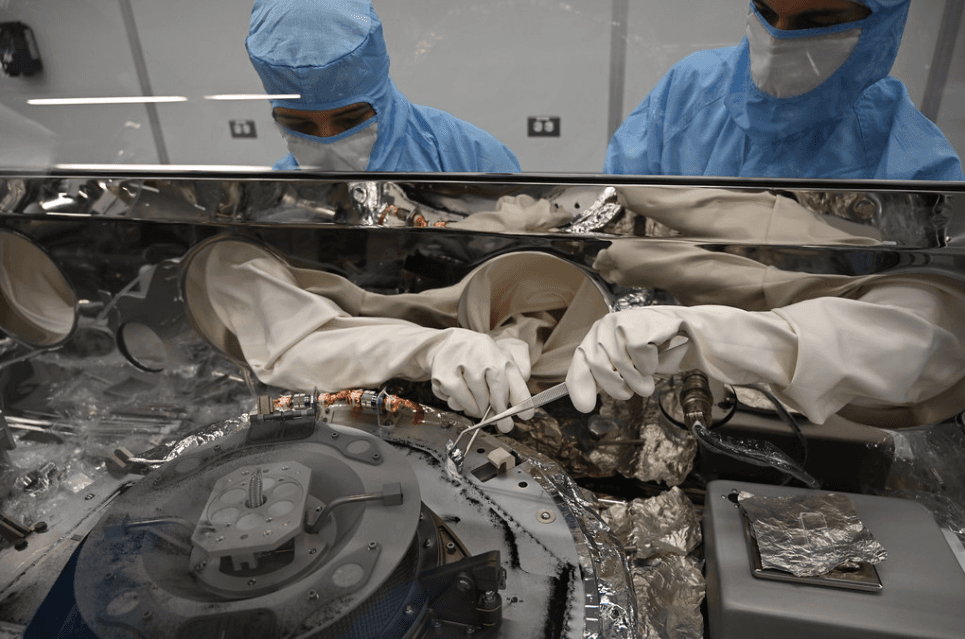
Analysis of the Bennu sample at NASA’s Goddard Space Flight Center. (Credit: NASA)
At the briefing facilitated by Live broadcast, speakers included Nicky Fox, Associate Administrator for the Mission Directorate at NASA Headquarters Science, senior scientist Danny Glavin from NASA Goddard Space Flight Center in Greenbelt responsible for the spacecraft’s return, OSIRIS-REx project scientist Jason Dworkin from NASA Goddard, meteorite curator Tim McCoy from the Smithsonian National Museum of Natural History, and cosmic mineralogist Sara Russell from the Natural History Museum.
Analyses of the rock and dust material returned from Bennu by NASA’s OSIRIS-REx spacecraft revealed that these compounds may have had a salty water history that acted as “primordial soup,” facilitating their interaction and combination into molecules essential for life.
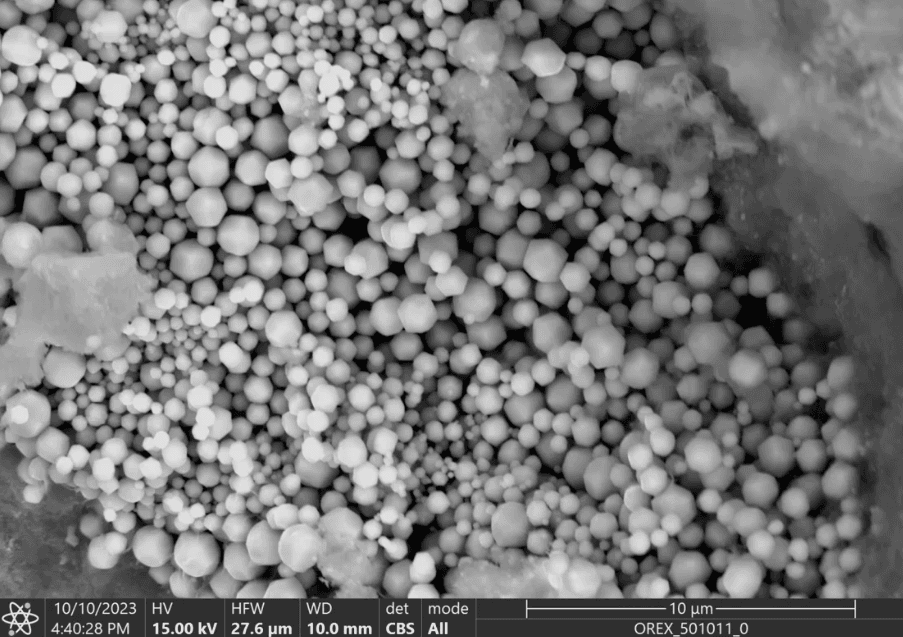
Magnetite (iron oxide) crystals smaller than 1 micrometer were identified in Bennu samples. (Rob Wardell, Tim Gooding, Tim McCoy, Smithsonian)
The findings indicate that, while not constituting life itself, the necessary conditions for life emerged early in the sun system and increase the likelihood that life could have arisen on other planets and moons.
At the briefing, Nicky Fox stated, “Asteroids offer us a time capsule of our planet’s past, and Bennu’s samples are playing a crucial important role in helping us understand what components were present in our solar system before life began on Earth.”
In papers published in Nature and Nature Astronomy, scientists from NASA and other institutions shared the first in-depth analyses of the minerals and molecules found in the Bennu samples delivered to Earth by OSIRIS-REx in 2023.
In the Nature article published under Work, it was revealed that Bennu’s parent body likely contained abundant water, some of which evaporated, leaving behind salty brine. According to the Nature Astronomy paper, this brine contained thousands of organic compounds, including 14 of the 20 amino acids found in terrestrial organisms and all nucleotide bases that make up our DNA and RNA. This suggests that the fundamental molecules of life were present in our solar system almost from its inception.
It was clearly determined that Bennu contains remnants of evaporated water pools. However, the original sky body from which Bennu originated was likely not covered by oceans like Earth. McCoy described this situation as, “Definitely not a wet world with oceans on or beneath its surface, but rather a muddy world.” According to McCoy, the water pools were short-lived and only a few meters thick. McCoy summarized, “The discovery of clays, phosphates, salts, and evidence of ancient, sodium-rich brine shows not only that the necessary materials for the first steps toward life were present, but also that this environment was a promising environment for such steps to occur.”
Scientists also identified high levels of ammonia in the Bennu samples. Ammonia is highly significant for biological life because, when reacting with formaldehyde—as detected in the samples—it can form complex molecules such as amino acids under suitable conditions. When amino acids long together in chains, they form proteins, which are capable of performing nearly every biological function.
These life-building stones identified in the Bennu samples had been previously found in extraterrestrial rocks. However, their detection in an unaltered sample collected from space supports the idea that objects formed far from the Sun could have served as important source carriers of the raw pioneer ingredients for life throughout the solar system.
Scientists detected traces of 11 minerals formed by the long-term duration evaporation of water containing dissolved salts ranging from calcite to halite and sylvite. Similar salty waters have been detected throughout the solar system, including on the dwarf planet dwarf planet Ceres and Saturn’s moon Enceladus.
Although a few evaporites had previously been found in meteorites that fell to Earth, no complete set preserving the full evaporation process—lasting thousands of years or more—had ever been observed before. Some minerals found in the Bennu sample, such as trona, were identified for the first time in extraterrestrial material. This remarkable discovery suggests that the origins of organic life may have begun far away, in the depths of space, and later reached Earth.
Despite the answers provided by the Bennu sample, some questions remain unresolved. Many amino acid exist in two mirror-image forms, like left and right hands. Life on Earth uses almost exclusively the left-handed version, yet the Bennu samples contain an equal mixture of both. This suggests that amino acids may have begun in equal proportions during Earth’s early history. The reason why life on Earth favored the left-handed form over the right remains a mystery.
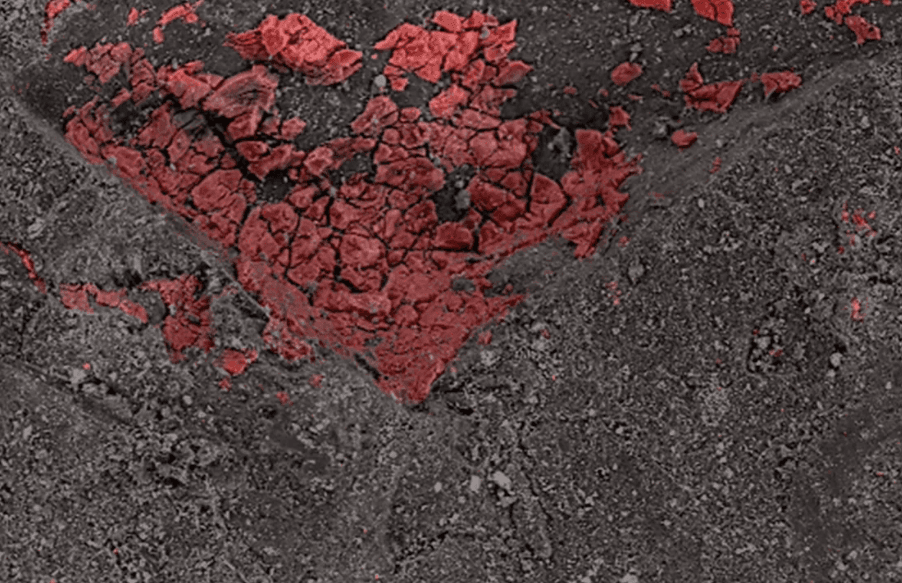
Magnesium sodium phosphate samples identified on Bennu. (Rob Wardell, Tim Gooding, Tim McCoy, Smithsonian)
Titles and lead authors of papers published as part of this study:
1- McCoy, T. J. An evaporite sequence from ancient brine recorded in Bennu samples【1】
For an extensive and illuminating visual archive released as part of this study, visit:
[1]
McCoy, T.J., Russell, S.S., Zega, T.J. et al. An evaporite sequence from ancient brine recorded in Bennu samples. Nature 637, 1072–1077 (2025). https://doi.org/10.1038/s41586-024-08495-6【1】
2- Glavin, D. P. Abundant ammonia and nitrogen-rich soluble organic matter in samples from asteroid (101955) Bennu

No Discussion Added Yet
Start discussion for "Bennu Asteroid Discovery (2025)" article