


This article was automatically translated from the original Turkish version.
+1 More
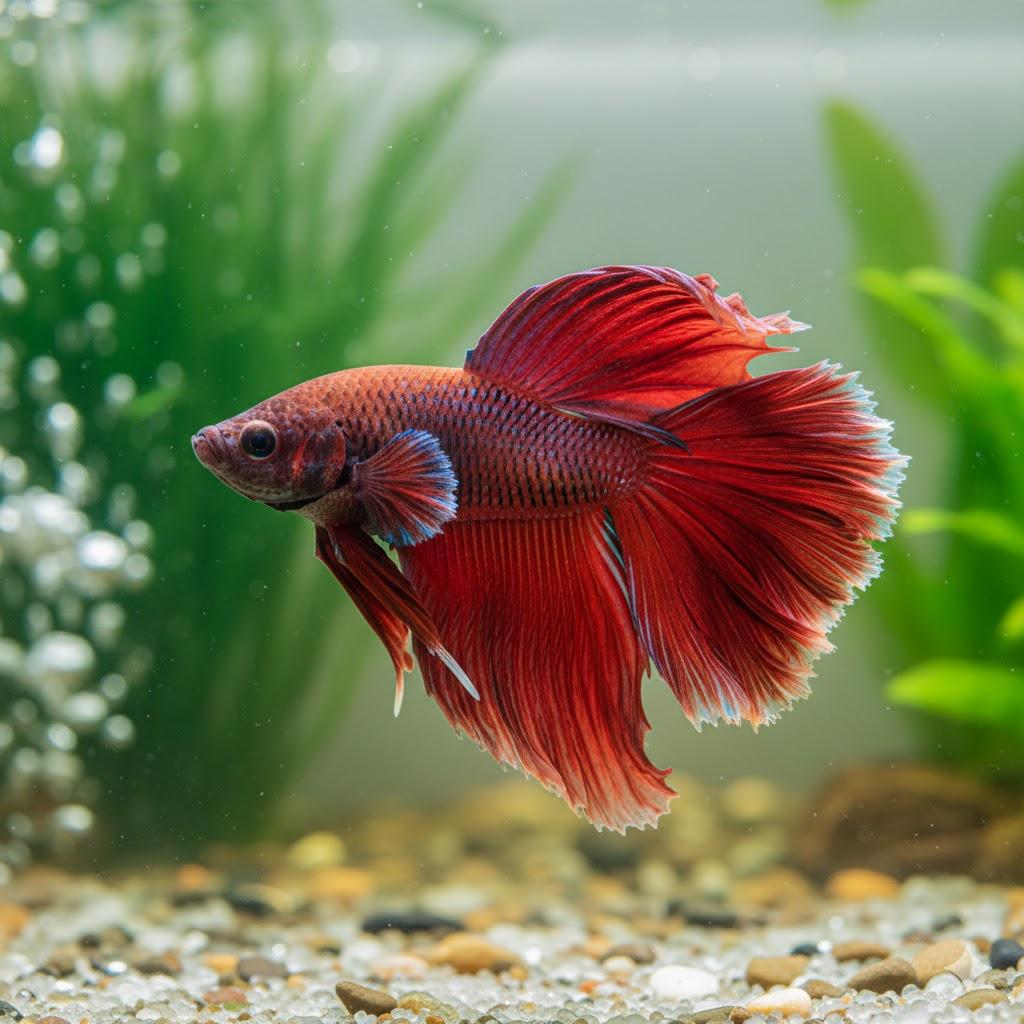
Betta Balığı
(Yapay Zeka ile Oluşturulmuştur)
Betta fish, also known as Siamese fighting fish, is a species of fish native to Southeast Asia and kept worldwide as a pet. Its scientific name, Betta splendens, is derived from Malay and Latin words; in Malay it means “hardy fish” and in Latin it means “shining”. This species is popular as a aquarium fish, and although it has more than 70 close relatives in the wild, Betta splendens is the most common and widely recognized variety.

Betta Balığı
(Yapay Zeka ile Oluşturulmuştur)
The Betta fish is common in wetland areas such as forests and swamps, particularly in Southeast Asia, including countries like Thailand, Malaysia, Vietnam, Laos and Cambodia. These fish typically inhabit warm, stagnant water pools and rice paddies. Evolved to survive in low-oxygen environments, Betta fish use a specialized structure called a “labyrinth organ” to breathe air directly from the water’s surface.
Betta fish are typically 2 to 3 inches (approximately 5 to 7.5 cm) in length and have an aerodynamic body structure. In captivity, these fish can display vivid colors including combinations of red, blue, orange, pink and purple.
Males usually have brighter colors and longer fins than females, traits that become more pronounced during courtship and aggression. In the wild, Betta fish tend to have duller colors, shorter fins and matte tones.

Betta Balığı (Betta splendens)
(Yapay Zeka ile Oluşturulmuştur)
Betta fish are highly territorial in the wild. Males defend themselves by flaring their fins and inflating their gills when encountering other males. Fights often result in physical injury and can sometimes be fatal. In captivity, male Betta fish are usually kept alone because housing them together can lead to violent confrontations. Therefore, it is not advisable to keep more than one male Betta in the same aquarium.
During the breeding season, Betta fish perform a complex courtship ritual. The male builds a bubble nest at the water’s surface. When the female approves of the nest, the male intensifies his colors and performs displays to attract her. During mating, the male chases the female and, after she releases eggs, he fertilizes them and guards them. The fry hatch within approximately 24 to 48 hours. Once the fry become independent, the father abandons them.

Betta Balığı (Betta splendens) Beslenme Süreci
(Yapay Zeka ile Oluşturulmuştur)
Betta fish are omnivorous, feeding in the wild on insects that fall into the water, plankton and small crustaceans. In aquariums, they are typically fed specialized high-protein fish food. Due to their rapid metabolism, they require frequent small meals. Betta fish also use five distinct feeding methods: biting, suction-like swallowing, grazing, jumping and spitting.
In their natural habitat, Betta fish have an average lifespan of about two years, while in captivity this can range from two to five years. Factors such as water quality, temperature and feeding habits significantly influence their lifespan.
Betta fish are susceptible to certain health issues. Common problems include fin rot, swim bladder disease and edema. Dirty water can lead to parasitic infections and other illnesses. Although Betta fish can tolerate poor water conditions for short periods, prolonged exposure to unclean water can severely affect their health. Additionally, due to their territorial nature, it is important not to house multiple male Betta fish in the same aquarium.
The Betta fish is classified as “Vulnerable” by the International Union for Conservation of Nature (IUCN). Its natural habitats are threatened by human activities such as agricultural and industrial pollution, water contamination and the expansion of palm oil plantations. Additionally, chemicals entering the water, particularly certain pharmaceuticals such as Prozac, can negatively impact Betta fish reproduction.
Samara et al. "The Effect of Different Natural Feeds on the Color Brightness of Ornamental Betta Fish (Betta splendens)." Egyptian Journal of Aquatic Biology and Fisheries 29, no. 4 (2025): 1129–1138. Accessed February 22, 2026. https://doi.org/10.21608/ejabf.2025.442761
İhsan Çelik, Pınar Çelik, and Sencer Akalın. “Larval Development of Siamese Fighting Fish (Betta splendens Regan, 1910).” Acta Natura et Scientia 3, no. 2 (2022): 137–147. Accessed February 22, 2026. https://doi.org/10.29329/actanatsci.2022.352.06
“High Variability in Aggression and Habituation to the Mirror Assay in Ornamental Siamese Fighting Fish *Betta splendens*.” *Acta Ethologica* 28 (2025): 139–150. Accessed February 22, 2026. https://link.springer.com/article/10.1007/s10211-025-00469-9


Betta Balığı
(Yapay Zeka ile Oluşturulmuştur)
No Discussion Added Yet
Start discussion for "Betta Fish (Betta splendens)" article
Natural Distribution
Physical Characteristics
Behavior and Social Structure
Reproduction and Mating
Feeding and Diet
Lifespan
Health and Care
Conservation Status and Threats