badge icon

This article was automatically translated from the original Turkish version.

Article

BioNanobots

Biology

+1 More

These advanced robotic systems designed at the nanoscale can penetrate the cell membrane through mechanical, chemical, or physical means to directly enter the cell. These nanobots hold revolutionary potential in biomedicine, particularly for targeted drug delivery, gene editing, intracellular imaging, and biosensor applications.

Cell Membrane and Translocation Mechanisms

The cell membrane is a selectively permeable structure composed of a phospholipid bilayer and proteins that regulate the movement of substances between the intracellular environment and the external surroundings. The primary function of nanobots capable of piercing the cell membrane is to overcome this barrier and reach the interior of the cell to perform their intended tasks. The mechanisms by which nanobots traverse the cell membrane are as follows:

  • Physical Penetration: Nanobots enter the cell by temporarily disrupting the membrane structure using sharp tips or mechanical force.
  • Magnetic Guidance: Nanobots coated with magnetic nanoparticles induce mechanical pressure on the cell membrane using external magnetic fields to facilitate entry.
  • Chemical Assistants: Chemical agents on the nanobot surface that enhance lipid membrane permeability or target membrane proteins increase membrane permeability.
  • Endocytosis Activation: Nanobots trigger the cell’s own endocytosis mechanisms to be internalized.

Nanobot Design and Materials

Main materials and design approaches used in nanobots capable of penetrating the cell membrane:

  • Gold Nanoparticles: Preferred for motion control due to their electronic and magnetic properties.
  • Magnetic Nanoparticles: Enable remote control and directional guidance.
  • Biocompatible Polymers: Biocompatible coatings such as polyethylene glycol (PEG) reduce immune responses.
  • DNA Origami Structures: Provide programmability and functionality in the nanobot scaffold.

Application Areas

  • Cancer Therapy: Nanobots directly enter cancer cells to deliver drugs or genetic material.
  • Gene Therapy: Facilitate the intracellular delivery of gene-editing tools such as CRISPR/Cas9.
  • Intracellular Monitoring: Nanobots can detect real-time biochemical changes within the cell.
  • Immunomodulation: Contribute to disease treatment by interacting with immune cells.

Challenges and Development Strategies

  • Immune System Response: The recognition of nanobots as foreign bodies and their subsequent clearance must be prevented.
  • Prevention of Cellular Damage: Mechanical or chemical damage to the cell membrane must be avoided.
  • Specific Targeting: Nanobots must be directed exclusively to target cells.
  • Remote Control and Power Supply: The movement and functions of nanobots must be precisely and securely controlled from a distance.

To address these challenges, biomimetic surface coatings, target-specific ligands, magnetically controlled motion systems, and advanced material technologies have been developed.
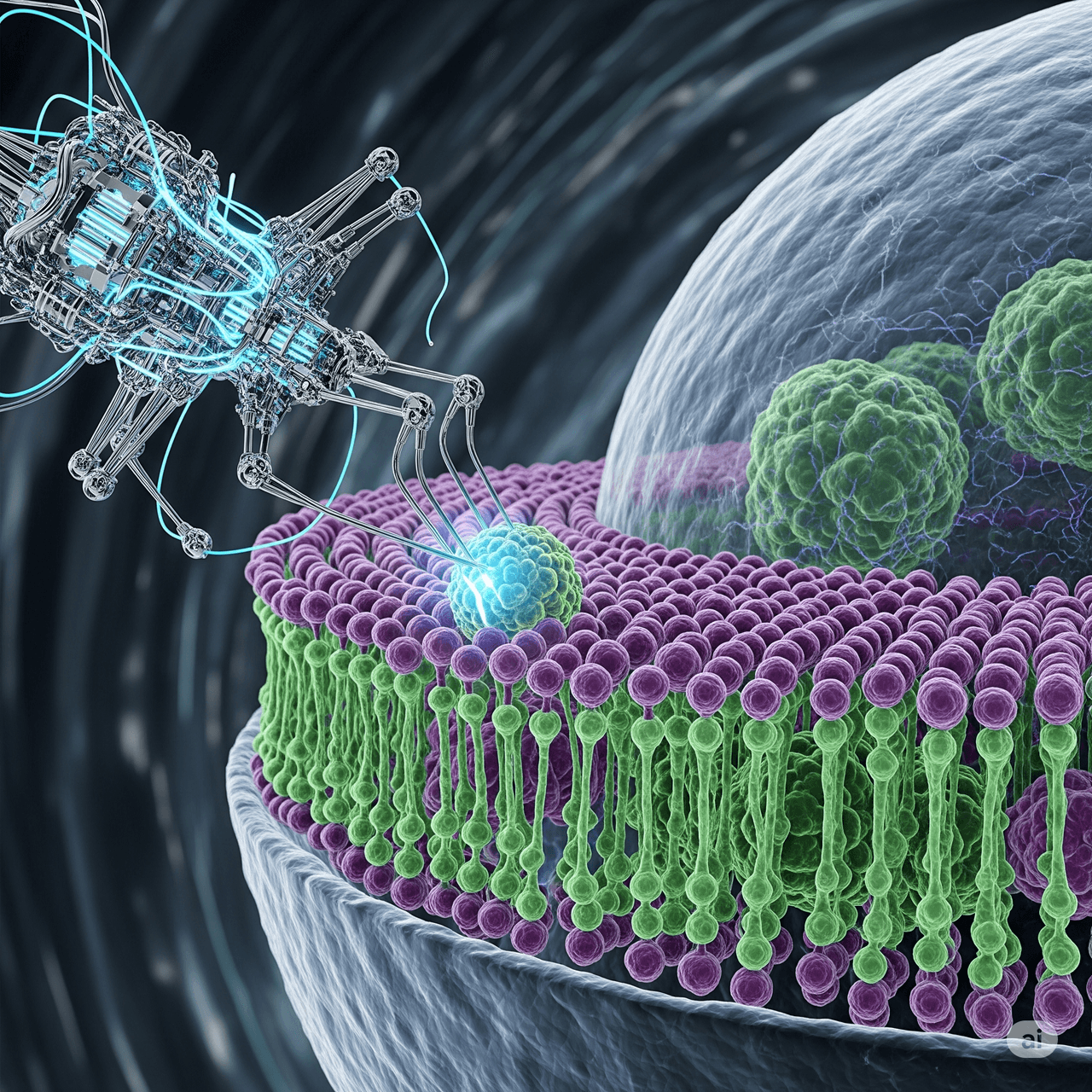

Principle of Mechanical Penetration of the Cell Membrane by a Magnetically Controlled Nanobot (generated with AI assistance)

Author Information

Avatar
AuthorKader GöksuDecember 2, 2025 at 6:35 AM

Tags

Discussions

No Discussion Added Yet

Start discussion for "BioNanobots" article

View Discussions

Contents

  • Cell Membrane and Translocation Mechanisms

  • Nanobot Design and Materials

  • Application Areas

  • Challenges and Development Strategies

Ask to Küre