


This article was automatically translated from the original Turkish version.
+1 More
Biopolitics is a concept that describes the ways in which modern political power manages life, the body, and population. This concept reveals that power operates not only through legal regulations and political institutions but also through biological processes such as health, fertility, death, disease, life expectancy, and population movements. Biopolitics defines the condition in which life itself becomes the object of political governance.
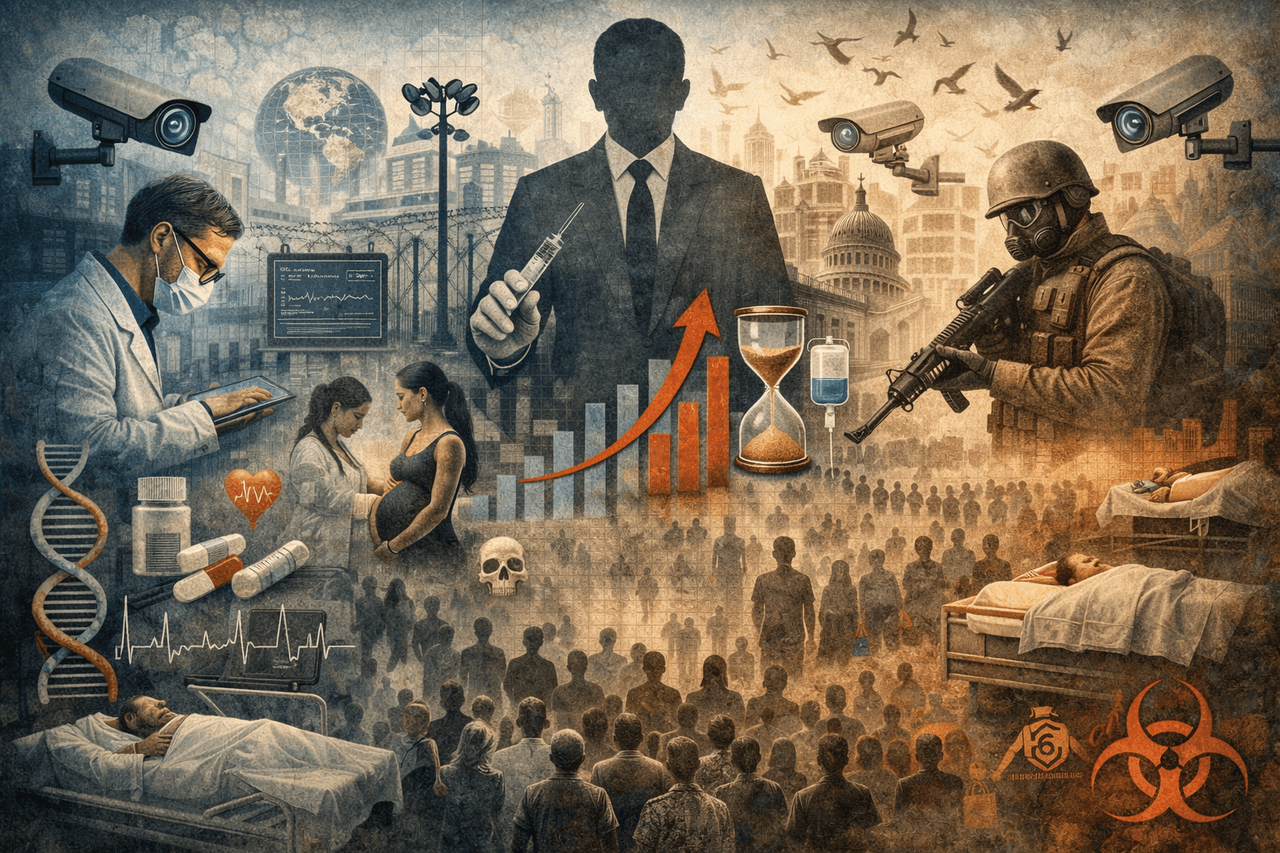
A visual related to the concept of biopolitics (Generated by Artificial Intelligence)
Biopolitics occupies the intersection of the concepts of “life” and “politics.” In this context, the concept is concerned not with individual biological existence but with the population as a collective of bodies. The health, productivity, continuity, and regulation of the population constitute the core concerns of biopolitics. In modern societies, biopolitics functions with the aims of preserving, regulating, and optimizing life. During this process, power directs individuals not through direct coercion but through norms, regulations, and institutional mechanisms. Thus biopolitics is associated more with a logic of management and regulation than with repression.
The concept of biopolitics is used to explain forms of governance that emerged alongside the rise of the modern state. With industrialization the development of capitalist modes of production and the growth of modern bureaucratic structures the population became a strategic element for political power. During this period power placed emphasis on ensuring the continuity of life and regulating the population.
Conceptually biopolitics was systematically addressed in political philosophy and social theory during the twentieth century. These analyses sought to explain modern forms of governance by examining the effects of power on life.
From a biopolitical perspective the body is not viewed merely as an individual entity but as a component of the population. Birth rates death rates health conditions and life expectancy serve as key indicators of biopolitical regulation. Therefore biopolitics focuses on the aggregate of bodies rather than on individual bodies. The regulation of bodies is carried out through norms emerging in areas such as education health military service and labor life. These norms shape individual behavior within defined frameworks aiming to ensure the continuity of social order.
Medicine and public health represent one of the most visible domains of biopolitical practice. Through health systems individual bodies are monitored classified and regulated. Conditions of health and illness are defined according to specific criteria and these definitions influence the formulation of public policies. Health policies play a crucial role in safeguarding and sustaining the population. In this context medicine functions not merely as a practice of individual treatment but as an instrument of social regulation.
The contemporary applications of biopolitics refer to how practices of governing life emerge across different social domains in modern societies. The concept is employed to explain the relationship between contemporary forms of governance and biological processes at the levels of the individual body and the population. In this sense biopolitics is linked to regulatory practices developed in fields such as health technology population and security.
Biopolitics is one of the fundamental concepts for understanding the relationship between modern power and life. It provides an analytical framework for explaining the interaction between political governance and biological processes in modern societies. In this regard biopolitics is a concept connected to political philosophy sociology medicine and ethics.
Accessed November 26, 2025.
Esposito, Roberto. Bíos: Biopolitics and Philosophy. Translated by Timothy Campbell. Minneapolis: University of Minnesota Press, 2008. Accessed January 7, 2026.
Özmakas, Utku. "Biyopolitika Kavramına Dair Bir Soruşturma." PhD thesis, Ankara Üniversitesi, 2016. https://tez.yok.gov.tr/UlusalTezMerkezi/tezDetay.jsp?id=pbbsSi2itEJORqmzbgM61g&no=3hYZ2tQ369LYtriy-JWOxw
Özmakas, Utku. *Biyopolitika: İktidar ve Direniş*. İstanbul: İletişim Yayınları, 2018. https://iletisim.com.tr/kitap/biyopolitika-iktidar-ve-direnis/9622?srsltid=AfmBOorl_DGpjgH6_9pkZAXY6-w_rLFeKlCU6hxuL4dupFkjhDFhX6Kz

Concept and Historical Framework
Body Population and Governance