


This article was automatically translated from the original Turkish version.
+1 More
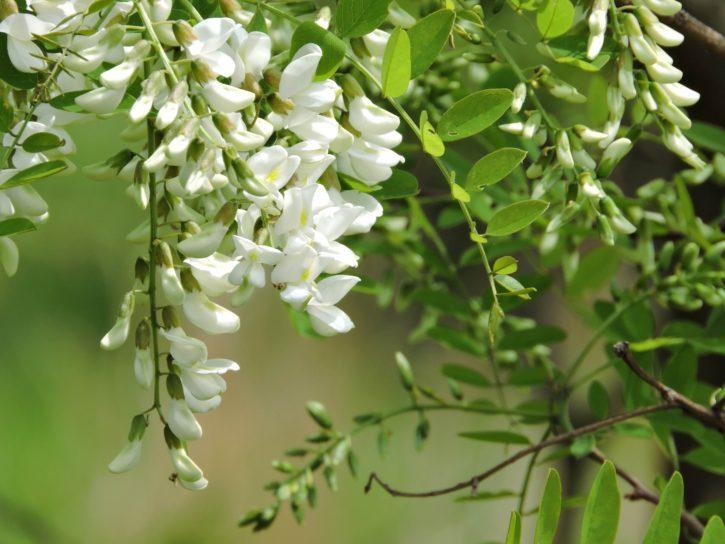
Acacia Tree Flower
Origin(s) | North America | ||||||||
|---|---|---|---|---|---|---|---|---|---|
Family(ies) | Fabaceae (Leguminosae) | ||||||||
Common Name | False Acacia | ||||||||
Type Name | Robinia pseudoacacia L. | ||||||||
The black locust tree, known botanically as Robinia pseudoacacia L., is a leguminous species belonging to the Fabaceae (legume) family. Native to North America, it is among the first exotic tree species introduced to Türkiye. It is also commonly known as “false acacia.” This species attracts attention due to its rapid growth potential, low soil requirements, resilience, and showy flowers, and is widely used for various purposes in both forestry and non-agricultural applications.
Robinia pseudoacacia has been widely cultivated across Europe and Asia. In Türkiye, its use began initially around Ankara and later expanded to diverse climatic zones, from the rural areas of Central Anatolia to the Aegean and Mediterranean regions. It has been particularly preferred for boulevards, roadside plantings, railway embankments, barracks perimeters, and village reforestation projects. Public institutions such as the State Railways have utilized this tree for both aesthetic and soil stabilization purposes.
The black locust tree is highly resistant to drought and poor soil conditions. Thanks to symbiotic bacteria in its roots, it possesses the ability to fix atmospheric nitrogen. This trait makes it an ideal species for reforestation efforts in organic-matter-poor sandy areas. Successful results have been achieved in trial sites located in regions with contrasting climates such as Side-Sorkun and Terkos.

A Flowering Black Locust Tree (Generated by Artificial Intelligence.)
Other species of acacia are also used in Türkiye. In particular, Acacia cyanophylla (Cyprus acacia) is favored due to its adaptation to Mediterranean climatic conditions and rapid growth. However, it is essential not to confuse this species taxonomically with Robinia pseudoacacia. Cyprus acacia was introduced to Türkiye in the 1950s from Cyprus and has been employed primarily in erosion control and sand dune stabilization projects.
The black locust tree has hard, heavy, and highly elastic wood. The sapwood is narrow and pale yellowish-white, while the heartwood varies from greenish-yellow to dark brown. Due to its durability, it is used in applications requiring strong timber such as fence posts, furniture, mine supports, railway sleepers, and agricultural tools. It is also valued as firewood. Its moderate workability has led to its recognition as a versatile tree that meets the diverse needs of rural farmers.
White-Flowered False Acacia, Republic Acacia (Seyran Palabaş Uzun)
Black locust flowers contain compounds with high antioxidant capacity. Analyses have shown that methanol and acetone extracts exhibit particularly strong reducing power when measured by methods such as FRAP and CUPRAC. They are also rich in phenolic and flavonoid compounds. These characteristics have led to the evaluation of black locust flowers as a potential natural source of antioxidants.
Black locust leaves are also evaluated for livestock nutrition. Studies have determined that the crude protein content and in vitro dry matter digestibility of these leaves are high. These values are comparable to those of mulberry leaves and superior to those of plane tree leaves. Accordingly, black locust leaves are recommended as a high-quality roughage source, especially in arid regions.

Black Locust Tree Flower (Pixinio)
Microorganisms of the Bacillus genus isolated from black locust soil show potential for the production of various industrial enzymes. These bacteria are capable of producing enzymes such as amylase, cellulase, xylanase, protease, and phytase in both solid and liquid media. This demonstrates that black locust provides not only a forestry or forage resource but also an ecosystem with significant potential for microbial biotechnology.
Atay, İbrahim. “Akasya (Robinia pseudoacacia L.)’nın Önemi ve Silvikültürel Özellikleri.” *İstanbul Üniversitesi Orman Fakültesi Dergisi*, Volume 35, Issue 1, 1985. Accessed May 13, 2025. https://dergipark.org.tr/en/download/article-file/175292
Hornbaker, Eileen. “Siyah Keçiboynuzu Çiçekler, Geçişli Şube.” *Pixnio*. Accessed May 13, 2025. https://pixnio.com/tr/bitkiler/agaclar/akasya/siyah-keciboynuzu-cicekler-gecisli-sube.
Kaplan, Seda, et al. “Yalancı Akasya Ağacı (Robinia pseudoacacia) Çiçeklerinin Çözücü Özütlerinin Antioksidan Aktivitelerinin Belirlenmesi.” 4. Ulusal Kimya Öğrenci Kongresi, Manisa, 2013. Accessed May 13, 2025. http://kimyakongreleri.org/kok2013/KOK2013-026.pdf
Pala, Mehmet. “Şanlıurfa’da Yetiştirilen Bazı Ağaç Yapraklarının Besin Madde İçeriği ve Sindirilebilirliklerinin Belirlenmesi.” Master's thesis, Harran Üniversitesi, 2023. Accessed May 13, 2025. http://acikerisim.harran.edu.tr:8080/jspui/bitstream/11513/2617/1/MEHMET%20PALA.pdf
Seyran Palabaş Uzun. Accessed May 13, 2025. https://www.youtube.com/watch?v=SVwMsMH141Q.
Öztürk, Hasan Ümit. "Akasya Ağacı Toprağından İzole Edilen Bacillus sp. Tarafından Üretilen Endüstriyel Enzimlerin Araştırılması." PhD thesis, Marmara Üniversitesi, 2013. Accessed May 13, 2025. https://www.proquest.com/openview/c96f4cd8d08be48b921b9dcfa880be3b/1?cbl=2026366&diss=y&pq-origsite=gscholar
“Akasya Ağacı.” YouTube video, 2:37. Date Published.

Acacia Tree Flower
Origin(s) | North America | ||||||||
|---|---|---|---|---|---|---|---|---|---|
Family(ies) | Fabaceae (Leguminosae) | ||||||||
Common Name | False Acacia | ||||||||
Type Name | Robinia pseudoacacia L. | ||||||||
No Discussion Added Yet
Start discussion for "Black Locust Tree (Robinia pseudoacacia L.)" article
Natural Distribution and Use in Türkiye
Ecological Characteristics
Wood Properties and Applications
Physiological and Biochemical Properties
Use in Animal Nutrition
Microbial and Industrial Potential