

This article was automatically translated from the original Turkish version.
+1 More
KARA MAMBA
GEOGRAPHICAL AREA | East and Southern Africa | ||||||||
|---|---|---|---|---|---|---|---|---|---|
TYPE | Dendroaspis polylepis | ||||||||
FAMILY | Elapidae | ||||||||
TEAM | Squamata (Snakes) | ||||||||
CLASS | Reptilia (Reptiles) | ||||||||
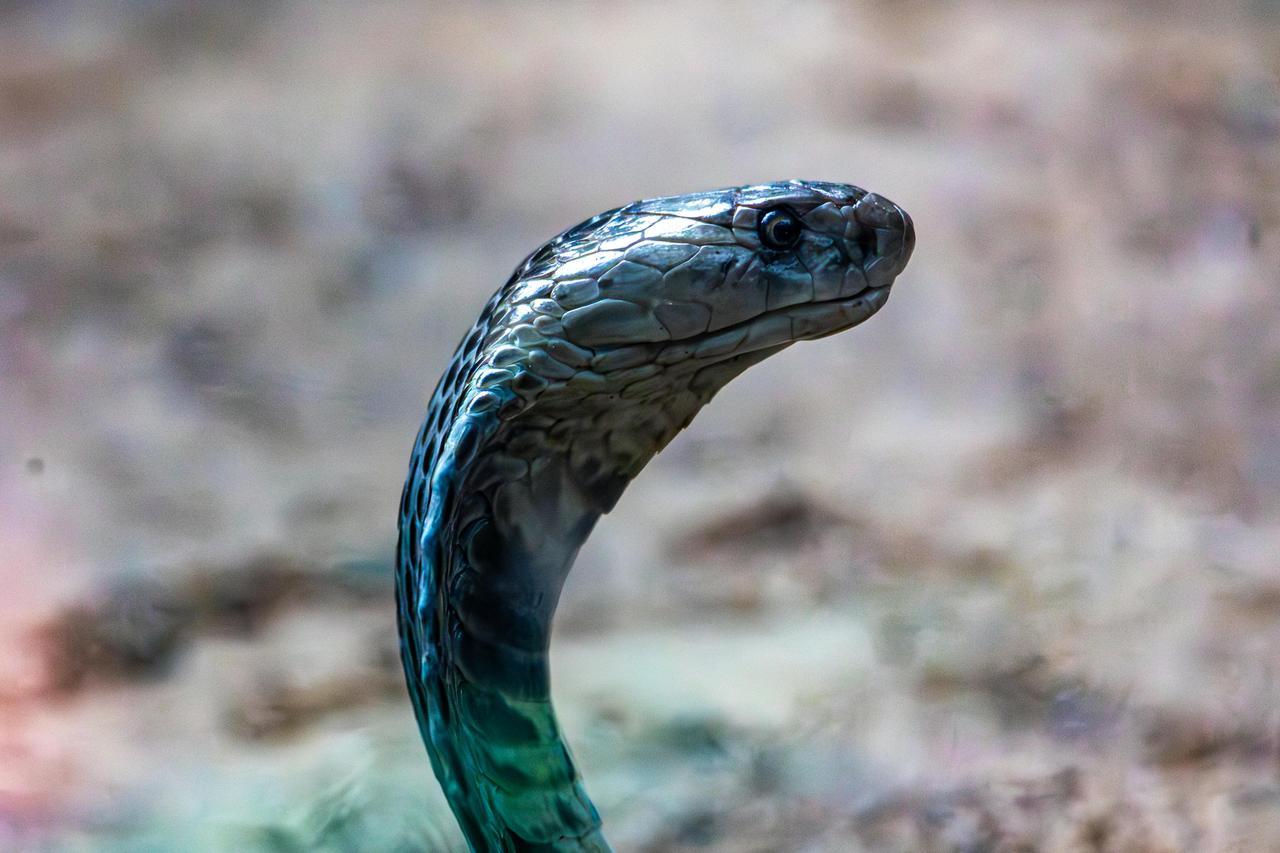
Black mamba (Dendroaspis polylepis) is one of the longest venomous snake species native to the continent of Africa. Its average length ranges between 250 and 350 cm, with a recorded maximum length of 425 cm. The body is long and slender, with a small and distinct head. The skin color varies from olive brown to dark gray, while the ventral side is lighter in tone; the species’ name derives from the black coloration inside its mouth.
The black mamba is an active species capable of rapid movement both during hunting and when threatened. These traits distinguish it among other snake species in Africa. Its body structure and speed play a crucial role in its survival, contributing significantly to both its hunting strategy and defensive mechanisms.
Behaviorally, the black mamba is primarily diurnal. It may display aggressive behavior when threatened but usually prefers to flee from humans. This combination of rapid escape and potential for attack makes the species particularly dangerous. Small mammals, especially rodents, form the primary food sources of the black mamba.
Black Mamba (TRT Documentary)
The black mamba (Dendroaspis polylepis) is a species belonging to the order Ophidia within the class Reptilia and the family Elapidae. It is the largest and most widely recognized of the four mamba species found in Africa.
Historically, the black mamba and the green mamba (Dendroaspis angusticeps) were initially classified as a single species. In 1946, Fitz Simons separated them into two distinct species, and subsequent research confirmed differences in morphology, behavior, and distribution between the two. The black mamba primarily inhabits dry and semi-arid regions, while the green mamba is found in moist forested areas.
The black mamba’s position within the Elapidae family is highlighted by its potent neurotoxic venom, rapid movement, and elongated body structure. Compared to other members of this family, the black mamba stands out in terms of both size and venom potency.
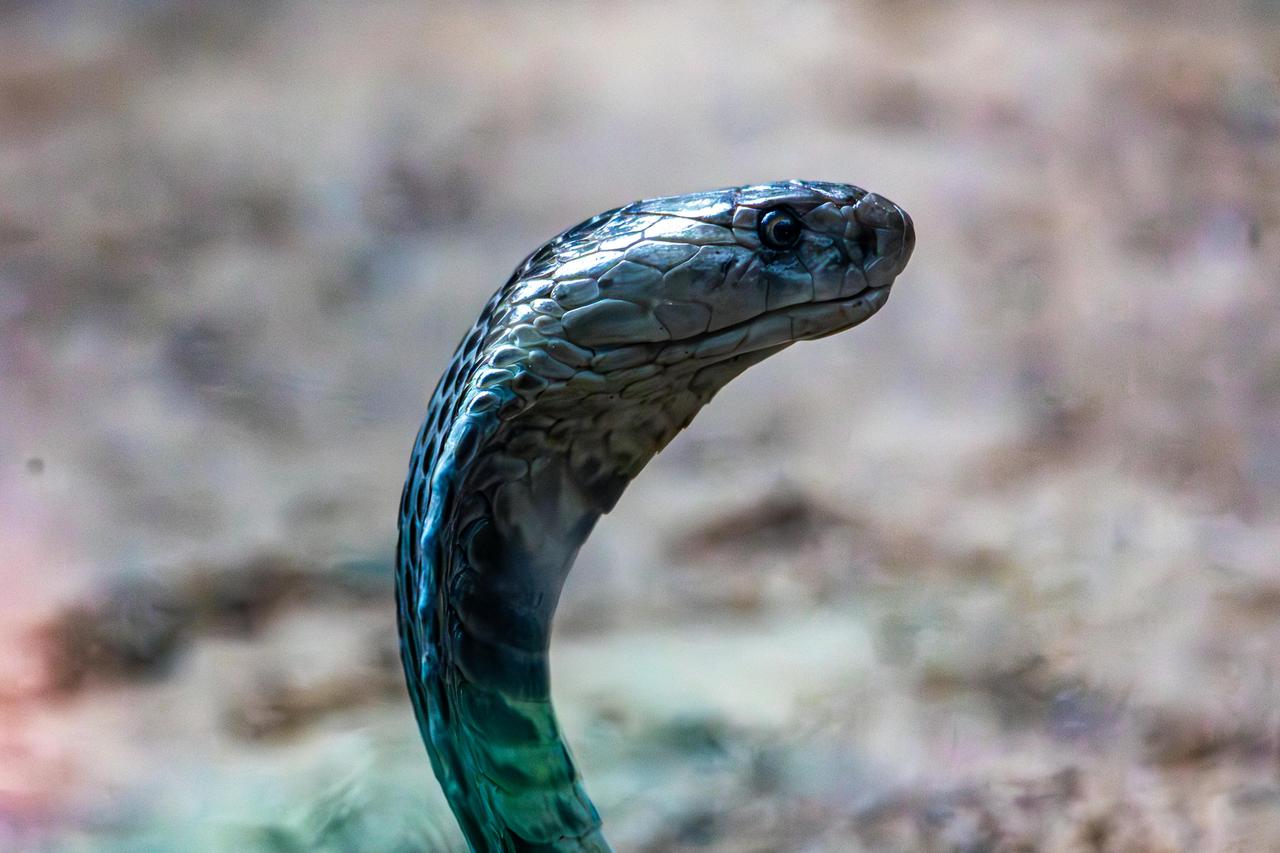
Close-up of a Black Mamba in its Natural Habitat (Pexels)
The black mamba is distributed across a wide geographic range in Africa. Its primary range extends from northeastern Zaire to southwestern Sudan, including Ethiopia, Eritrea, Somalia, Kenya, Tanzania, Mozambique, Malawi, Zambia, Zimbabwe, Botswana, and northern regions of South Africa. It is also found in western and southwestern countries such as Angola and Namibia. Although rarely observed above 1000 meters in elevation, it can reach up to 1800 meters in Kenya and 1650 meters in Zambia.
Habitat preferences are directly linked to the species’ ecology and behavior. The black mamba favors semi-arid shrublands, light woodlands, rocky outcrops, and savannas. These characteristics distinguish it from the more humid and densely vegetated habitats preferred by the green mamba. Its habitat directly influences its strategies for movement, hunting, and defense.
The species’ distribution is also influenced by regional ecological conditions. The black mamba hunts in open and semi-open areas and generally avoids dense human settlements and thick forests. Consequently, its distribution map reflects not only geographic boundaries but also ecological constraints.
The black mamba is a diurnal snake known for its exceptional speed. It is highly agile and fast during both hunting and defense; observations indicate it can move at speeds of 16 to 19 km per hour. This high speed is a critical factor in its survival, aiding both escape and predatory behaviors.
Its hunting behavior primarily targets small mammals, especially rodents and squirrels, which constitute its main food sources. During hunting, the snake delivers sudden strikes to quickly immobilize its prey. It responds rapidly to environmental stimuli and may display aggression when threatened. However, in most cases it prefers to flee upon encountering humans.
In terms of social behavior, the black mamba is generally solitary. Interactions between individuals are limited and occur only briefly during mating season or when sharing hunting territories. Habitat selection favors open and savanna-like areas, which optimize the snake’s mobility and hunting efficiency.
Like other mamba species, the black mamba is an oviparous reptile. The mating season typically coincides with the period following the rainy season, during which males approach females and exhibit courtship behaviors. Females select safe and suitable locations to lay their eggs, often among rocks, beneath tree roots, or in other sheltered areas with dense vegetation.
A single female typically lays between 10 and 25 eggs. Egg development depends on ambient temperature and humidity; under favorable conditions, hatchlings emerge after approximately three months. Newborn snakes measure 40 to 50 cm in length and are immediately independent. Hatchlings rapidly develop hunting skills; they grow quickly but take several years to reach adult size.
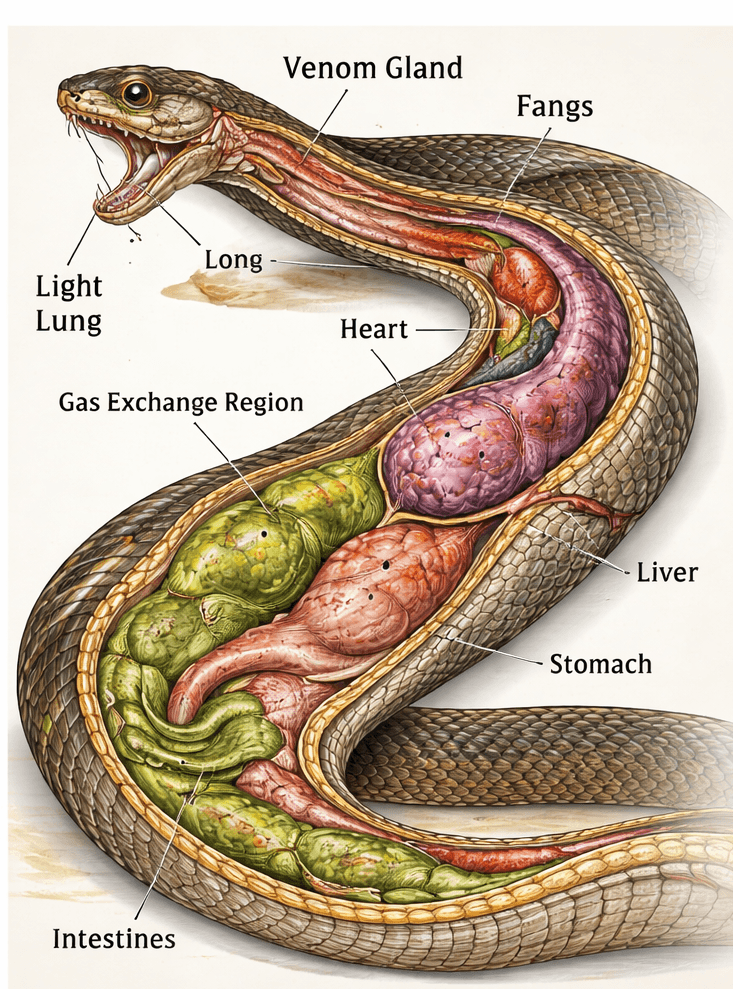
Internal Anatomy of the Black Mamba (Generated by Artificial Intelligence)
Throughout its life cycle, the black mamba maintains an effective position as both predator and defender, thanks to its high mobility and potent venom. Adult individuals rely on speed and agility to evade natural predators and capture prey. The species’ lifespan in the wild is estimated at approximately 11 to 15 years.
The black mamba exhibits distinctive anatomical features among reptiles. Its most notable anatomical trait is the presence of a single, elongated right lung. This lung extends nearly the entire length of the body and is divided into two main regions: a front, honeycomb-like gas exchange area and a posterior, sac-like region.
Its muscular and nervous systems support the snake’s rapid movement. As a venomous species, it uses its neurotoxic venom to quickly paralyze prey. The venom disrupts signal transmission between nerves and muscles, enabling a fast and efficient hunting strategy.
The cardiovascular system and other organs are structured to support the snake’s high mobility and survival capacity. In particular, the respiratory and circulatory systems are optimized to distribute oxygen efficiently along the elongated body, facilitating high-speed movement.
The black mamba is one of Africa’s most venomous snakes. Its venom is highly potent, serving both to immobilize prey and for self-defense. An adult black mamba can inject 8 to 16 ml of venom in a single bite; newborns produce 1 to 2 ml, a quantity still dangerous to humans.
The venom acts on the nervous system, causing muscle paralysis. This enables the snake to rapidly capture and neutralize prey. Certain components also affect the heart and vascular system, lowering blood pressure and disrupting fluid balance in the body. Enzymes in the venom facilitate its rapid spread through tissues, ensuring swift onset of effects.
The venom forms the foundation of the black mamba’s hunting and defensive strategies. When humans are bitten, symptoms develop rapidly and can lead to severe health complications if left untreated.
Håkansson, Thomas, and Thomas Madsen. “On the Distribution of the Black Mamba (Dendroaspis Polylepis) in West Africa.” *Journal of Herpetology* 17, no. 2 (1983): 186–89. Accessed January 8, 2026. https://doi.org/10.2307/1563464.
Mitchell, B. L. “SOME REPTILES AND AMPHIBIANS OF NYASALAND.” *The Nyasaland Journal* 3, no. 2 (1950): 46–57. Accessed January 8, 2026. http://www.jstor.org/stable/29545624.
Regan Dsouza, Photograph, *Close-up of a black mamba snake in its natural habitat*, 2026, Pexels, Accessed January 8, 2026, https://www.pexels.com/tr-tr/fotograf/dogal-yasam-alanindaki-kara-mamba-yilaninin-yakin-cekimi-30076157/
Schott, R. “Dendroaspis polylepis.” *Animal Diversity Web*. Updated July 26, 2005. Accessed January 8, 2026. https://animaldiversity.org/accounts/Dendroaspis_polylepis/
Stach, Zdenek. “Black Mamba Dendroaspis Polylepis Bite: a Case Report.” PubMed, 2011.
TRT Belgesel. "Kara Mamba 🐍." Accessed January 8, 2026. https://www.youtube.com/watch?v=4JJ_-XBrltE
gikunju, Joseph. “Revered but Poorly Understood: A Case Report of Dendroaspis Polylepis (Black Mamba) Envenomation in Watamu, Malindi Kenya, and a Review of the Literature.” Tropical Medicine and Infectious Disease, n.d. doi:10.3390/TROPICALMED3030104.
maina, john. “The Morphology of the Lung of the Black Mamba Dendroaspis Polylepis (Reptilia: Ophidia: Elapidae). A Scanning and Transmission Electron Microscopic Study.” Journal of Anatomy, 1989.

KARA MAMBA
GEOGRAPHICAL AREA | East and Southern Africa | ||||||||
|---|---|---|---|---|---|---|---|---|---|
TYPE | Dendroaspis polylepis | ||||||||
FAMILY | Elapidae | ||||||||
TEAM | Squamata (Snakes) | ||||||||
CLASS | Reptilia (Reptiles) | ||||||||
No Discussion Added Yet
Start discussion for "Black Mamba (Dendroaspis polylepis)" article
Taxonomy and Systematic Position
Distribution and Habitat
Behavior and Ecology
Reproduction and Life Cycle
Anatomy and Internal Structure
Venom and Effects