

This article was automatically translated from the original Turkish version.
Conservation Status | Least Concern (LC) according to IUCN Red List data | ||||||||
|---|---|---|---|---|---|---|---|---|---|
Incubation Period | Approximately 32-38 days | ||||||||
Reproduction Information | 3-5 white eggs in April and May | ||||||||
Scientific Name(s) | Ciconia nigra | ||||||||
Weight(s) | Approximately 3 kilograms | ||||||||
Wintering Area | Regions of South Africa and India | ||||||||
Migration Status | Summer migrant and passage species in Türkiye | ||||||||
Eye Ring | Prominent red skin ring | ||||||||
Beak and Legs | Bright red in adults, grayish green in juveniles | ||||||||
Abdomen Region | White plumage on the chest and under the tail | ||||||||
Body Color | Glossy black feathers with green and purple iridescence | ||||||||
Scientific Classification | Family Ciconiidae, genus Ciconia | ||||||||
Diet(s) | Fish reptiles and small mammals insects amphibians | ||||||||
Habitat | Mature forests riverbanks and rocky slopes | ||||||||
Dimension(s) | 95-105 cm body length 173-205 cm wingspan | ||||||||
Black Stork (Ciconia nigra) is a large, migratory waterbird species classified within the family Ciconiidae and possessing a broad geographic distribution. The species is found across the Palearctic region, primarily inhabiting forested areas and wetland ecosystems.
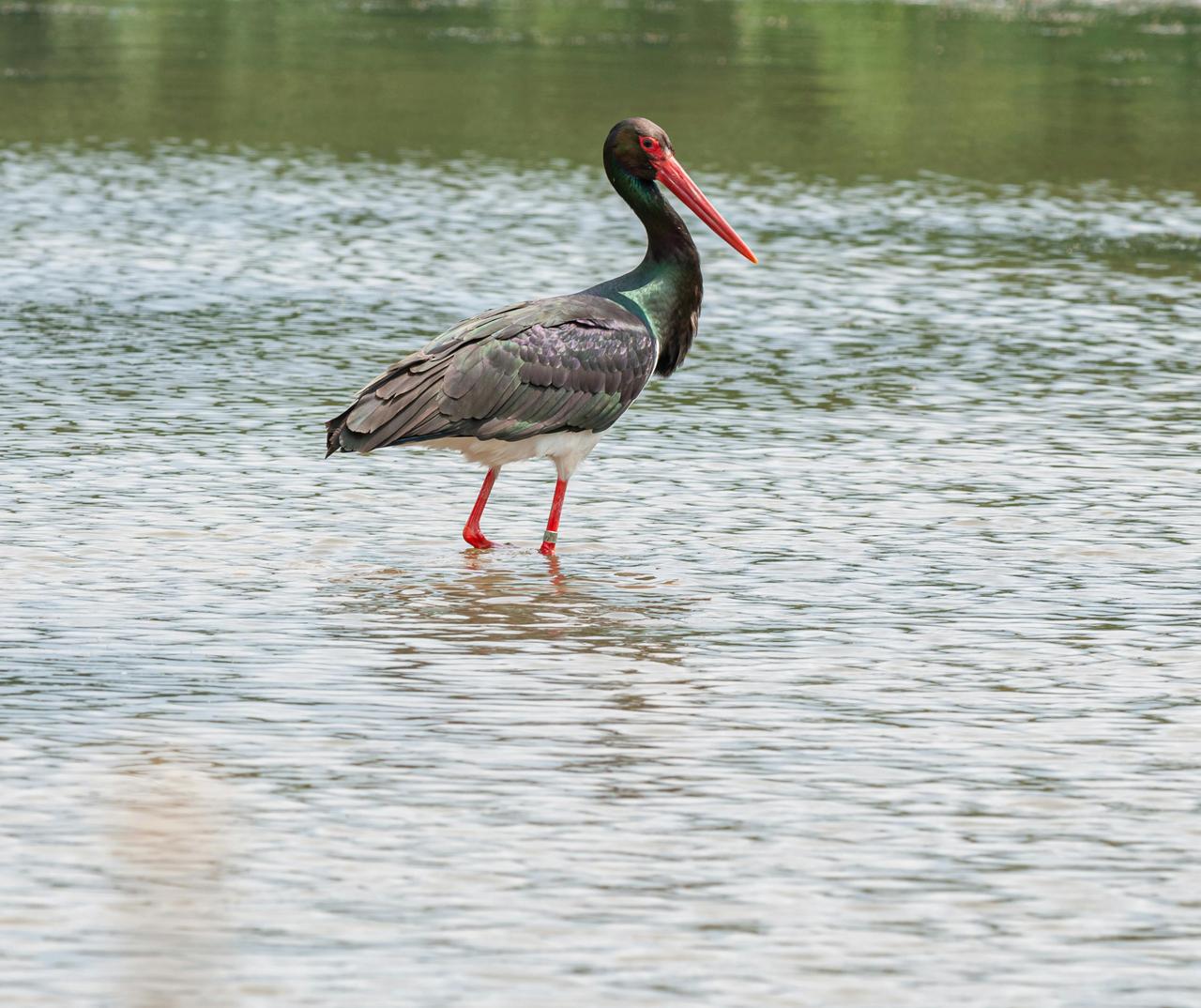
When examining their anatomy, black storks measure between 90 and 105 centimeters in height with a wingspan ranging from 144 to 205 centimeters. Their body weight averages around 3 kilograms. Sexual dimorphism is not pronounced, but males are relatively larger than females. The chest and abdomen are entirely covered in white feathers, while the rest of the body consists of glossy black feathers that display green and purple iridescence in sunlight. The bill, legs, and bare skin around the eyes are distinctly red, although these colors may turn brown during winter months. Juveniles have paler plumage compared to adults, with bills, legs, and eye rings appearing grayish-green. Black storks are also characterized by holding their necks straight and extended forward during flight.
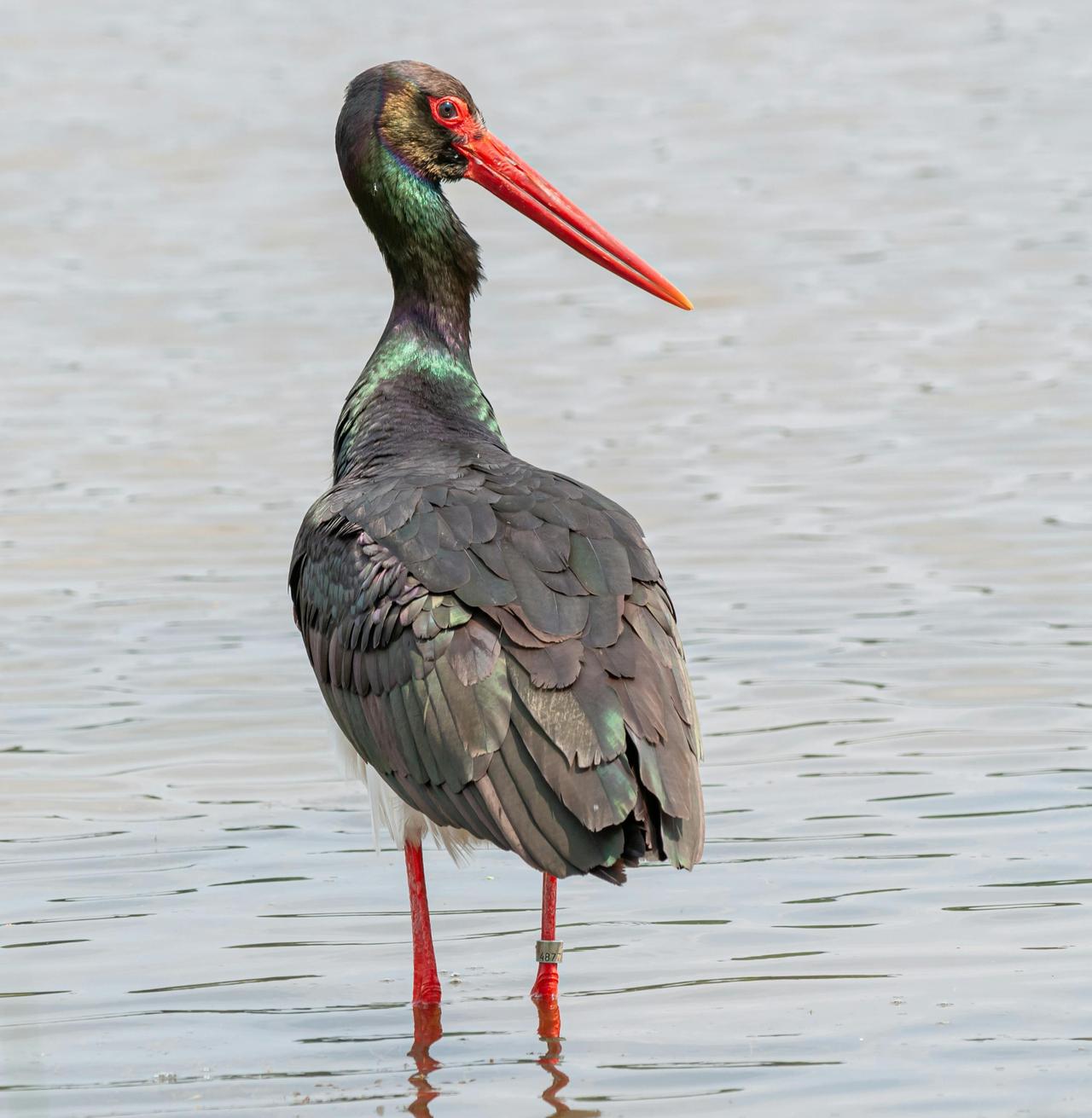
Black Stork (Ciconia nigra) (pexels)
The black stork is the species within the Ciconiidae family with the widest geographic distribution. During the breeding season, it occurs across the Palearctic region from Spain to China, and migrates to regions such as southern Africa and India for wintering. In Türkiye’s ecosystems, it is a summer migrant and transit species observed throughout all regions, with occasional reports of wintering. Its habitat preferences include quiet, undisturbed areas away from human activity, such as old-growth forests, rocky cliffs, river and lake shores, and marshes. Since it requires shallow waters for foraging, nesting sites must be located near a water source.
The black stork has a strictly carnivorous diet and relies primarily on visual cues when hunting. Fish and amphibians (frogs and salamanders) form the core of its diet. In addition, it consumes insects, small reptiles, bird eggs and nestlings, and small mammals. Its foraging strategy typically involves moving slowly and silently through shallow water, either walking with its head lowered or standing motionless with wings spread, to detect prey.
Breeding seasons vary regionally but generally begin in late April or May. During the breeding season, black storks exhibit a monogamous mating system. Courtship rituals involve up-and-down movements of the head and the production of bill-clattering sounds by striking the upper and lower mandibles together. Nests are typically constructed on the tops of large trees or in rocky crevices, using branches, twigs, and mud, and may be reused for many years. The female lays three to five oval, white eggs per clutch. Incubation lasts between 32 and 38 days, during which both males and females share responsibilities for incubation and feeding the chicks. Chicks attain flight capability and leave the nest between 63 and 71 days after hatching. In the wild, average lifespan is recorded at 18 years, while individuals in captivity have been known to live up to 31 years.
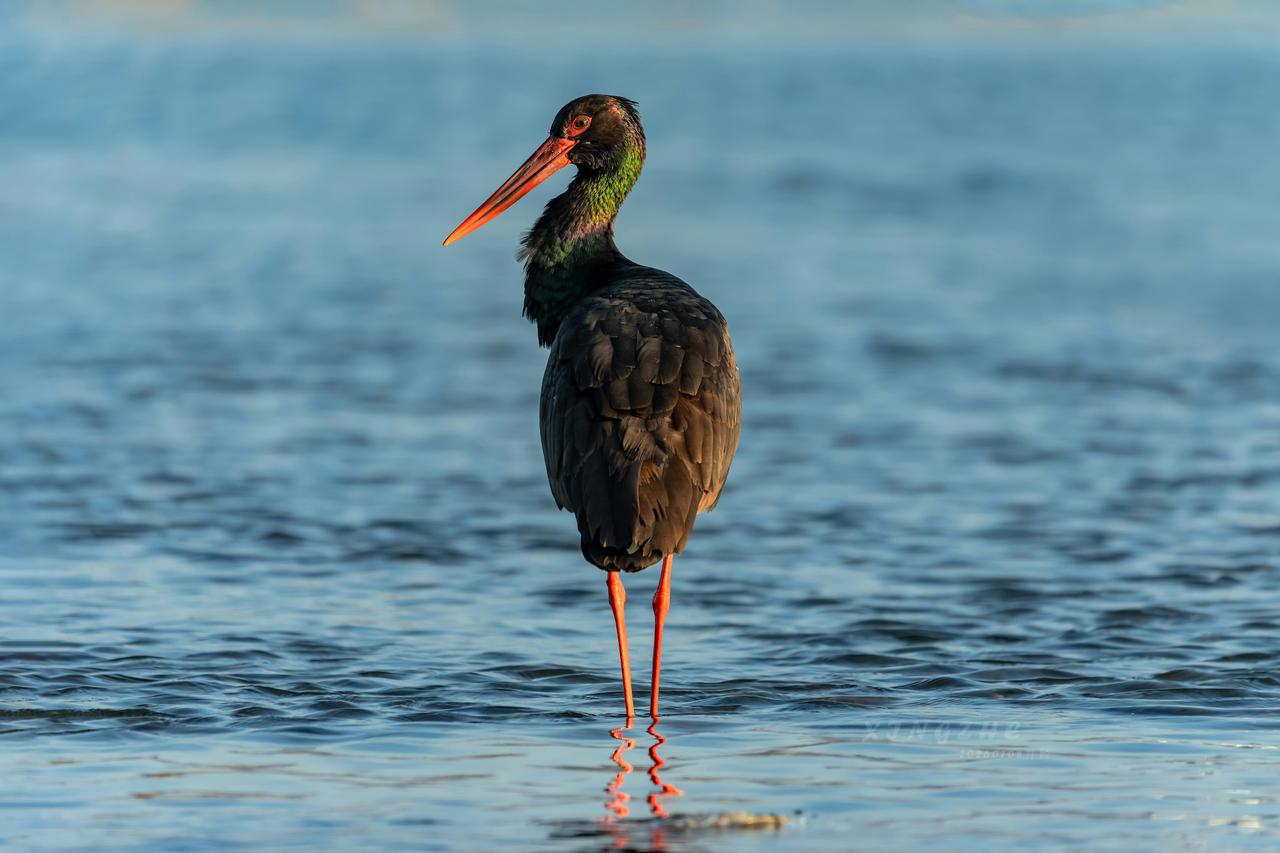
Black Stork (Ciconia nigra) (pexels)
Unlike their more sociable relatives, the white storks, black storks are highly shy and solitary, avoiding human settlements. They do not fly in flocks except during migration and are mostly solitary outside the breeding season. They are diurnal and capable of soaring at high altitudes by utilizing thermal air currents thanks to their broad wings. Ecologically, they serve as predators that help regulate populations of small vertebrates and also act as hosts for the trematode parasite Cathaemasia hians, which is transmitted to humans in parts of Europe, particularly Spain, via fish.
According to the International Union for Conservation of Nature (IUCN) Red List, the black stork is not considered threatened and is categorized as “Least Concern” (LC). The global population is estimated at between 32,000 and 44,000 individuals. However, the species’ population is generally declining, primarily due to deforestation, habitat destruction, illegal hunting, and fatal collisions with power lines along migration routes.
Animal Diversity Web. "Ciconia nigra (black stork)." Accessed April 30, 2026. https://animaldiversity.org/accounts/Ciconia_nigra/
Bilim Çocuk. "O Bir Kara Leylek." TÜBİTAK. Accessed April 30, 2026. https://bilimcocuk.tubitak.gov.tr/wp-content/uploads/sites/157/2025/09/576dc6af-00f7-4665-ad5e-bfe7e0919cac.pdf
Kuş Araştırmaları Derneği. "Çatımızdaki Konuk: Leylek." Accessed April 30, 2026. https://dogaarastirmalari.org.tr/wp-content/uploads/2024/09/20210604153148-catimizdaki_konuk_leylek.pdf
Ornito. "Kara Leylek (Ciconia nigra)." Accessed April 30, 2026. https://ornito.org/Bird/Detail/225
Pexels. "Gün Batımında Suda Duran Siyah Leylek." Accessed April 30, 2026. https://www.pexels.com/tr-tr/fotograf/gun-batiminda-suda-duran-siyah-leylek-36311673/
Pexels. "Kuş Hayvan Gaga Vahşi." Accessed April 30, 2026. https://www.pexels.com/tr-tr/fotograf/kus-hayvan-gaga-vahsi-4112185/
Pexels. "Vinç Yakın Çekim Fotoğrafı." Accessed April 30, 2026. https://www.pexels.com/tr-tr/fotograf/vinc-yakin-cekim-fotografi-4112186/

Conservation Status | Least Concern (LC) according to IUCN Red List data | ||||||||
|---|---|---|---|---|---|---|---|---|---|
Incubation Period | Approximately 32-38 days | ||||||||
Reproduction Information | 3-5 white eggs in April and May | ||||||||
Scientific Name(s) | Ciconia nigra | ||||||||
Weight(s) | Approximately 3 kilograms | ||||||||
Wintering Area | Regions of South Africa and India | ||||||||
Migration Status | Summer migrant and passage species in Türkiye | ||||||||
Eye Ring | Prominent red skin ring | ||||||||
Beak and Legs | Bright red in adults, grayish green in juveniles | ||||||||
Abdomen Region | White plumage on the chest and under the tail | ||||||||
Body Color | Glossy black feathers with green and purple iridescence | ||||||||
Scientific Classification | Family Ciconiidae, genus Ciconia | ||||||||
Diet(s) | Fish reptiles and small mammals insects amphibians | ||||||||
Habitat | Mature forests riverbanks and rocky slopes | ||||||||
Dimension(s) | 95-105 cm body length 173-205 cm wingspan | ||||||||
No Discussion Added Yet
Start discussion for "Black Stork (Ciconia nigra)" article
Physical Characteristics
Geographic Distribution and Habitat
Feeding Habits
Reproduction and Life Cycle
Behavior and Ecology
Conservation Status