


This article was automatically translated from the original Turkish version.
+3 More
Blockchain-Based Logistics
Core Technology | Blockchain (Distributed Ledger Technology - DLT) | ||||||||
|---|---|---|---|---|---|---|---|---|---|
Main Benefits | Transparency, Security, Traceability, Efficiency | ||||||||
Key Element | Smart Contracts | ||||||||
Application Area(s) | Supply Chain Management Financing Customs International Trade | ||||||||
Important Platform | TradeLens (Maersk & IBM) | ||||||||
Integration | Internet of Things (IoT), Artificial Intelligence (AI) | ||||||||
Blockchain-based logistics refers to systems that integrate blockchain technology to enable tracking and management of products and services throughout the supply chain. This technology enables secure data sharing among all parties involved in the supply chain through a decentralized immutable and transparent digital ledger. Reducing complexity in the supply chain increasing efficiency ensuring security and providing full traceability for all stakeholders are among its primary objectives. Evaluated within the frameworks of Industry 4.0 and Logistics 4.0 blockchain holds the potential to address traditional logistics challenges such as data silos counterfeiting transaction delays and lack of trust.
Blockchain technology is based on a distributed database structure in which transactions are recorded in cryptographically linked blocks. Each new transaction is added to the chain as a block after being verified by participants in the network and contains a hash of the previous block. This architecture makes it nearly impossible to alter or delete past data. The fundamental principles of the technology are as follows:
In the logistics sector this technology provides a trust-based shared digital infrastructure for a complex network involving numerous actors such as suppliers manufacturers carriers port operators customs authorities and end customers. Every stage of a product’s journey from production to delivery is recorded on the blockchain enabling real-time end-to-end traceability of processes.
In traditional supply chain systems identifying the origin and journey of a product can take weeks. With blockchain this process can be completed in seconds. The entire journey of a product from raw material to consumer is digitally recorded. This traceability is critically important in sectors vulnerable to counterfeiting such as food pharmaceuticals and luxury consumer goods. Consumers can transparently learn about a product’s origin production conditions and transportation processes which is a key factor in building brand trust.
Logistics processes involve numerous sensitive documents such as bills of lading invoices and customs declarations. The distributed and encrypted nature of blockchain protects these documents against forgery. Thanks to immutable records documents cannot be tampered with or lost. This strengthens trust among all stakeholders and minimizes the risk of fraud.
Blockchain technology digitizes paper-based and manual processes automating logistics operations. In international trade document exchange and approval processes between parties impose significant time and cost burdens. Blockchain simplifies these processes reduces the role of intermediaries and lowers operational costs. Given that document management costs can reach 10-15% of total delivery costs the cost-reducing impact of blockchain is a major advantage. Additionally faster payments and reduced disputes enhance financial efficiency.
When all parties in the supply chain have access to the same reliable data set it enables more effective collaboration across the system. Transparent information sharing among suppliers carriers and customers facilitates better coordination and enables timely interventions. This contributes positively to the overall performance of the supply chain.
Smart contracts one of the key components of blockchain technology are digital protocols that automatically execute when predefined conditions are met. In the logistics sector they can be widely applied in the following areas:
This structure reduces human error accelerates processes and eliminates bureaucratic barriers enhancing the reliability of operations.

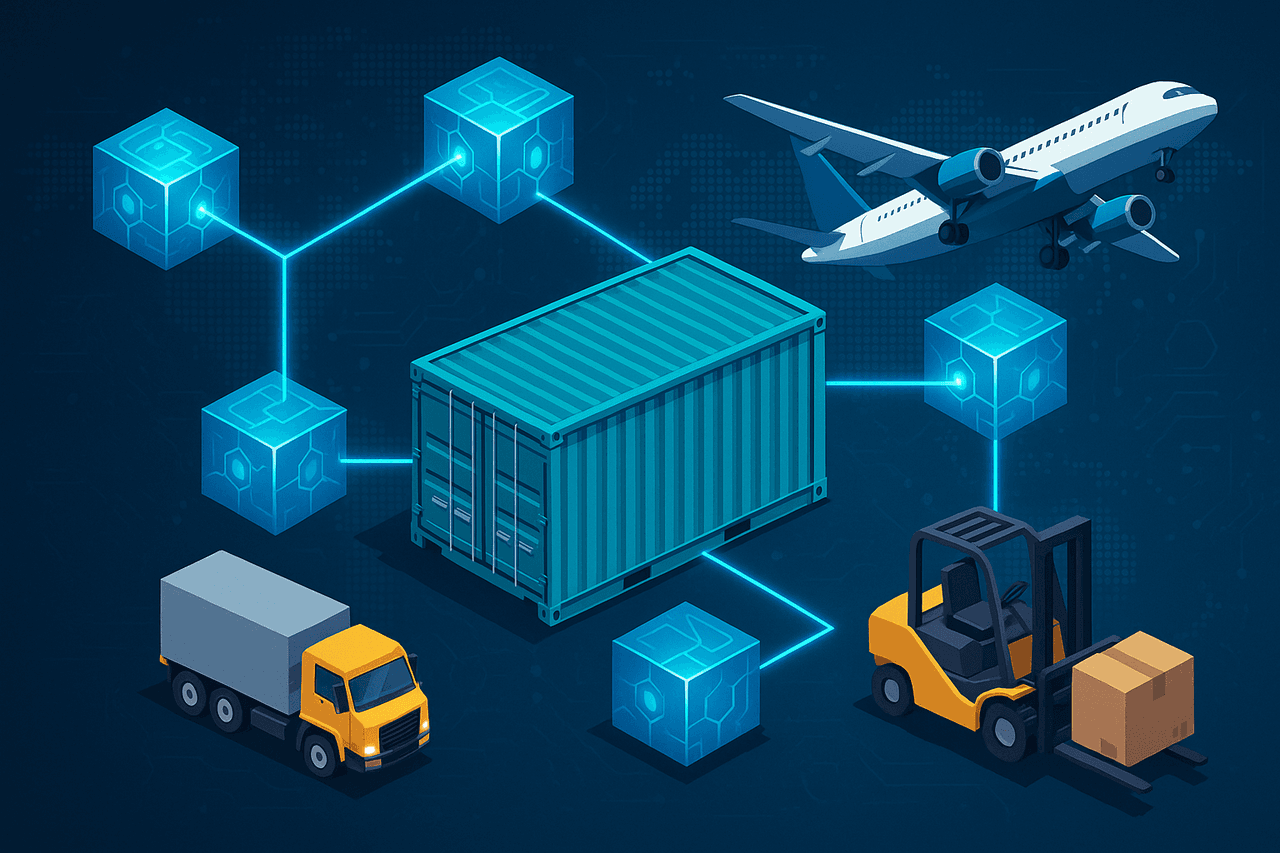
Blockchain-based logistics (generated by artificial intelligence.)
Several technical and structural barriers hinder the widespread adoption of blockchain technology. These include high integration costs incompatibility with existing systems lack of technical expertise and the time required for users to adapt to the technology. One of the most significant challenges is the necessity for all stakeholders to transition to the same infrastructure in order to fully realize the technology’s potential. Additionally the lack of interoperability between different blockchain platforms and the absence of sufficiently developed common standards pose major problems. The immutable nature of smart contracts can also be limiting in situations requiring flexibility.
In the future blockchain is expected to integrate more closely with technologies such as the Internet of Things (IoT) and artificial intelligence (AI). Direct recording of data from IoT sensors—such as location temperature and humidity—into the blockchain holds the potential to significantly enhance transparency and automation in logistics processes. Within the framework of European Union initiatives such as the Green Deal digital product passports are expected to mandate the tracking of products’ environmental and social impacts via blockchain thereby supporting the development of sustainable supply chains.
Günen, Emre. “Maersk ve IBM'den Blockchain Tabanlı Lojistik Ortaklığı: TradeLens.” Fintechtime. Accessed July 17, 2025. https://fintechtime.com/2018/08/maersk-ve-ibmden-blockchain-tabanli-lojistik-ortakligi-tradelens/.
Hukuk ve Bilişim Dergisi. "Uluslararası Ticarette Blokzincir Kullanımı." Accessed July 17, 2025. https://www.hukukvebilisimdergisi.com/uluslararasi-ticarette-blokzincir-kullanimi/.
Mendi, Arif Furkan. “Blokzincir Uygulamaları ve Gelecek Öngörüleri.” *GSI Journals Serie C: Advancements in Information Sciences and Technologies* 4(1): 76–88. Accessed July 17, 2025. https://dergipark.org.tr/tr/pub/aist/issue/56936/862936.
Tekin, Mahmut, Derya Öztürk, and İsmail Bahar. “Akıllı Lojistik Faaliyetlerinde Blokzincir Teknolojisi.” *Kent Akademisi*. Accessed July 17, 2025. https://doi.org/10.35674/kent.773016.

Blockchain-Based Logistics
Core Technology | Blockchain (Distributed Ledger Technology - DLT) | ||||||||
|---|---|---|---|---|---|---|---|---|---|
Main Benefits | Transparency, Security, Traceability, Efficiency | ||||||||
Key Element | Smart Contracts | ||||||||
Application Area(s) | Supply Chain Management Financing Customs International Trade | ||||||||
Important Platform | TradeLens (Maersk & IBM) | ||||||||
Integration | Internet of Things (IoT), Artificial Intelligence (AI) | ||||||||
No Discussion Added Yet
Start discussion for "Blockchain-Based Logistics" article
Core Principles of Blockchain Technology and Logistics Processes
Advantages of Blockchain-Based Logistics
Enhanced Transparency and Traceability
Improved Data Security
Increased Efficiency and Cost Savings
Strengthened Collaboration
The Role of Smart Contracts
Challenges and Future Perspectives