


This article was automatically translated from the original Turkish version.
+1 More
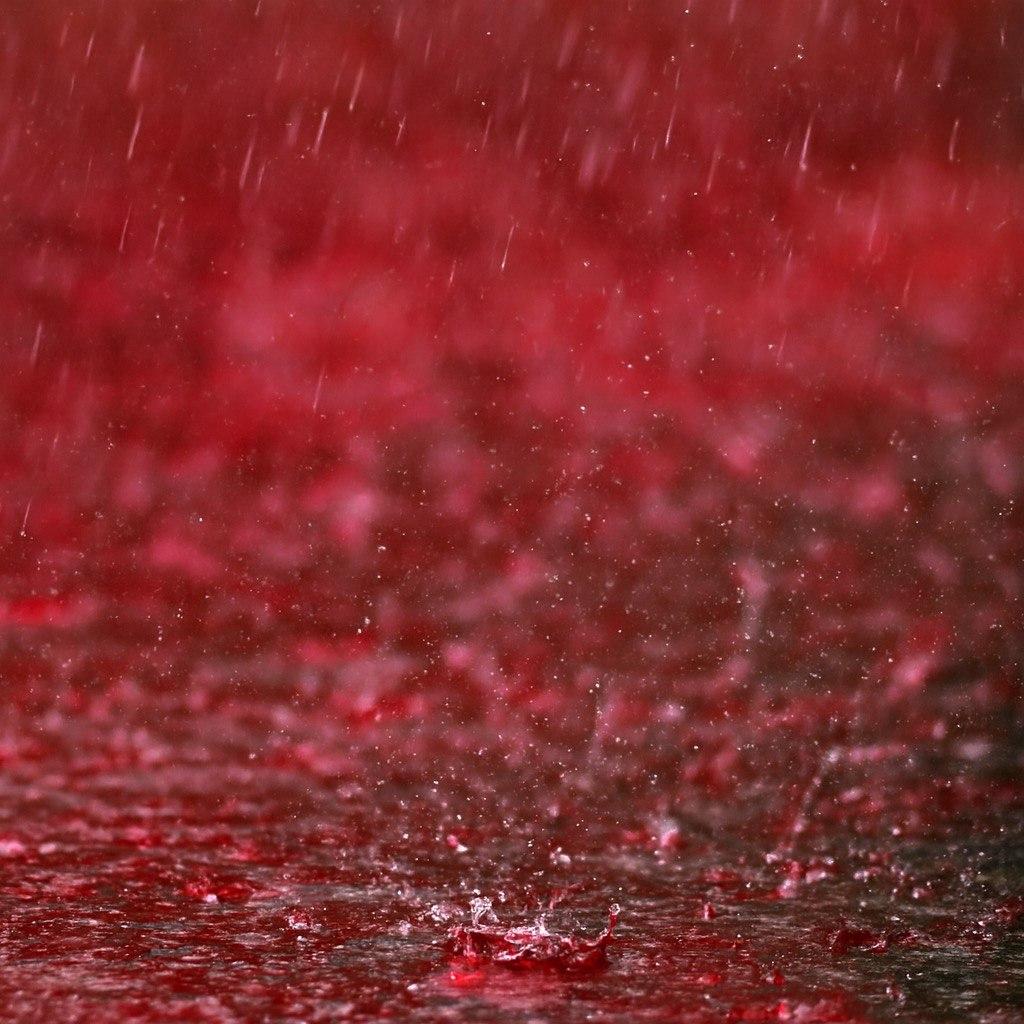
Blood Rain (Generated by Artificial Intelligence.)
Prominent Event | 2001 Kerala (India) Red Rain Case | ||||||||
|---|---|---|---|---|---|---|---|---|---|
Related Process | Atmospheric Precipitation | ||||||||
Observed Color | Red Orange Brownish Tones | ||||||||
Event Type | Colored Rain | ||||||||
Red rain is a natural phenomenon in which raindrops mix with red-colored particles in the atmosphere, causing precipitation to appear red, orange, or brownish. The discoloration of rain in this manner is not due to the chemical composition of the rain itself but rather to substances carried or collected by the raindrops as they fall. Although the term “blood” is used to describe the appearance, the phenomenon is not related to biological blood.
In meteorological classifications, “red rain” is not defined as a distinct type of precipitation; instead, it is regarded as a case in which the color of rain is altered by atmospheric particles. Meteorological sources categorize such events under discolorations caused by foreign substances mixing with raindrops during their descent. Therefore, red rain is not the result of a different mechanism in the physical formation of rain but depends entirely on the characteristics of the particles carried along with the rainfall.

Red Rain (Generated by Artificial Intelligence.)
In meteorology, red rain is not considered a type of precipitation but rather a consequence of atmospheric transport and deposition processes. Colored precipitation events are typically associated with the deposition of desert dust, volcanic ash, or biological particles alongside rain systems. In this context, red rain is viewed as a visible outcome of the transfer of atmospheric particulate load to the surface during rainfall.
In meteorology, such phenomena are explained not in terms of the physical formation of precipitation but within the framework of the properties of substances accompanying the rain. Thus, red rain is regarded as a side effect that can occur within the normal operation of meteorological processes, depending on atmospheric conditions.
The most common explanation for red rain is the mixing of mineral dust transported by large-scale air movements into precipitation systems. Dust rich in iron oxide, when incorporated into raindrops, can produce reddish or brownish discoloration. These dust particles are carried by wind systems hundreds or even thousands of kilometers before depositing in areas affected by rainfall. The color of the rain varies depending on the concentration and mineral composition of the particles.
In some cases, microscopic structures of biological origin have been detected in rainwater. Studies of a red rain event observed in the Indian state of Kerala in 2001 reported the presence of high concentrations of red, cell-like structures in the rainwater. Analyses of the chemical and biological properties of these structures indicated that they exhibited characteristics distinct from ordinary mineral dust.【1】
Red precipitation observed in the Indian state of Kerala in 2001, which occurred intermittently over several months, was subjected to laboratory analysis of samples collected from the region. The findings concluded that the color of the rain was linked to atmospheric particles. This event is among the most thoroughly documented cases in the literature concerning red rain.【2】

Red Rain (Generated by Artificial Intelligence.)
In Europe, particularly in the Mediterranean Basin and southern Spain, certain rainfall events have been found to involve mineral dust from the Sahara Desert transported over long distances through the atmosphere and mixing with precipitation systems, resulting in reddish or muddy-looking rain. Analyses of such rainfall have reported the presence of both mineral particles and biological components in the rainwater.【3】
Gangappa, Rajkumar, Chandra Wickramasinghe, Milton Wainwright, A. Santhosh Kumar, and Godfrey Louis. “Growth and Replication of Red Rain Cells at 121 °C and Their Red Fluorescence.” *Proceedings of SPIE - The International Society for Optical Engineering* 7819 (2010): 78190. Accessed January 23, 2026. https://www.researchgate.net/publication/238195604_Growth_and_replication_of_red_rain_cells_at_121C_and_their_red_fluorescence
Louis, Godfrey, and A. Santhosh Kumar. “Cometary Panspermia Explains the Red Rain of Kerala.” arXiv (Cornell University), (2003). Accessed January 23, 2026. https://www.researchgate.net/publication/1793883_Cometary_panspermia_explains_the_red_rain_of_Kerala
Louis, Godfrey, and A. Santhosh Kumar. “The Red Rain Phenomenon of Kerala and Its Possible Extraterrestrial Origin.” *Astrophysics and Space Science* 302, no. 1-4 (2006): 175–187. Accessed January 23, 2026. https://ui.adsabs.harvard.edu/abs/2006Ap%26SS.302..175L/abstract
Met Office. "Blood Rain." weather.metoffice.gov.uk. Accessed January 23, 2026. https://weather.metoffice.gov.uk/learn-about/weather/types-of-weather/rain/blood-rain
Meteorology General Directorate. "Kan Yağmur (Blood Rain)." *Meteorology Dictionary.* Accessed January 23, 2026. https://www.mgm.gov.tr/genel/meteorolojisozlugu.aspx?m=K&k=aa14
Navarro, Azahara, Ana del Moral, Bettina Weber, et al. “Microbial Composition of Saharan Dust Plumes Deposited as Red Rain in Granada (Southern Spain).” *Science of the Total Environment* 913 (February 25, 2024): 169745. Accessed January 23, 2026. https://www.sciencedirect.com/science/article/pii/S0048969723083754
[1]
Godfrey Louis ve A. Santhosh Kumar, “Cometary Panspermia Explains the Red Rain of Kerala,” arXiv (Cornell University), (2003): 1-3, Son Erişim: 23 Ocak 2026, https://www.researchgate.net/publication/1793883_Cometary_panspermia_explains_the_red_rain_of_Kerala
[2]
Godfrey Louis ve A. Santhosh Kumar, “The Red Rain Phenomenon of Kerala and Its Possible Extraterrestrial Origin,” Astrophysics and Space Science 302, no. 1-4 (2006): 175–187, Son Erişim: 23 Ocak 2026, https://ui.adsabs.harvard.edu/abs/2006Ap%26SS.302..175L/abstract
[3]
Azahara Navarro, Ana del Moral, Bettina Weber, vd, “Microbial Composition of Saharan Dust Plumes Deposited as Red Rain in Granada (Southern Spain),” Science of the Total Environment 913, (25 Şubat 2024): 2, Son Erişim: 23 Ocak 2026, https://www.sciencedirect.com/science/article/pii/S0048969723083754


Blood Rain (Generated by Artificial Intelligence.)
Prominent Event | 2001 Kerala (India) Red Rain Case | ||||||||
|---|---|---|---|---|---|---|---|---|---|
Related Process | Atmospheric Precipitation | ||||||||
Observed Color | Red Orange Brownish Tones | ||||||||
Event Type | Colored Rain | ||||||||
Formation Mechanism
Atmospheric Dust Transport
Biological Particles
Notable Events