


This article was automatically translated from the original Turkish version.
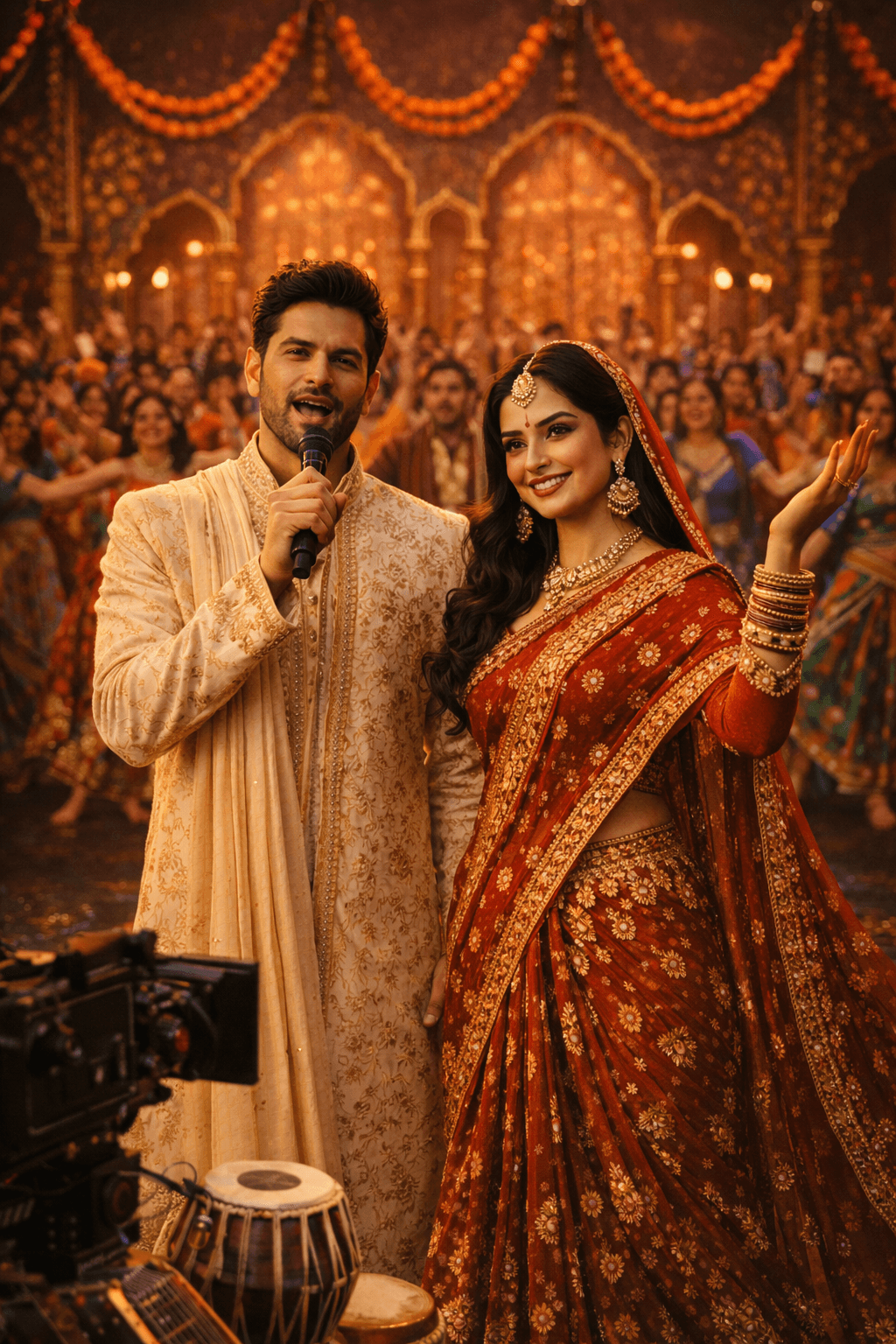
Bollywood (Görsel, yapay zeka aracılığıyla oluşturulmuştur.)
Bollywood is a term referring to the film industry based in Mumbai, India (formerly Bombay), which primarily produces films in Hindi. The term is a portmanteau of “Bombay” and “Hollywood” and specifically denotes the popular Hindi-language film industry rather than all cinematic production in India. India hosts separate film industries operating in Tamil, Telugu, Malayalam and other regional languages, with Bollywood occupying one component within this decentralized structure.
Bollywood is characterized by its production volume, star system, the central role of music and dance in narrative, its melodramatic storytelling structure and its global reach. Within the framework of cultural industry theory, Bollywood’s popular culture production is analyzed in relation to the interplay between ideology and consumer culture, and through the concept of the “dream industry”【1】. This perspective highlights that Bollywood functions not merely as an entertainment producer but also as a field engaged in cultural representation, national identity construction and global perception processes.
From its early days, Indian cinema has integrated music, dance and performative elements into its narratives. With the transition to sound cinema, song and dance sequences became a fundamental component of popular Indian cinema and eventually evolved into a defining structural feature of Bollywood.
Industrially, Bollywood has developed a model integrated with production companies, distribution networks, a star system and the music industry. Film music generates independent economic value, with soundtrack albums released concurrently with film screenings. The status of star actors is a decisive factor for the industry’s sustainability and global visibility. Today, industrial distribution channels are undergoing a digital transformation through both traditional cinemas and OTT platforms.
Comparative analyses have examined the production volume, distribution structures and cultural representation patterns of Hollywood, Bollywood and Nollywood. Bollywood distinguishes itself through its high production capacity, music-and-dance-based narrative and strategic content production targeting the diaspora【2】.
Melodramatic narrative structures dominate Bollywood films. Core themes include love, family, sacrifice, loyalty, class differences and the conflict between tradition and modernity. Film durations are typically long and the dramatic structure is marked by high emotional intensity. The Masala style, which blends multiple genres within this narrative framework, constitutes Bollywood’s most distinctive genre trait.
Song and dance sequences serve not merely as aesthetic elements but as carriers of dramatic narrative. These sequences function as tools to express characters’ inner worlds, romantic relationships and social tensions. Genres such as romantic drama, family melodrama, action and comedy are commonly combined in hybrid forms. Popular Indian cinema generates a mass viewing experience through visual grandeur, costume design and spatial diversity. In this context, Bollywood narrative offers audiences a model of the “dream industry.”
In Bollywood cinema, traditional elements specific to Indian culture are systematically represented. Family structure, marriage rituals, religious practices, social norms and the caste system appear in various forms within narratives.
Gender representations, particularly within the context of family structure and patriarchal order, have been extensively analyzed. Female characters are frequently portrayed through roles centered on motherhood, wifely duty and self-sacrifice, while male characters are constructed around familial authority and protective roles. Nevertheless, some productions have featured characters and alternative identity representations that challenge gender norms.
The tension between tradition and modernity is presented in films through the reproduction and questioning of cultural norms. This mode of representation is examined from the perspectives of both cultural continuity and social transformation.
Bollywood films serve as a vital instrument in sustaining the cultural identity of the Indian diaspora. Narratives targeting the diaspora emphasize cultural belonging, family ties and national values.
Diasporic characters are typically positioned between two cultures, and the narrative structure is shaped around themes of return to India, reconnection with cultural roots or adherence to traditional values【3】. This process facilitates the reconstruction of national identity through cultural symbols.
In international relations literature, Bollywood is regarded as a soft power instrument, strategically used to convey India’s cultural values, social structure and historical references to a global audience【4】.
Qualitative studies, particularly interviews with university students and culturally sensitive participants, reveal that Bollywood films significantly influence perceptions of India. Participants view these films as tools for cultivating cultural affinity, promoting tourism and gaining knowledge about India’s social and religious diversity. These findings demonstrate that cinema functions not merely as entertainment but as a practical instrument of cultural diplomacy and international perception management.
Bajrangi Bhaijaan, when analyzed in the context of public diplomacy and cultural representation, foregrounds universal human values beyond India-Pakistan relations and religious identities【5】. In the film, limited geographical and political conflicts are transcended through themes of human solidarity and cultural empathy.
Film analyses show that the narrative structure reinforces transnational human relationships, tolerance and peace. Characters serve as examples of empathy and moral responsibility at both individual and societal levels. In this sense, the film functions not only as a local narrative but also as an instrument of international cultural diplomacy.
Research conducted in Türkiye indicates that perceptions of India and Bollywood are largely shaped through cinema【6】. A significant portion of participants’ knowledge and imagery of India is derived from Bollywood films.
Research findings indicate that India is perceived through the lens of exotic culture, traditional family structures and social norms. This demonstrates the decisive role of cinema’s cultural representation power in shaping perceptions within an international context.
Gender roles in Bollywood cinema are addressed through the lens of traditional and modern identities. Female characters are commonly represented through family-centered roles, while some films feature female figures who challenge social norms【7】.
Films challenging gender norms have been analyzed within the framework of modernization and individual freedom. Male character identities are linked to patriarchal norms and traditional responsibilities.
Bollywood is regarded as a central component of popular culture production【8】. Star culture, the music industry, dramatic structure and visual aesthetics form a production model tied to mass consumption. Within the framework of the “dream industry” concept, it is argued that Bollywood presents audiences with a narrative world rich in emotional intensity, visual opulence and cultural symbols.
Hollywood, Bollywood and Nollywood are three major representatives of global cinema industries, distinguished by different production and distribution models. Bollywood stands out as a high-volume industry, characterized by its music-and-dance sequences, star actors and expansive shooting locations. Its diaspora-oriented content reinforces traditional Indian values and family structures, contributing to the strengthening of national identity and cultural belonging. Bollywood’s music-and-dance-based narrative, star system and diaspora strategies constitute its defining features that distinguish it from the other two industries and grant it a unique position within global cinema.
Bollywood constitutes a multidimensional cinematic field through its industrial organization model, modes of cultural representation, relationships with the diaspora, gender representations and its function within soft power. It interacts with popular culture production, national identity construction and international perception processes. Its music-and-dance-based narrative structure, melodramatic storytelling and representation of traditional values are among its distinguishing features. In this sense, Bollywood is not merely a national film production center but is also recognized as an active component of global cultural circulation.
[1]
Eylem Şentürk Kara and Bahar Öztürk, Hayal Endüstrisi Bollywood: Popüler Hint Sineması (Ankara: Nobel Akademik Yayıncılık, 2024), 22, Access: 27 February 2026. https://www.researchgate.net/publication/388270794_HAYAL_ENDUSTRISI_BOLLYWOOD_Populer_Hint_Sinemasi
[2]
Onur Taydaş, "A Study on Hollywood, Bollywood and Nollywood Film Industries," Cinema Sociology: History, Society and Audience ed. Enderhan Karakoç and Özlem Özgür. Nobel Akademik Yayıncılık, 163.https://www.academia.edu/93909379/
[3]
Gamze Güneş, "Bollywood Films and the Indian Diaspora: How Are Indian Values Reconstructed?," Journal of Social Policy Studies 19, no. 42 (2019): 116, Access: 27 February 2026. https://search.trdizin.gov.tr/tr/yayin/detay/391665/
[4]
Eylem Şentürk Kara and Şeyma Kozluklu, "Evaluating Bollywood Films in the Context of Soft Power: A Qualitative Study Among Communication Faculty Students at İnönü University," International Journal of Folklore Studies 3, no. 4 (2020): 87, Access: 27 February 2026. https://dergipark.org.tr/en/download/article-file/1137343
[5]
Zindan Çakıcı and Emre Meriç, "Revisiting Bollywood Cinema in the Context of Public Diplomacy: A Study on Bajrangi Bhaijaan," İleti-ş-im, Special Issue: 6 (January 2021): 48, Access: 27 February 2026. https://dergipark.org.tr/tr/download/article-file/1532105
[6]
Hacer Özyanıkoğlu and Cengiz Şahin, "A Study on Perceptions of India, Bollywood and Caste in Türkiye," International Journal of Asian Studies 6, no. 1 (2022): 83, Access: 27 February 2026. https://dergipark.org.tr/en/download/article-file/2447990
[7]
Özge Bacaksız, "Reflection of Traditional Elements of Indian Culture in Bollywood Cinema:
[8]
Eylem Şentürk Kara and Şeyma Kozluklu, "Evaluating Bollywood Films in the Context of Soft Power: A Qualitative Study Among Communication Faculty Students at İnönü University," International Journal of Folklore Studies 3, no. 4 (2020): 87, Access: 27 February 2026. https://dergipark.org.tr/en/download/article-file/1137343


Bollywood (Görsel, yapay zeka aracılığıyla oluşturulmuştur.)
Historical Background and Industrial Development
Narrative Structure and Genre Characteristics
Cultural Representation and Traditional Elements
Diaspora and Identity Construction
Bollywood in the Context of Soft Power
Public Diplomacy and Film Analysis: Bajrangi Bhaijaan
Perceptions of India and Bollywood in Türkiye
Gender and Modernization
Popular Culture and the Dream Industry
Comparative Industry Analysis