

This article was automatically translated from the original Turkish version.
+2 More
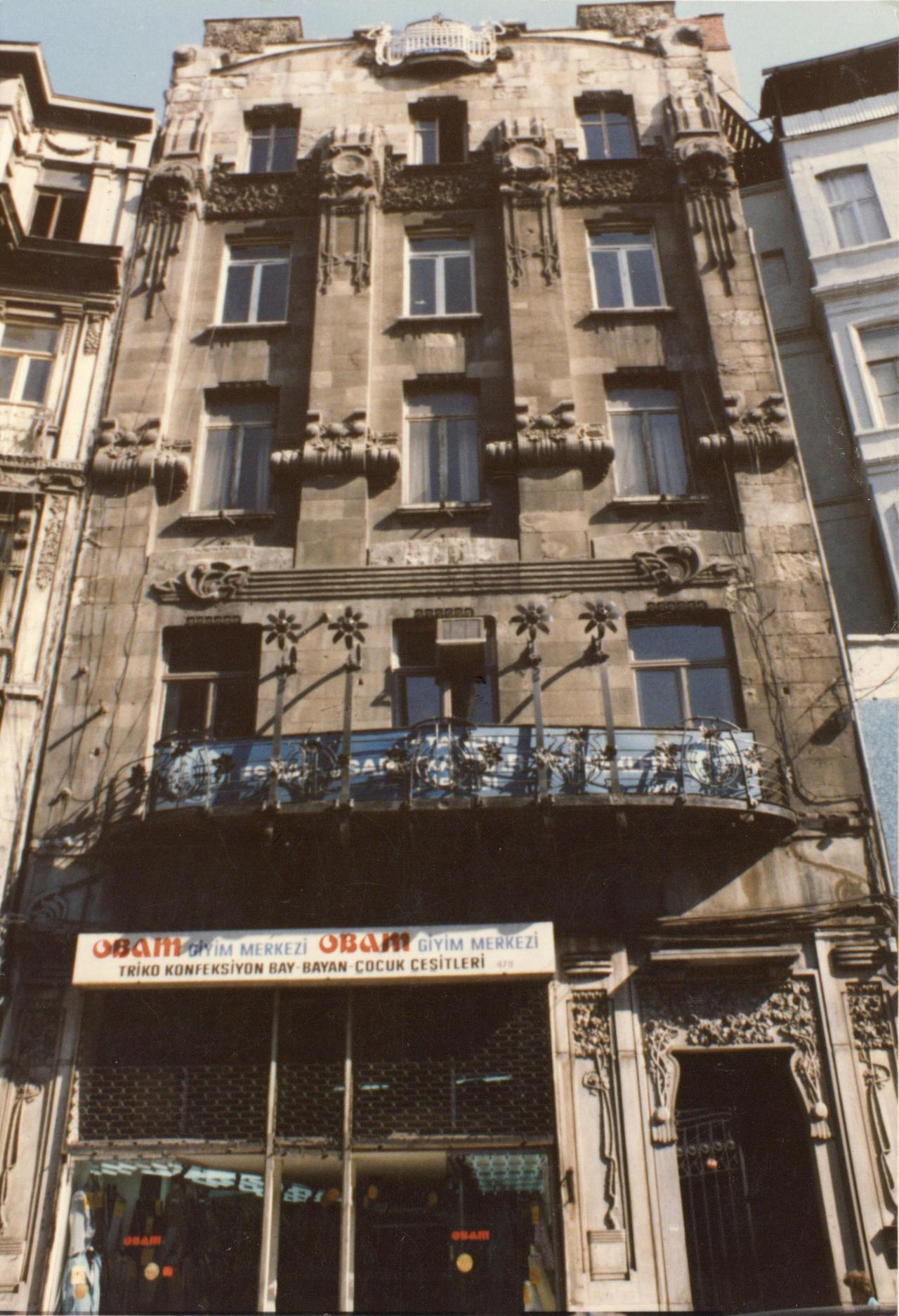
Botter Apartmanı, Istanbul’s Beyoğlu district, located on İstiklal Avenue (formerly known as Cadde-i Kebir), is a historic building recognized as the first in Türkiye to be constructed in the Art Nouveau (New Art) style. It was designed and built between 1900 and 1901 by the court architect Raimondo D'Aronco for Jean Botter, a Dutch tailor and fashion designer who served Sultan Abdülhamid II.
As a building designed to serve simultaneously as a fashion atelier and a residence, it is one of the most significant examples of functional diversity during the Ottoman period.【1】
The construction of Botter Apartmanı was part of the intensive apartment-building trend that began in the Pera district at the end of the 19th century. The Dutch fashion designer Jean Botter commissioned the Ottoman court architect, Italian Raimondo D'Aronco, to design a building that would unite his atelier and residence. Completed in 1901, the building long served as the center of the fashion world under the name "Maison Jean Botter."
Following the Balkan Wars and World War I, interest in the building declined, and in 1917 the Botter family decided to relocate to Paris, selling the structure to Mahmut Nedim Bey, the son of Ottoman statesman Nedim Paşa. During the Republican era, the building changed hands multiple times and was used as a bank branch in the 1960s. Over time, it fell into disrepair and became neglected. The building was restored in 2021 and reopened to the public in 2023 as the "Casa Botter Center for Art and Design."
The building was constructed in a row-house format on a narrow and elongated plot. The entrance is located on the side, as the ground floor facing the avenue was dedicated to the fashion atelier. The structure comprises multiple levels including a basement, ground floor, mezzanine, residential floors, and a terrace. Sources vary between describing it as seven or nine stories; therefore, when counting floors, the basement, ground floor, mezzanine, residential levels, and terrace should be considered together. The structural system uses iron, infill walls are made of brick, and the exterior façade is clad in stone.
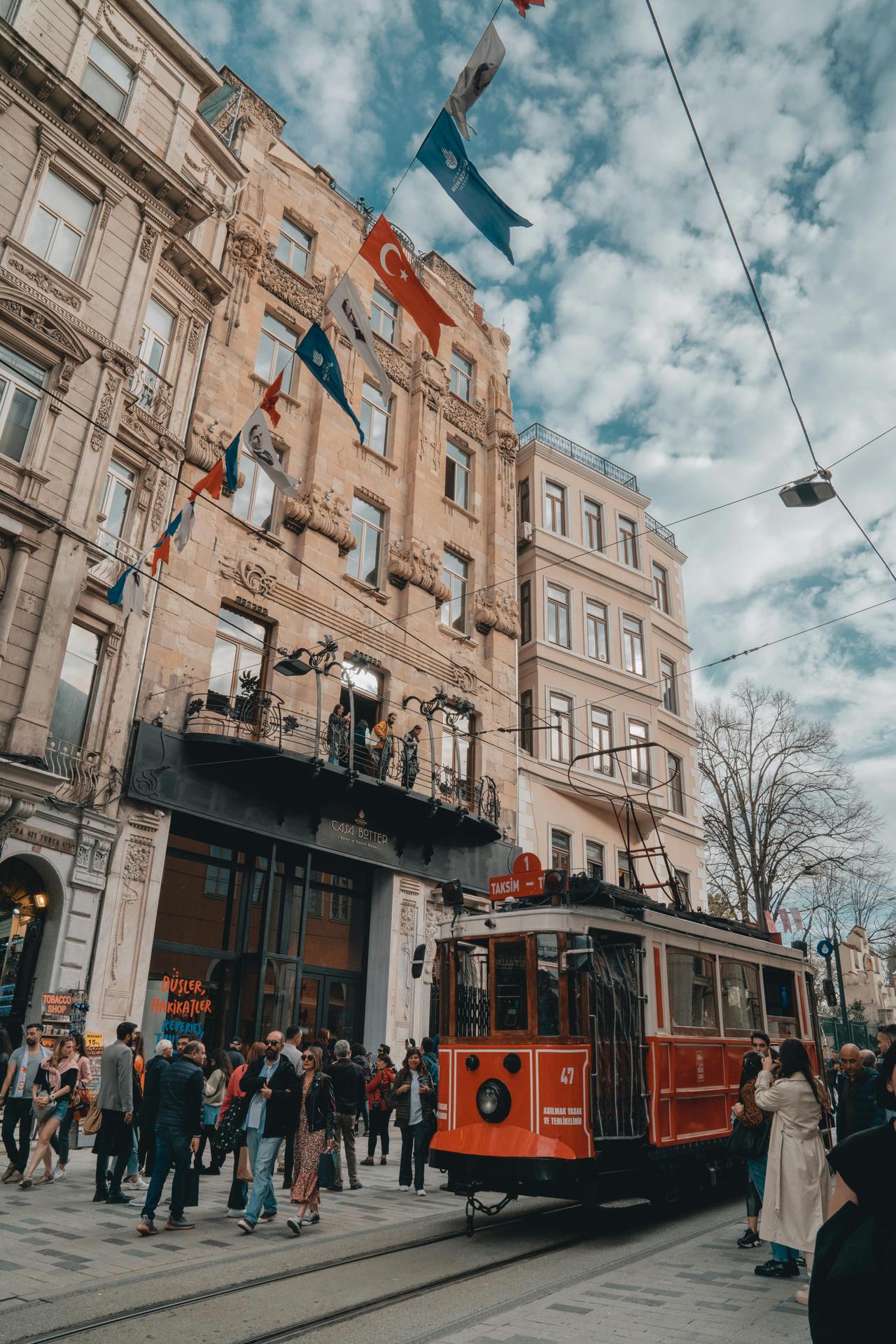
Botter Apartmanı (pexels)
In architectural literature, Botter Apartmanı is regarded as the physical manifestation of the Gesamtkunstwerk (total work of art) concept in Istanbul. According to this approach, the building’s exterior façade, interior spatial planning, stair railings, furniture, and stained-glass windows were all designed in a unified artistic language using the characteristic features of Art Nouveau. The design shows clear influences from the Vienna Secession.
The ground floor was conceived as a prestigious fashion atelier with high-ceilinged display windows facing the avenue. Upon completion, it housed Botter’s sales and exhibition rooms, connected to the mezzanine level by two opposing curved staircases. The mezzanine is believed to have been used for fashion shows; its walls were covered with mirrors and fabrics, and its windows featured stained glass. The first floor was designated for workshop functions, while the upper floors served as the family’s private living quarters.
The interior features a striking elliptical staircase hall with curved stairs, landings, Art Nouveau-style railings, stained-glass windows, circular doors, an elevator cabin, and an iron cage. The elliptical elevator cabin is lined with wood; both the elevator cage and stair railings incorporate ring motifs and botanical elements.
The building’s most distinctive feature is its sinuous, plant-inspired ornamentation, characteristic of the Art Nouveau movement’s inspiration from nature. The following motifs are prominent on both the façade and interior:
Between 2021 and 2023, a restoration project led by IBB Heritage strengthened the building against earthquakes while scientifically preserving its original features—including the elevator, staircases, and stained-glass windows. Today, operating as the Casa Botter Center for Art and Design, the ground floor functions as an exhibition hall, while upper floors house design ateliers, artist offices, a library, and a conference room. The garden area has been repurposed as a design house and café.
Görgülü, Tülin. "Apartman Tipolojisinde Geçmişten Bugüne; Kira Apartmanından ‘Rezidans’a Geçiş." *TUBA-KED* 14 (2016): 165–182. Accessed April 12, 2026. https://avesis.yildiz.edu.tr/yayin/ef35c1b2-e36d-4cf6-b367-29d8a86d8058/apartman-tipolojisinde-gecmisten-bugune-kira-apartmanindan-rezidansa-gecis
Kasap, Serdar. "Art Nouveau in Istanbul: A Case Study of the Botter Apartment." *The Journal of Social Sciences* 12, no. 79 (December 2025): 229–238. Accessed April 12, 2026. https://doi.org/10.29228/SOBIDER.88635
SALT Araştırma. "Botter Apartmanı - Botter Building." archives.saltresearch.org. Accessed April 21, 2026. https://archives.saltresearch.org/handle/123456789/69937
Söylemez, Duygu İlkhan. "Botter Apartmanının Gesamtkunstwerk Çerçevesinde İncelenmesi." Anemon Muş Alparslan Üniversitesi Sosyal Bilimler Dergisi 10, no. 2 (2022): 719-739. Accessed April 12, 2026.
Tezgah, Sevil. "Mimari Tezyinatta İstanbul Art Nouveau’su." Master's thesis, Fatih Sultan Mehmet Vakıf Üniversitesi, 2017. Accessed April 12, 2026. https://tez.yok.gov.tr/UlusalTezMerkezi/tezDetay.jsp?id=i5A5oqrhVTgc2toQngkYag&no=sSGTGFvHsymFIf6DU2r9ew
Türk, Sami. "Vintage tram rides along bustling Istiklal Avenue in Istanbul, surrounded by historic architecture." pexels. Accessed April 12, 2026. https://www.pexels.com/photo/cable-car-in-old-town-16555422/
https://dergipark.org.tr/en/pub/anemon/article/1054849
İBB Atatürk Library. "Casa Botter." ataturkkitapligi.ibb.gov.tr. Accessed April 12, 2026. https://ataturkkitapligi.ibb.gov.tr/tr/Kitaplik/Muzelerimiz/Casa-Botter-/28
[1]
Duygu İlkhan Söylemez, "Botter Apartmanının Gesamtkunstwerk Çerçevesinde İncelenmesi," Anemon Muş Alparslan Üniversitesi Sosyal Bilimler Dergisi 10, sy. 2 (2022): 721-722. https://dergipark.org.tr/en/pub/anemon/article/1054849

History
Architectural Structure and Style
Ornamentation and Decorative Features
Restoration and Current Use