


This article was automatically translated from the original Turkish version.
+1 More
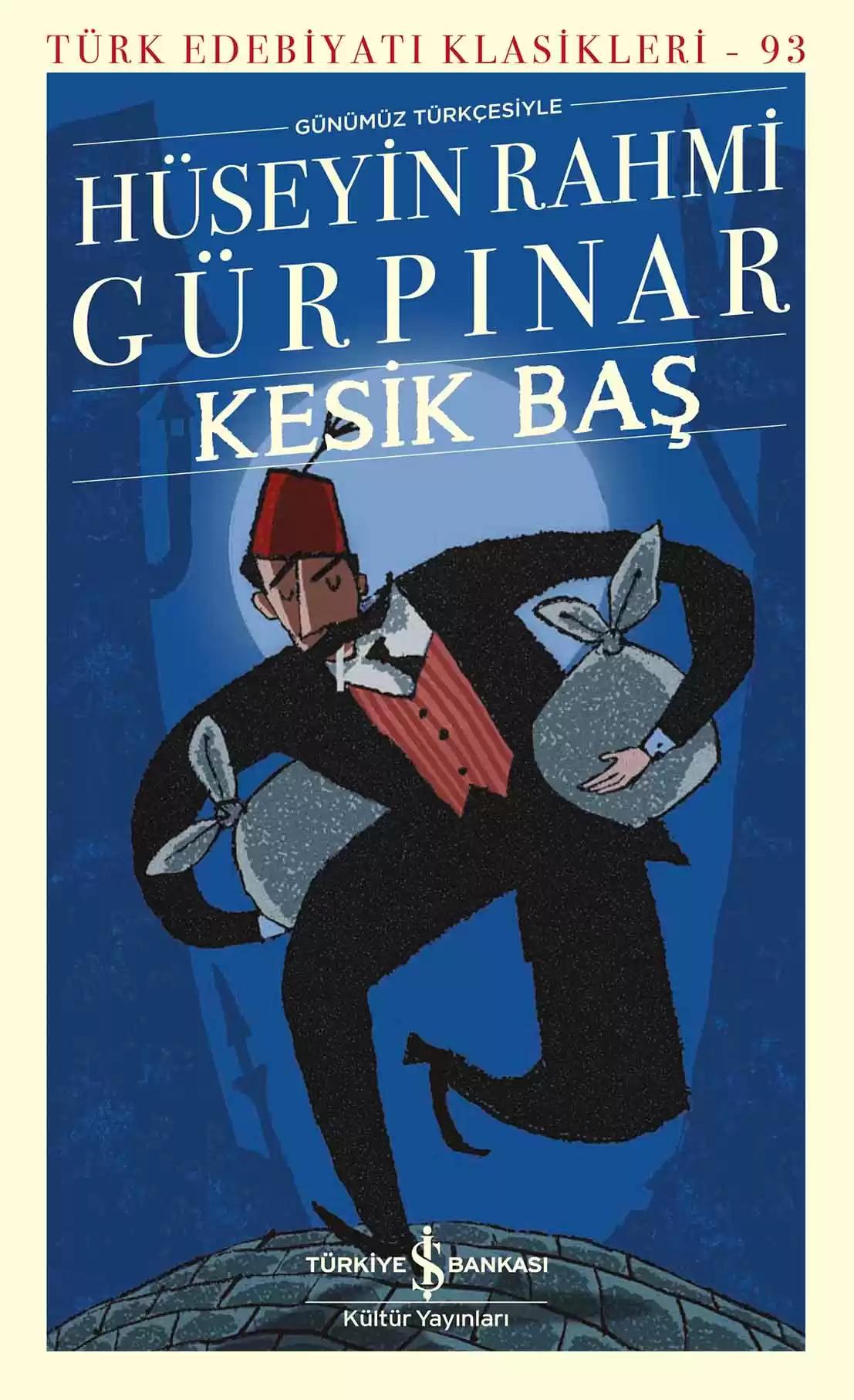
Broken Head (Novel)
Author(s) | Hüseyin Rahmi Gürpınar | ||||||||
|---|---|---|---|---|---|---|---|---|---|
Year of Publication | 1911 | ||||||||
Type(s) | Novel | ||||||||
Subject(s) | The effects of superstitions on society | ||||||||
Theme(s) | Superstitions modernization and scientific thought social criticism ignorance irrational beliefs | ||||||||
Kesik Baş is a novel by Hüseyin Rahmi Gürpınar, published in 1911. This work is one of the most significant examples of the author’s literary approach, offering an original critique of the social structure, superstitions, and irrational beliefs of its time. Evaluated within the realist movement in Turkish literature, Kesik Baş reveals Hüseyin Rahmi’s struggle against societal ignorance and his quest for individual enlightenment. Within its historical context, the novel explores the impact of widespread popular superstitions on individuals and the tragic events they provoke. The novel is not merely a tale of fear or suspense; it also carries a powerful social critique.
The novel centers on a climate of fear generated by the legend of a severed head and its social consequences. It illustrates how superstitions, when combined with ignorance, produce destructive outcomes. A rumor that a severed head has been seen in the garden of a mansion sparks widespread panic in the neighborhood. The local population explains the incident through various folktales, and as the rumor grows, unrest intensifies throughout the community. Throughout the novel, the people’s unwavering adherence to superstitions and the way these beliefs shape their lives are powerfully emphasized. In this work, Hüseyin Rahmi dramatizes the social and individual consequences of blind faith in superstitions.
Kesik Baş is written in Ottoman Turkish of its period. As in the author’s other works, a simple and accessible language is preferred. The humorous tone employed throughout the novel softens its critical edge, engaging readers intellectually while also entertaining them. One of the most striking features of the work is its successful depiction of social events and individual psychology under the influence of realism. Through its characters, the author satirizes the widespread superstitions and false beliefs of the public.
The central themes of the novel include superstition, ignorance, social decay, and enlightenment. Hüseyin Rahmi Gürpınar treats the prevalent folk superstitions and irrational beliefs in the community with deep irony. Through the legend of the “severed head,” he exposes how easily the public succumbs to non-rational modes of thought. In this context, the author critiques a social structure in which individual reason is disregarded and a culture of questioning has not developed. Ignorance is one of the primary targets of the author’s sharpest criticism, as it is portrayed throughout the novel not only as a personal failing but as the fundamental problem affecting the entire social environment at the neighborhood level. In contrast, a strong call for enlightenment underlies the novel’s subtext. Hüseyin Rahmi sees science, education, and rational thought as the antidote to superstition; in this sense, the novel is not merely a tale of fear but also a didactic text.
Kesik Baş is regarded as one of the earliest examples in Turkish literature to combine themes of fear and suspense with social critique. Blending realism with a humorous style, this work was bold for its time. It is recognized as one of Hüseyin Rahmi’s novels in which he undertook the mission of raising public awareness. At the same time, it stands as a significant example of Gürpınar’s “art for the people” philosophy. In academic circles, Hüseyin Rahmi’s novel is considered one of the most successful literary representations of the critique of superstition and irrational belief in traditional Turkish literature.
Bağcı, Müberra. “Gürpınar’ın Kesik Baş Romanında Polisiye Unsurlar.” Ankara Üniversitesi Dil ve Tarih-Coğrafya Fakültesi Türkoloji Dergisi, Volume 25, Issue 2, 2021. Accessed June 12, 2025. https://dergipark.org.tr/tr/download/article-file/1936201
Gürpınar, Hüseyin Rahmi. *Kesik Baş*. Türkiye İş Bankası Kültür Yayınları, 2023.

Broken Head (Novel)
Author(s) | Hüseyin Rahmi Gürpınar | ||||||||
|---|---|---|---|---|---|---|---|---|---|
Year of Publication | 1911 | ||||||||
Type(s) | Novel | ||||||||
Subject(s) | The effects of superstitions on society | ||||||||
Theme(s) | Superstitions modernization and scientific thought social criticism ignorance irrational beliefs | ||||||||
No Discussion Added Yet
Start discussion for "Broken Head (Novel)" article
Plot
Structure and Style
Themes
Place in Literature