


This article was automatically translated from the original Turkish version.
+1 More
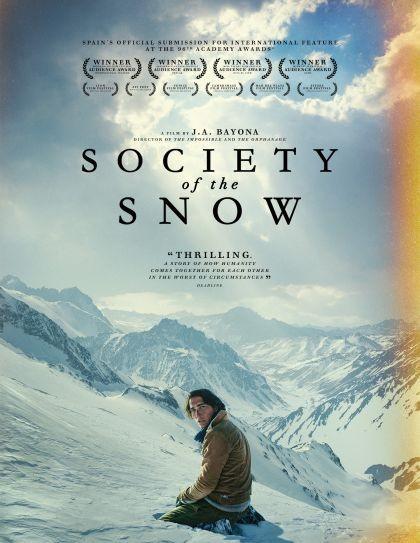
Brotherhood of Snow
Type(s) | Survival Tension | ||||||||
|---|---|---|---|---|---|---|---|---|---|
Director(s) | Juan Antonio Bayona | ||||||||
Production Year | 2023 | ||||||||
Language(s) | Spanish | ||||||||
Country | Spain | ||||||||
Actors | Esteban Bigliardi Matías Recalt Agustín Pardella Enzo Vogrincic | ||||||||
Duration | 144 Minutes | ||||||||
Award(s) | Won Numerous Awards at the Goya Awards Nominated for Best International Feature Film at the 2024 Academy Awards | ||||||||
Screenwriter(s) | Casariego Vilaplana Bayona Marques | ||||||||
Producer(s) | Netflix | ||||||||
Juan Antonio Bayona’s 2023 film Society of the Snow (Turkish title: Kar Kardeşliği) is based on the true events surrounding the passengers of a Uruguayan Air Force plane that crashed in the Andes Mountains in 1972. The film brings to the screen a survival struggle woven not only with physical hardships but also with profound ethical and spiritual trials. With its visual language, performances, and narrative rhythm, the production examines human fragility in the face of nature alongside individual and collective conscience.
Disaster films adapted from real events hold a significant place in cinema history. One of the most notable examples of this genre in 2023, Society of the Snow addresses not only a physical catastrophe but also the extreme limits of human nature. Adapted from Pablo Vierci’s book of the same name, the film transplants the human sensitivity evident in Bayona’s earlier works onto a far colder and harsher terrain.
Kar Kardeşliği Official Trailer (YouTube)
The film opens with the crash of a plane carrying a Uruguayan rugby team and other passengers en route from Montevideo to Santiago, which strikes the Andes Mountains. The survivors endure seventy-two days amid snow-covered peaks, battling extreme weather and a complete lack of food. As food sources vanish, the passengers are forced to consume the bodies of their deceased companions. This act is not merely a matter of survival; the film presents a narrative in which the boundaries between life and death blur, and beliefs, morality, and human values are redefined. Religious symbols, silence, and the unembellished grandeur of nature deepen these themes.

Scene from Kar Kardeşliği (iMDb)
Juan Antonio Bayona opts for a minimalist, static, and restrained cinematic language in this film. Wide-angle shots of the natural landscape emphasize the smallness and isolation of the characters. The whiteness of the snow reflects both purity and the coldness of death. The camera frequently closes in on faces, deepening the narrative through expressions and gazes. The film makes limited use of dramatic music; instead, the sounds of nature and silence are rendered as powerful narrative tools, rivaling dialogue in emotional impact.
The cast of the film consists largely of young and relatively unknown actors. This choice enhances the authenticity of the audience’s connection to the characters. Enzo Vogrincic, who plays Numa, conveys the character’s inner transformation through silence. Through his performance, ethical questioning and internal change become central to the narrative. Agustín Pardella, as Carlitos, stands out as a representation of faith. The characters’ drama is presented with restraint, preserving a strong sense of realism.

Scene from Kar Kardeşliği (iMDb)
Society of the Snow lays bare how ethical decisions are forced into conflict by necessity. The act of consuming human remains is presented not merely as a physiological imperative but as a profound test of conscience, faith, and social norms. The process by which the characters arrive at this decision forms the dramatic core of the film. Additionally, the film explores how belief in God can transform in the face of such a catastrophe. The silence that follows unanswered prayers, and the identification of silence with the presence of God, imbue the narrative with a philosophical dimension.
The film treats the theme of survival not only individually but also collectively. The new social structure that emerges among the characters reveals how group dynamics intertwine with survival strategies. In this regard, the film is not merely a disaster story but also a sociological commentary on how communities are reconfigured during crises.
Cinematically, Society of the Snow presents the emotional intensity seen in Bayona’s earlier films such as The Impossible (2012) and A Monster Calls (2016) through a more minimalistic style. This film can be regarded as a mature milestone in the director’s cinematic career.
Society of the Snow is a work that does not merely witness the aftermath of a plane crash but confronts the viewer with the limits of being human. With its visual simplicity, ethical depth, and psychological realism, it stands as one of contemporary cinema’s most significant survival narratives. The film powerfully reflects the most naked form of human existence, vulnerability before nature, and the physical and spiritual dimensions of solidarity.
Debruge, Peter. “‘Society of the Snow’ Review: A Bone-Chilling Survival Drama From the Director of ‘The Impossible’.” *Variety*. September 9, 2023. https://variety.com/2023/film/reviews/society-of-the-snow-review-1235720505/. Accessed May 12, 2025.
“Kar Kardeşliği (2023) –Film Bilgileri and Reviews.” *Beyazperde*. https://www.beyazperde.com/filmler/film-267338/. Accessed May 12, 2025.
“Kar Kardeşliği (Society of the Snow) – 2023.” *Sinemalar.com*. https://www.sinemalar.com/film/275373/la-sociedad-de-la-nieve. Accessed May 12, 2025.
“Society of the Snow (2023) – IMDb.” IMDb. https://www.imdb.com/title/tt16277242/. Accessed May 12, 2025.

Brotherhood of Snow
Type(s) | Survival Tension | ||||||||
|---|---|---|---|---|---|---|---|---|---|
Director(s) | Juan Antonio Bayona | ||||||||
Production Year | 2023 | ||||||||
Language(s) | Spanish | ||||||||
Country | Spain | ||||||||
Actors | Esteban Bigliardi Matías Recalt Agustín Pardella Enzo Vogrincic | ||||||||
Duration | 144 Minutes | ||||||||
Award(s) | Won Numerous Awards at the Goya Awards Nominated for Best International Feature Film at the 2024 Academy Awards | ||||||||
Screenwriter(s) | Casariego Vilaplana Bayona Marques | ||||||||
Producer(s) | Netflix | ||||||||
No Discussion Added Yet
Start discussion for "Brotherhood of the Snow" article
Plot and Thematic Depth
Direction and Cinematography
Performances and Character Construction
Ethical and Religious Inquiry in the Film
Evaluation in Social and Cinematic Context