


This article was automatically translated from the original Turkish version.
+1 More
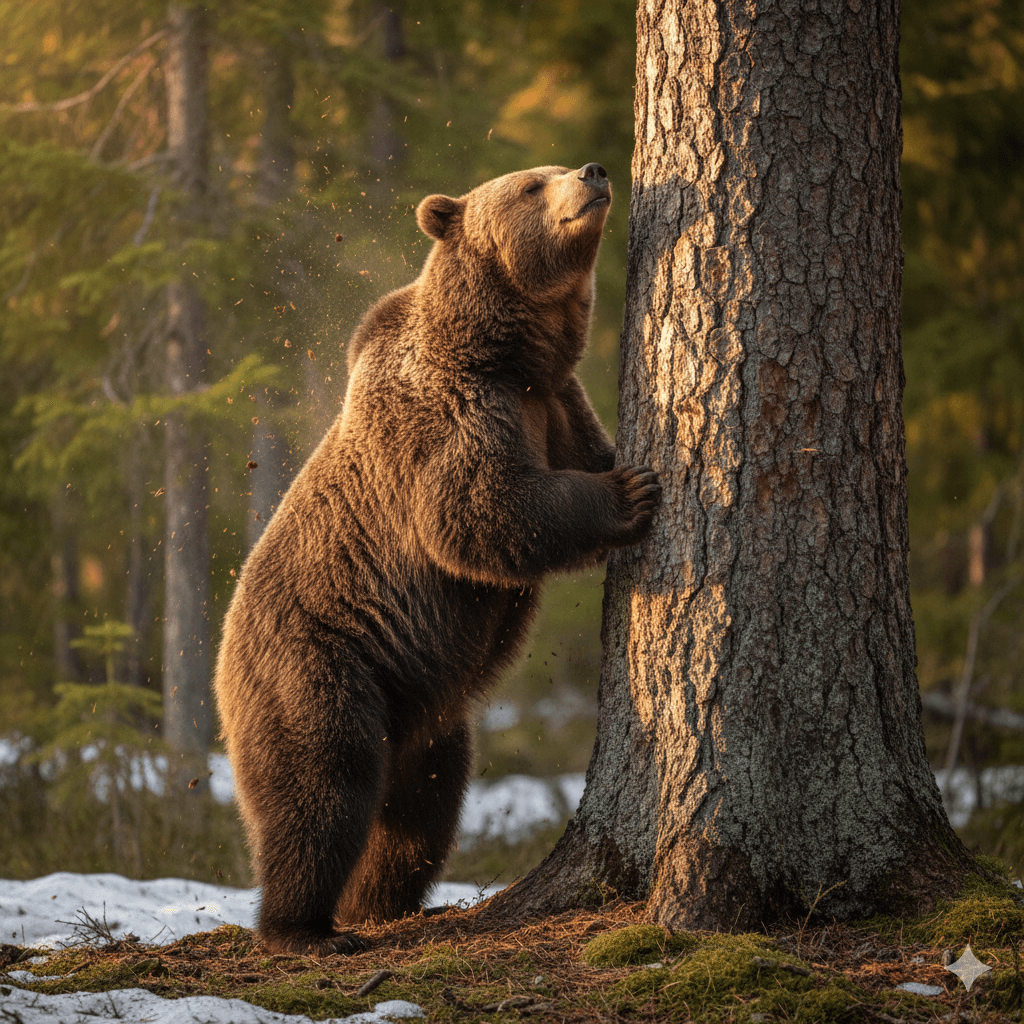
Brown Bear (Ursus Arctos)
Image generated by Artificial Intelligence
Brown bear (Ursus arctos)
Conservation Status | Strict protection under the Bern and CITES conventions | ||||||||
|---|---|---|---|---|---|---|---|---|---|
Habitat | Steep mountains Rocky areas Deciduous forests | ||||||||
Size(s) | Length 180-220 cm Weight 150-250 kg | ||||||||
Classification(s) | Order Mammalia Family Ursidae Family Carnivora | ||||||||
Ecological Role | Seed disperser, Indicator of ecosystem health | ||||||||
Winter Period | Deep hibernation beginning in October to December | ||||||||
Senses | Strong sense of smell, Poor eyesight | ||||||||
Lifespan | Average 20 to 30 years in the wild | ||||||||
Litter Size | Usually twins, Average one to four | ||||||||
Gestation Period | Approximately 180 to 270 days | ||||||||
Population in Türkiye | Approximately 3,000 to 5,000 individuals | ||||||||
Distribution in Türkiye | Black Sea Taurus, Inner Aegean, Eastern Anatolia | ||||||||
Food Sources | Plant roots, Fruit, Insects, Fish, Carrion | ||||||||
Feeding Style | Omnivore | ||||||||
Bozayı | Ursus arctos | ||||||||
Brown bear (Ursus arctos), Mammals (Mammalia) class, order Carnivora, and family Ursidae, is a large mammalian species with a wide geographic distribution. This animal, occupying the apex of the food pyramid in terrestrial ecosystems of the Northern Hemisphere, is classified as a “umbrella species” or “keystone species” for the conservation of biological diversity. The subspecies found in North America is known as the “Grizzly” (Ursus arctos horribilis), while populations in Türkiye and Europe generally belong to the Eurasian brown bear subspecies.
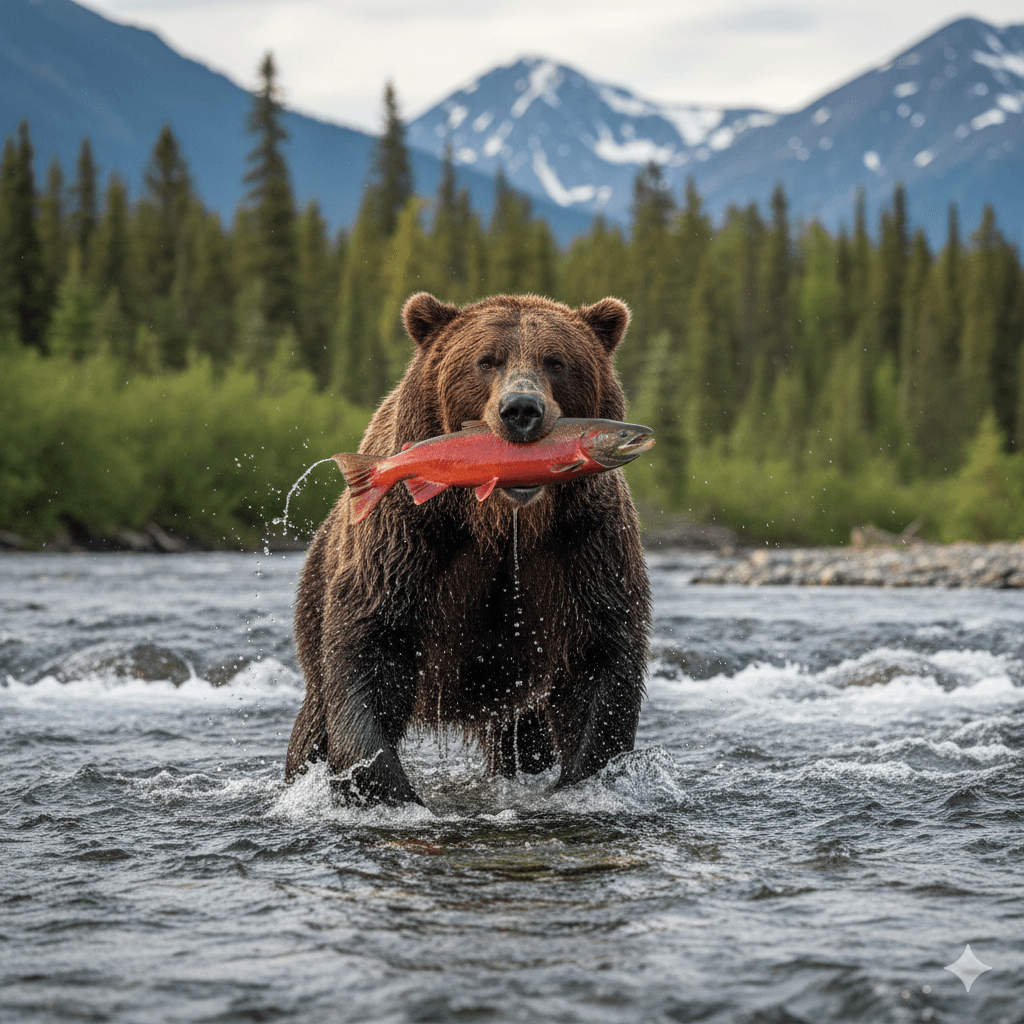
Brown bear (Ursus arctos) (Generated by Artificial Intelligence)
Brown bears possess a robust skeletal structure, a broad skull, and a prominent muscular hump on the shoulders. This shoulder hump provides strength to the forelimbs, facilitating digging. Adult body mass varies between 80 kg and 600 kg depending on geographic location and food availability; due to sexual dimorphism, males are 8–10% larger than females and in some cases can weigh twice as much. Their feet are five-toed with long, curved claws adapted for digging rather than climbing. Fur color ranges beyond the typical “brown” to include cream, dark brown, and black. In particular, the “Grizzly” subspecies has silver-tipped hairs that give a grizzled appearance. Although their vision is relatively weak, their sense of smell and hearing are highly developed.
Brown bears inhabit a wide variety of habitats across the Palearctic and Nearctic biogeographic regions (Holarktis), including tundra, taiga, temperate forests, alpine meadows, and coastal areas. Historically, their range extended from North Africa to Mexico, but today, due to habitat loss and human pressure, they persist only in fragmented populations occupying a small fraction of their former territory. In Türkiye, the Ursus arctos population is primarily concentrated in forested and steep rocky areas of the Black Sea Region, Eastern Anatolia, the Taurus Mountains, and the Inner Aegean mountains. The population size in Türkiye is estimated at between 3,000 and 5,000 individuals.
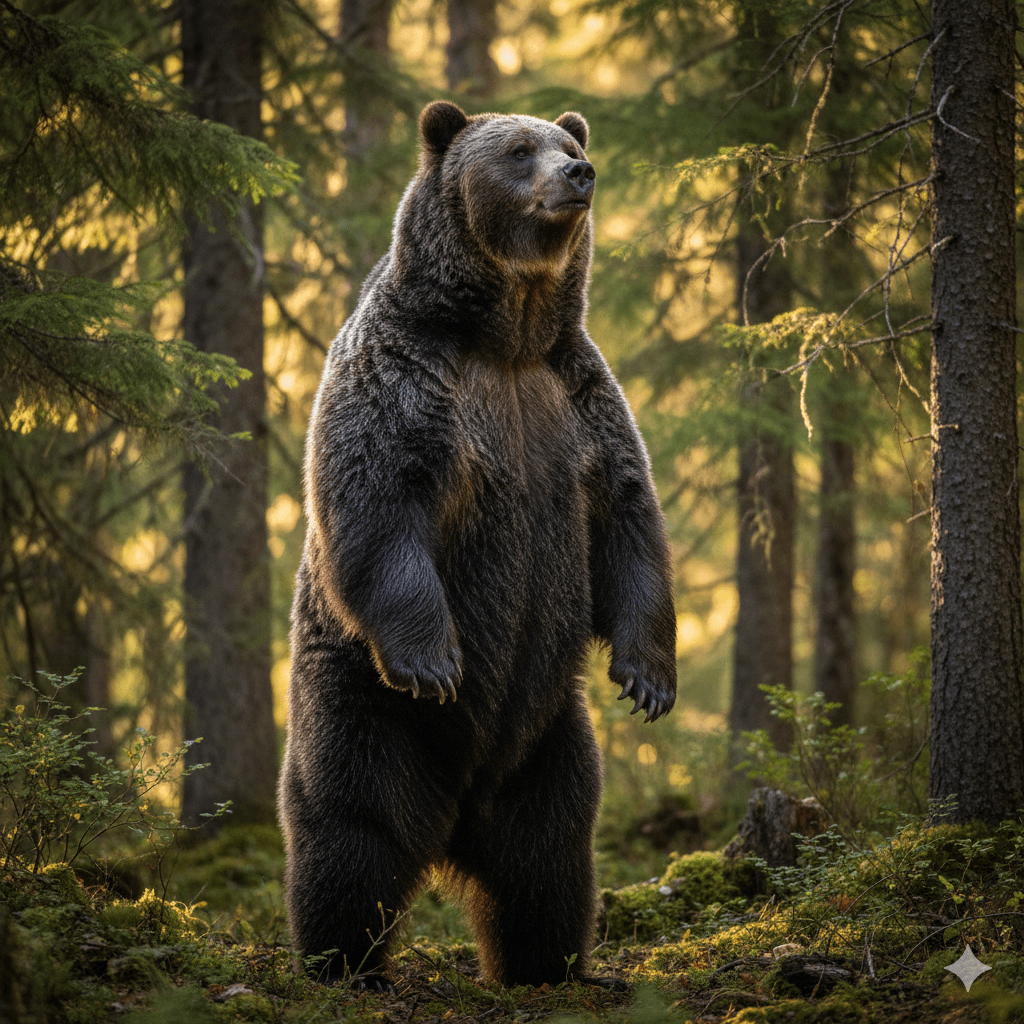
Brown bear (Ursus arctos) (Generated by Artificial Intelligence)
Although taxonomically classified among carnivores, brown bears have an opportunistic omnivorous diet. Their dietary composition varies seasonally and according to food availability. Plant material constitutes a significant portion of their diet, including grasses, roots, tubers, fruits, nuts, and fungi. Animal protein sources include insects (especially beetles and ants), fish (particularly spawning salmon), rodents, ungulate calves, and carrion. Prior to hibernation, they enter a period of intense feeding known as hyperphagia to accumulate fat reserves, during which they can store more than 1.5 kg of fat per day.
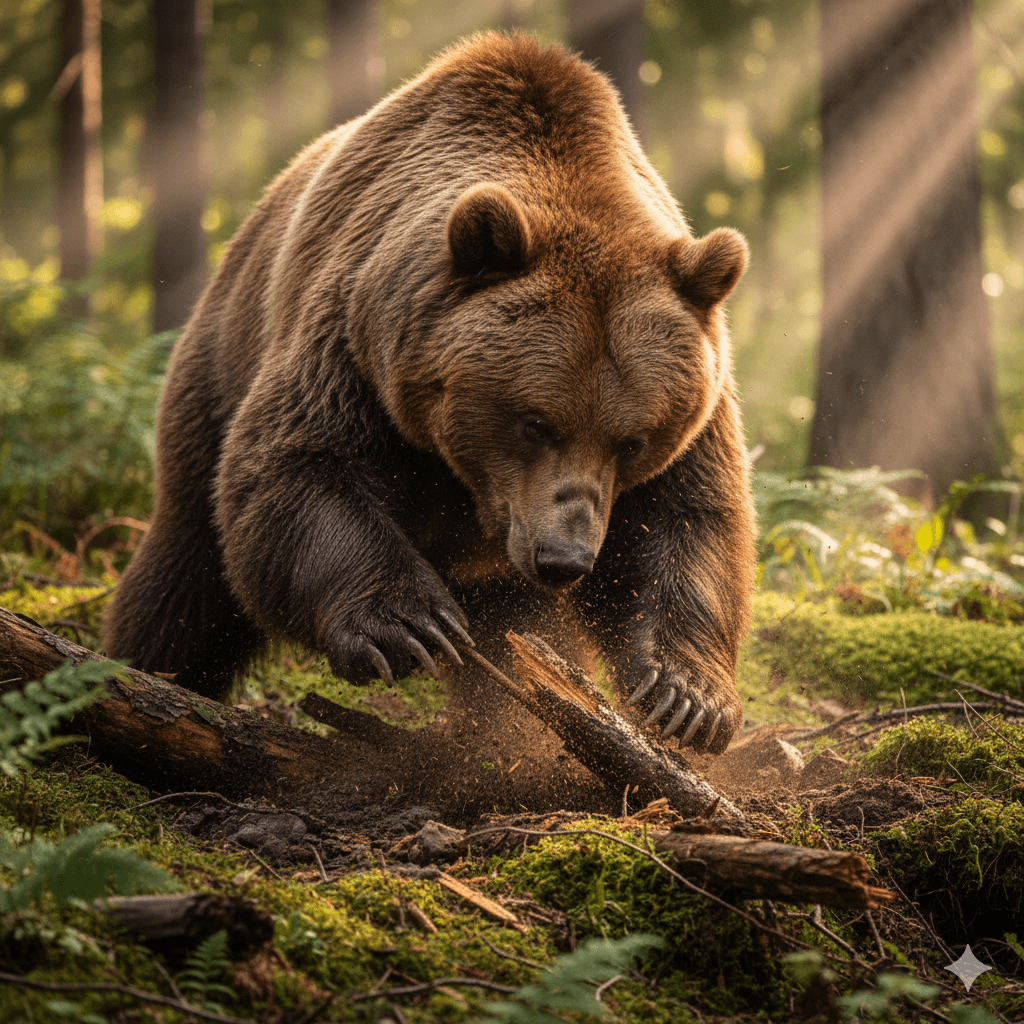
Brown bear (Ursus arctos) (Generated by Artificial Intelligence)
The mating season typically occurs between May and July. The most distinctive feature of brown bear reproductive physiology is delayed implantation; the fertilized egg does not immediately attach to the uterus but remains in suspended development until November, when the female enters hibernation. Cubs are born blind and hairless in January or February while the mother is hibernating. Females typically give birth to one to three cubs and rear them for two to three years, teaching them survival skills; during this period, females do not mate again. In the wild, average lifespan is 20–30 years, although cub mortality is high in the first years of life.
During winter months when food sources are scarce, brown bears lower their metabolic rate and enter hibernation. This state is not a true hibernation physiologically but rather a deep, prolonged sleep (torpor) in which body temperature drops only slightly. This period begins in October or November and may last until March or April. During this time, the animal does not eat, drink, urinate, or defecate; metabolic waste is recycled within the body. Dens are typically located in sheltered slopes, tree roots, or rock crevices.
Recognized as ecosystem engineers, brown bears contribute to vegetation renewal by dispersing fruit seeds through their feces over wide areas and help regulate prey populations. Their digging while searching for roots aerates the soil and supports the nitrogen cycle. Although the International Union for Conservation of Nature (IUCN) classifies the species globally as “Least Concern” (LC), local populations (e.g., those in the southern United States) remain threatened.
The species is listed under Appendix I of CITES (Convention on International Trade in Endangered Species of Wild Fauna and Flora) and Appendix II of the Bern Convention, granting it international “strict protection” status. In Türkiye, hunting is prohibited under the Illegal Hunting Law. 【1】The primary threats include habitat fragmentation, human-caused mortality, and illegal hunting.
Accessed November 26, 2025.
Center for Biological Diversity. "Natural History: Grizzly Bear." Center for Biological Diversity. Accessed February 18, 2026.
Defenders of Wildlife. "Grizzly Bear." Defenders of Wildlife. Accessed February 18, 2026.
Dewey, Tanya and Liz Ballenger. "Ursus arctos (brown bear)." Animal Diversity Web. Accessed February 18, 2026.
Doğa Derneği. "Bozayılar sağlıklı yaşam alanlarının göstergesi." Accessed February 18, 2026. https://dogadernegi.org/bozayi/
Okatan, Ayşenur. "Türkiye’nin Bozayısı." Bilim Genç (TÜBİTAK). Accessed February 18, 2026.
WWF-Türkiye. "Bozayılar Soru-Cevap." WWF-Türkiye. Accessed February 18, 2026.
Western Wildlife Outreach. "Grizzly Bear Biology & Behavior." Western Wildlife Outreach. Accessed February 18, 2026. https://westernwildlife.org/grizzly-bear-ursus-arctos-horribilis/biology-behavior/
[1]
Doğa Derneği, “Brown bears are indicators of healthy habitats,” Doğa Derneği, accessed 18 February 2026,

Brown Bear (Ursus Arctos)
Image generated by Artificial Intelligence
Brown bear (Ursus arctos)
Conservation Status | Strict protection under the Bern and CITES conventions | ||||||||
|---|---|---|---|---|---|---|---|---|---|
Habitat | Steep mountains Rocky areas Deciduous forests | ||||||||
Size(s) | Length 180-220 cm Weight 150-250 kg | ||||||||
Classification(s) | Order Mammalia Family Ursidae Family Carnivora | ||||||||
Ecological Role | Seed disperser, Indicator of ecosystem health | ||||||||
Winter Period | Deep hibernation beginning in October to December | ||||||||
Senses | Strong sense of smell, Poor eyesight | ||||||||
Lifespan | Average 20 to 30 years in the wild | ||||||||
Litter Size | Usually twins, Average one to four | ||||||||
Gestation Period | Approximately 180 to 270 days | ||||||||
Population in Türkiye | Approximately 3,000 to 5,000 individuals | ||||||||
Distribution in Türkiye | Black Sea Taurus, Inner Aegean, Eastern Anatolia | ||||||||
Food Sources | Plant roots, Fruit, Insects, Fish, Carrion | ||||||||
Feeding Style | Omnivore | ||||||||
Bozayı | Ursus arctos | ||||||||
No Discussion Added Yet
Start discussion for "Brown bear (Ursus arctos)" article
Physical Characteristics
Habitat and Distribution
Feeding Ecology
Reproduction and Lifespan
Hibernation Behavior
Ecological Role and Conservation Status