

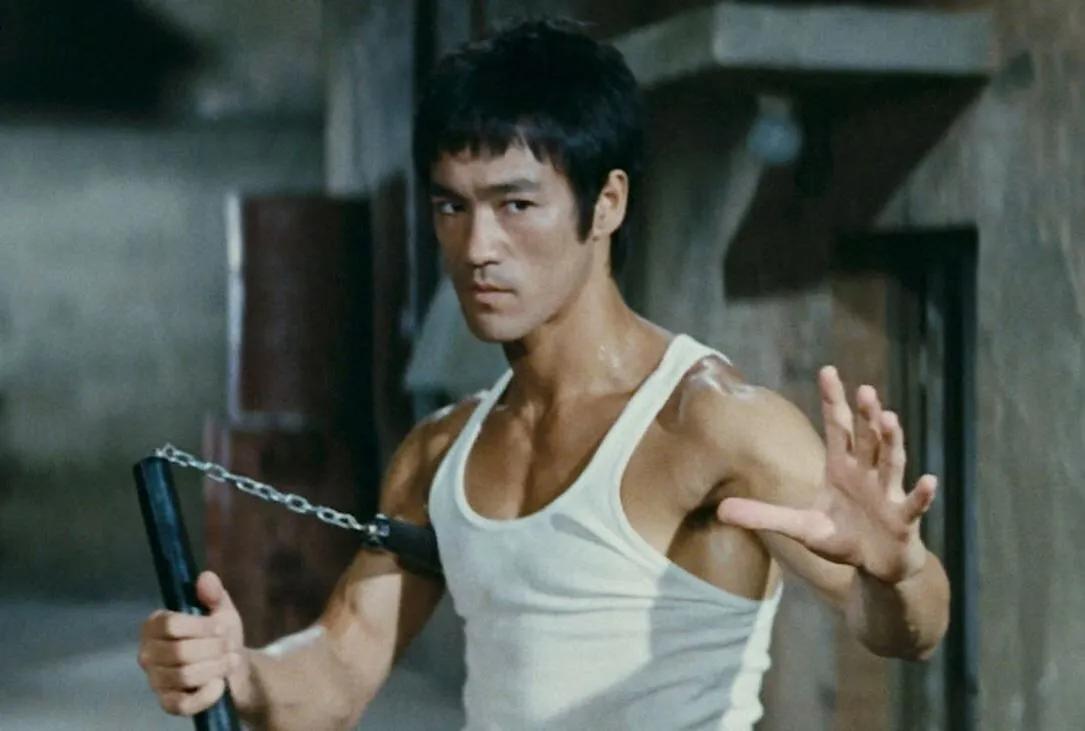

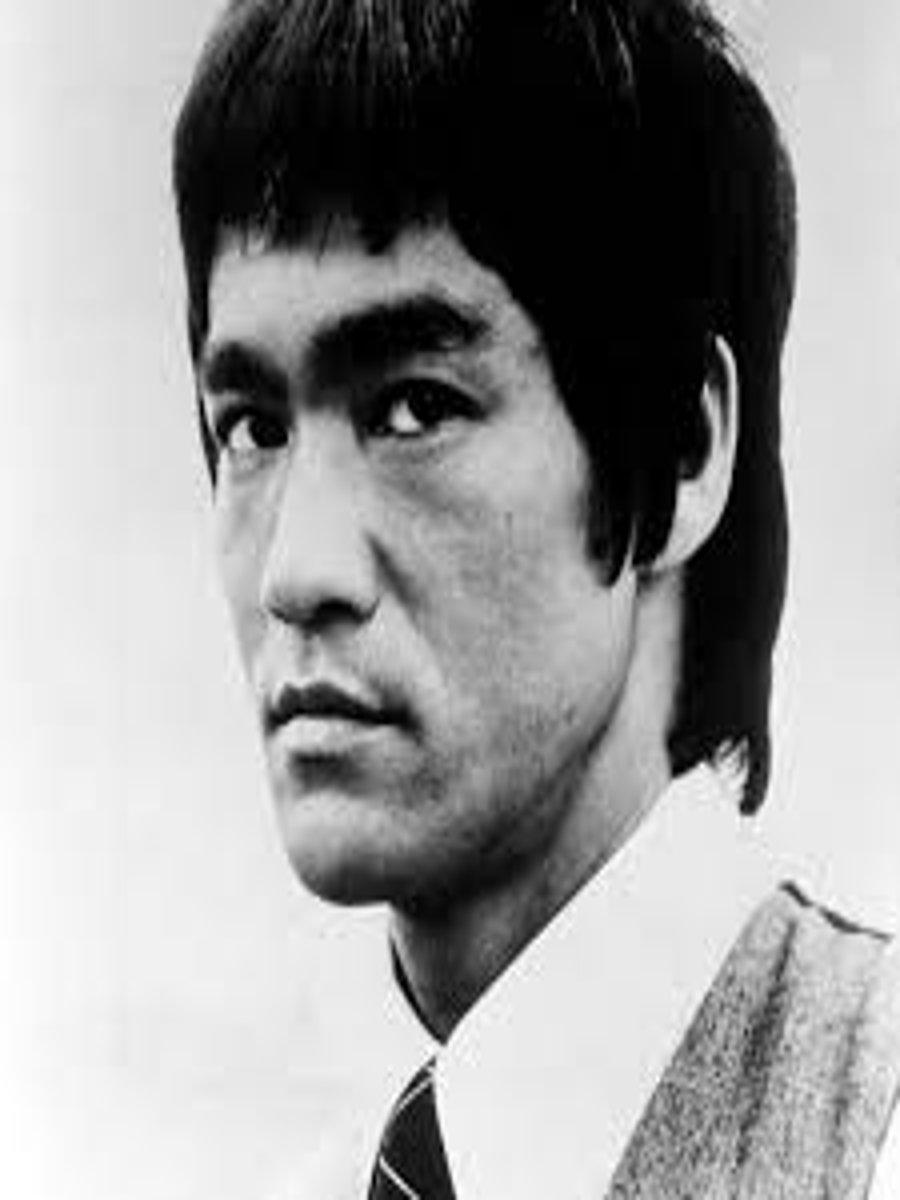
Bruce Lee
Full Name | Lee Jun-fan (李振藩) | ||||||||
|---|---|---|---|---|---|---|---|---|---|
Place of Birth | San Francisco, California, USA | ||||||||
Doğum tarihi | 1940-11-27 | ||||||||
Ölüm tarihi | 1973-07-20 | ||||||||
Place of Death | Hong Kong | ||||||||
Citizenship | United States of America | ||||||||
Ethnic Origin | Chinese (Han) | ||||||||
Education | University of Washington – Philosophy | ||||||||
Professional Information | philosopher instructor director actor Martial artist | ||||||||
Bruce Lee (李振藩 – Li Jun Fan) was an American actor of Hong Kong descent, martial artist, instructor, and philosopher who, despite his short life, left a lasting impact on martial arts, cinema, and cultural thought. Born on 27 November 1940 in San Francisco California, Bruce Lee is recognized as a pioneering figure who introduced and popularized East Asian martial arts in the Western world through his martial arts philosophy known as Jeet Kune Do.

Bruce Lee with his Master (Oggito)
Bruce Lee was born at the Chinese Hospital in San Francisco to Lee Hoi-chuen, a Chinese opera performer. Shortly after his birth, he moved with his family to Hong Kong. From an early age, he became familiar with cinema and appeared in numerous Hong Kong films as a child actor.
During his youth, Bruce Lee frequently engaged in street fights in Hong Kong. At the age of 13, he became a student of the renowned Wing Chun master Ip Man. This disciplined martial arts training helped him bring balance to his life. However, due to his problematic behavior on the streets, his family sent him to the United States in 1959.
After settling in Seattle, Lee completed high school and studied philosophy at the University of Washington. During this time, he began teaching kung fu. In this period, he developed his own approach to martial arts, both physically and mentally.
Bruce Lee rejected the rigid rules of traditional martial arts and sought to create a freer, more functional, and individualized style. From this philosophy emerged the Jeet Kune Do (截拳道 – The Way of the Intercepting Fist). Jeet Kune Do emphasizes effective techniques that adapt to the individual’s physical attributes and situational context rather than adhering to fixed forms. For him, “the best style is no style at all.”
Lee argued that Jeet Kune Do was not merely a fighting method but also a philosophy of life. In his own words, this art aimed to help the individual transcend physical, mental and spiritual limitations. His approach represented a free philosophical system beyond traditional disciplines.

Bruce Lee Statue – Hong Kong (pexels)
Bruce Lee’s career in Hollywood initially faced limitations and stereotypical roles. His portrayal of Kato in the television series The Green Hornet (1966–1967) brought him attention. However, constrained by the limited roles offered to Asian characters, he returned to Hong Kong in 1971.
After returning to Hong Kong, he collaborated with Golden Harvest Studios and achieved great success in films where he starred as the lead:
These films introduced Bruce Lee’s martial arts skill and charisma to a global audience. He became a pioneer of a new genre in cinema through direct, powerful and aesthetically compelling fight scenes. He also led the way in portraying Asians as strong and heroic figures in film.
Bruce Lee attracted attention not only through his physical abilities but also through his profound philosophical outlook. Influenced by his philosophy studies at the University of Washington, he developed a perspective that synthesized Eastern and Western thought. He integrated ideas inspired by Taoism, Confucianism and Zen Buddhism into his martial arts practice. For him, martial arts were not merely a physical activity but also a spiritual journey. His famous phrase “Be like water” symbolizes his emphasis on fluidity and adaptability.
Bruce Lee died on 20 July 1973 in Hong Kong at the age of 32. His death was officially attributed to cerebral edema. It occurred just days before the release of Enter the Dragon.
Bruce Lee’s death caused deep sorrow among his fans and generated numerous speculations. Yet, despite his early death, his influence did not diminish. He initiated a revolution in the world of martial arts, opened a new path in the film industry, and transformed the representation of Asian identity in Hollywood.
Today, Bruce Lee is remembered not only as a master of martial arts but also as a cultural icon, a disciplined thinker, and an inspiration for the unity of body and mind.
Bruce Lee Foundation. "About Bruce Lee." Bruce Lee Foundation. Accessed May 4, 2025. https://bruceleefoundation.org/about-bruce-lee/
Lee, Bruce. *The Warrior Within: The Philosophies of Bruce Lee to Better Understand the World around You and Achieve a Rewarding Life*. McGraw-Hill Education, 1996. Accessed May 4, 2025.
Bruce Lee
Full Name | Lee Jun-fan (李振藩) | ||||||||
|---|---|---|---|---|---|---|---|---|---|
Place of Birth | San Francisco, California, USA | ||||||||
Doğum tarihi | 1940-11-27 | ||||||||
Ölüm tarihi | 1973-07-20 | ||||||||
Place of Death | Hong Kong | ||||||||
Citizenship | United States of America | ||||||||
Ethnic Origin | Chinese (Han) | ||||||||
Education | University of Washington – Philosophy | ||||||||
Professional Information | philosopher instructor director actor Martial artist | ||||||||
Early Life and Education
The Birth of Jeet Kune Do
Cinema Career and Popularity
Philosophical Dimension and Influence
Death