


This article was automatically translated from the original Turkish version.
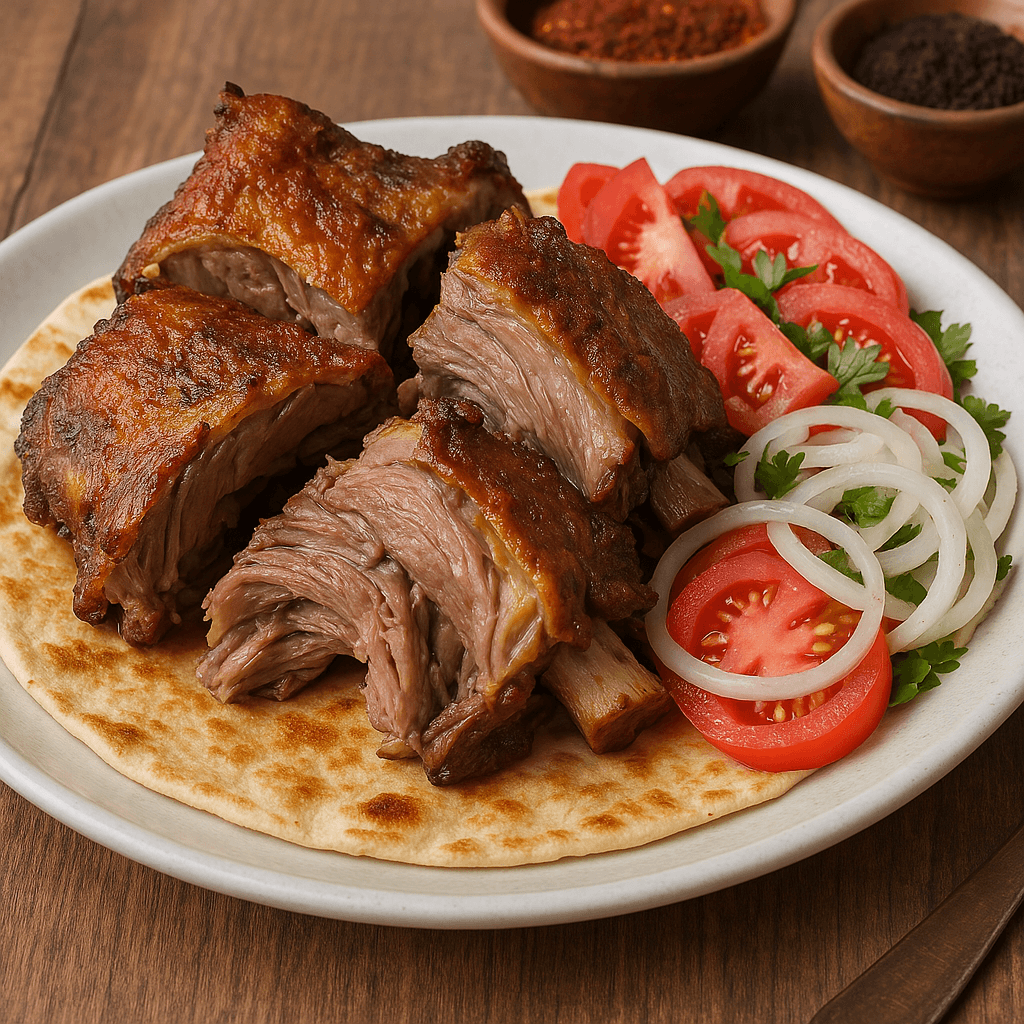
Büryan kebab is a type of meat kebab with deep roots in Turkish cuisine, prepared with regional variations across different areas of Anatolia. Known in Arabic as “perive,” this flavor is referred to in Türkiye as “püryan,” “piryan,” or “biran,” with variations in pronunciation depending on the region. In Kastamonu it is known as “kuyu kebab,” while in the Siirt and Bitlis regions it is called “büryan.” Although names and minor details vary by region, all versions are based on the same cooking technique as a variant of kuyu kebab.
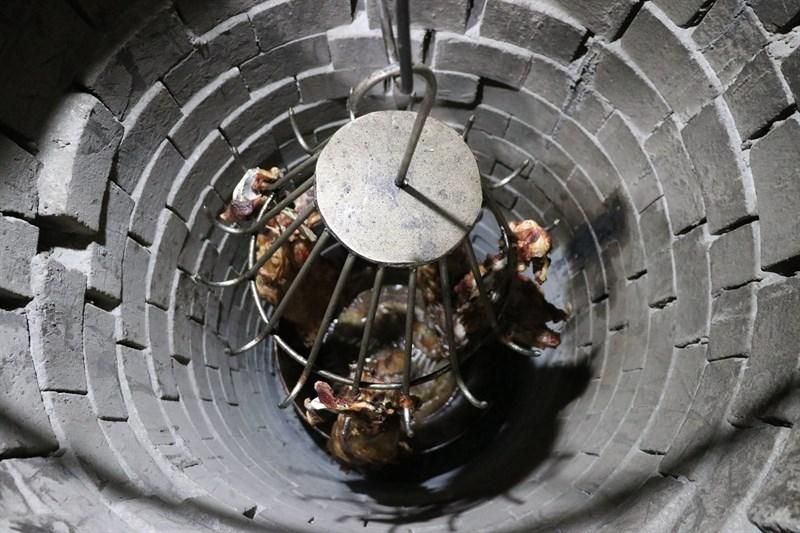
Büryan Kebab Pit Image (Siirt Municipality)
Büryan kebab is typically consumed during write months and early autumn, when animals are fed on fresh herbs and reach their most flavorful and nutritious state, enhancing the meat’s taste to its peak. During Winter months, it is less preferred due to fattening practices in livestock rearing. In Bitlis, the meat used for büryan is called “hevur,” referring to male goat meat or meat from goats that have never given birth (“tiştîr”), while in Siirt, male lamb meat is preferred. These choices reflect the geographical and cultural characteristics of each region. Unlike tandır kebab, büryan is distinguished by its unique pit-cooking method.
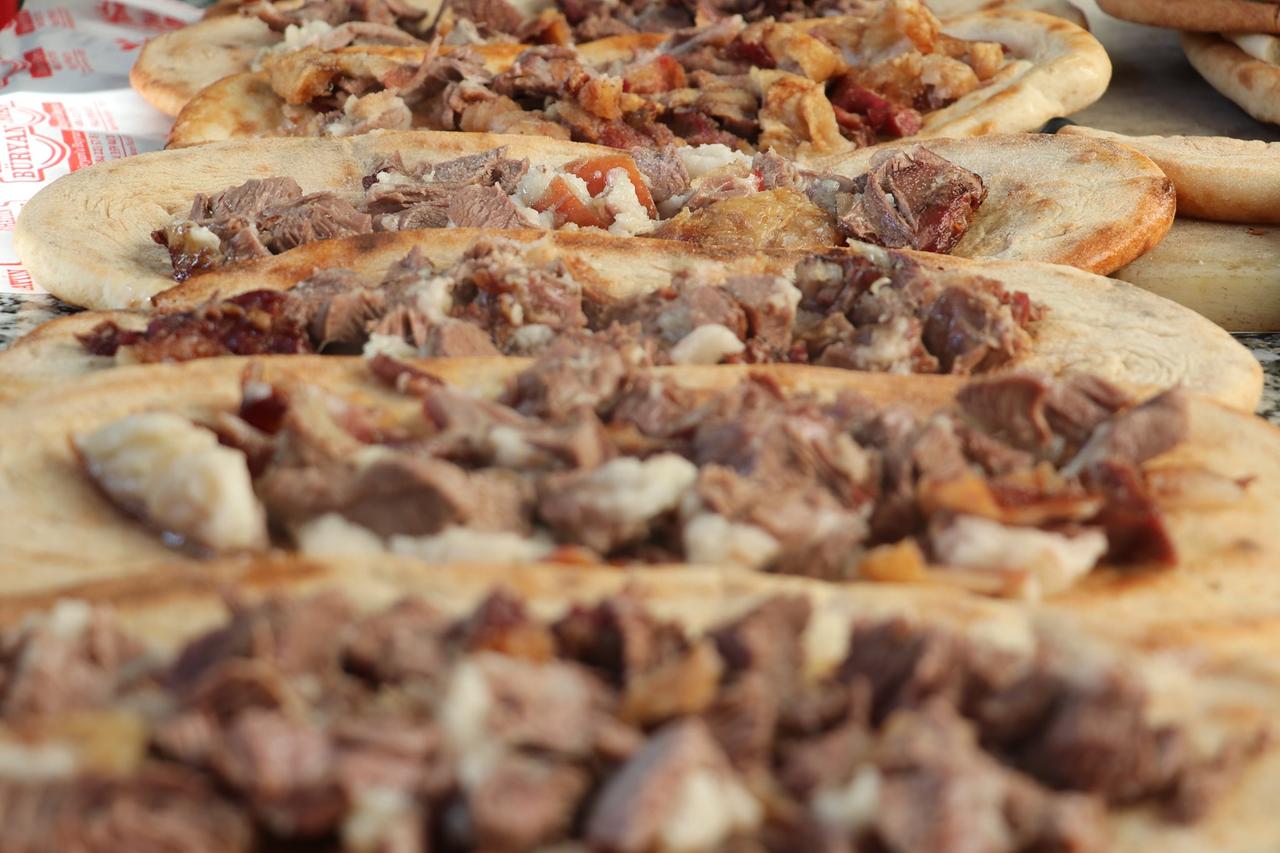
Boneless Büryan Kebab Image (Siirt Municipality)
Preparing büryan kebab is a process that requires both time and skill. The meat is prepared in advance and hung whole, evenly salted, and left to rest. The next day, it is placed into the pit for cooking. The cooking process proceeds as follows:
1. Pit Preparation: In a pit approximately two to three meters deep, oak wood is burned until it turns to embers.
2. Meat Preparation: Half a carcass of lamb or kid is used. After separating the legs and shoulders, the shank bone is left intact while other bones are removed. The bone-in meat is placed in a large copper cauldron with handles, sized to fit the pit, and covered with embers. Boneless meat is hung inside the pit by attaching it to iron hooks shaped like a “U,” suspended from the shank bone so that it dangles freely. At this stage, 10 to 15 half portions are positioned so they hang in midair without touching the pit walls.
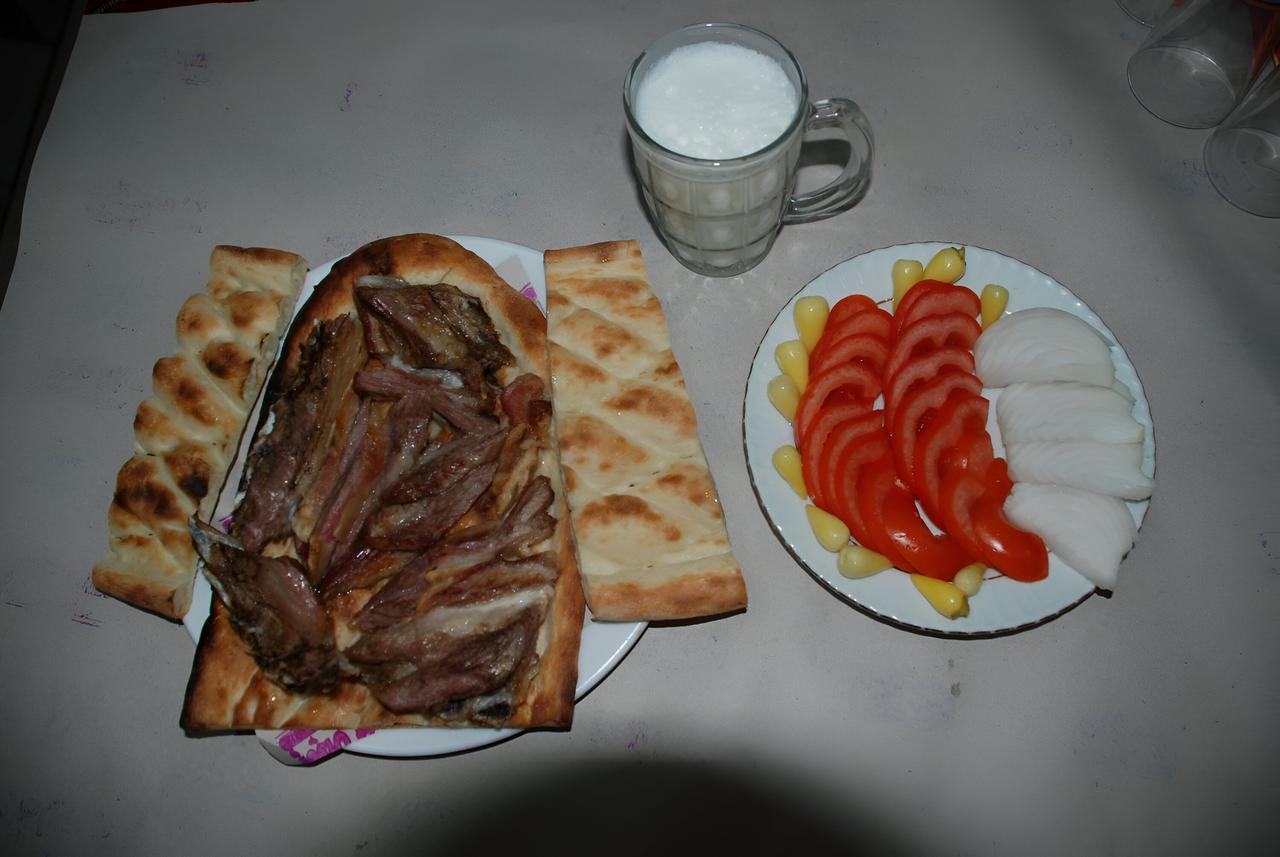
Example Büryan Kebab Presentation (Siirt Municipality)
3. Cooking: The top of the pit is sealed with a metal lid, and the edges are covered with mud or ash to prevent air from entering. During cooking, the meat’s fat drips into the cauldron, preventing smoke from forming inside the pit and imparting a unique flavor to the meat. Boneless meat takes approximately two to two and a half hours to cook, while bone-in meat requires three to three and a half hours.
4. Serving: Boneless cooked meat is removed from the pit and hung on racks, then sliced to order with a knife and weighed. The meat, cut into bite-sized pieces, is placed on pide bread, salted, and warmed in a stone oven until service. Bone-in meat is taken from the cauldron, placed on a tray, weighed, and served in the same manner with pide. Büryan can be served according to preference: fatty, lean, or medium-fat portions.
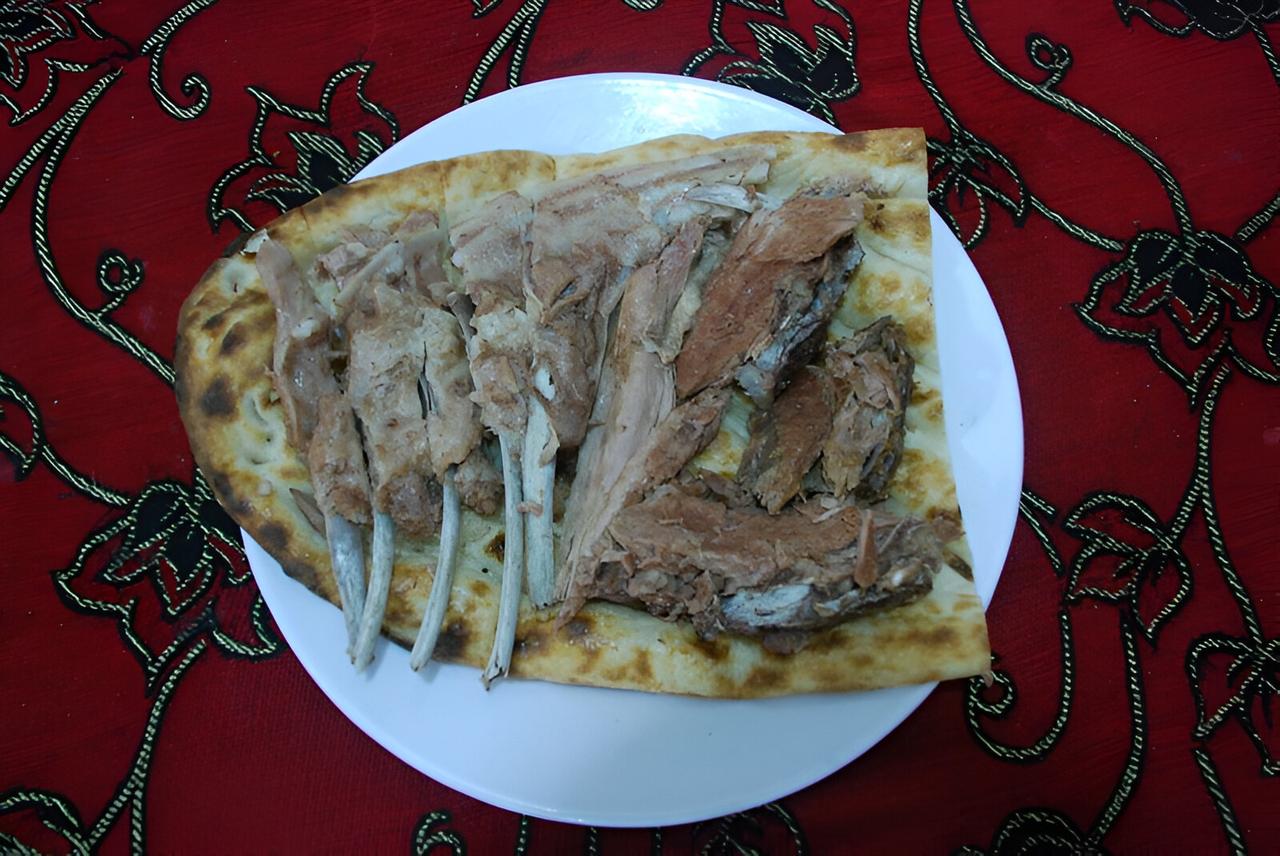
Bone-in Büryan Kebab Image (Siirt Municipality)
Büryan is commonly known as a dish sold from hanging racks. Served in both bone-in and boneless varieties, it is completed with pide bread and brought to the table. Traditionally consumed in summer, büryan stands out as one of Anatolian cuisine’s most distinctive examples, thanks to its flavor and unique pit-cooking method.
History and Regional Characteristics
Preparation
Serving and Consumption