
This article was automatically translated from the original Turkish version.
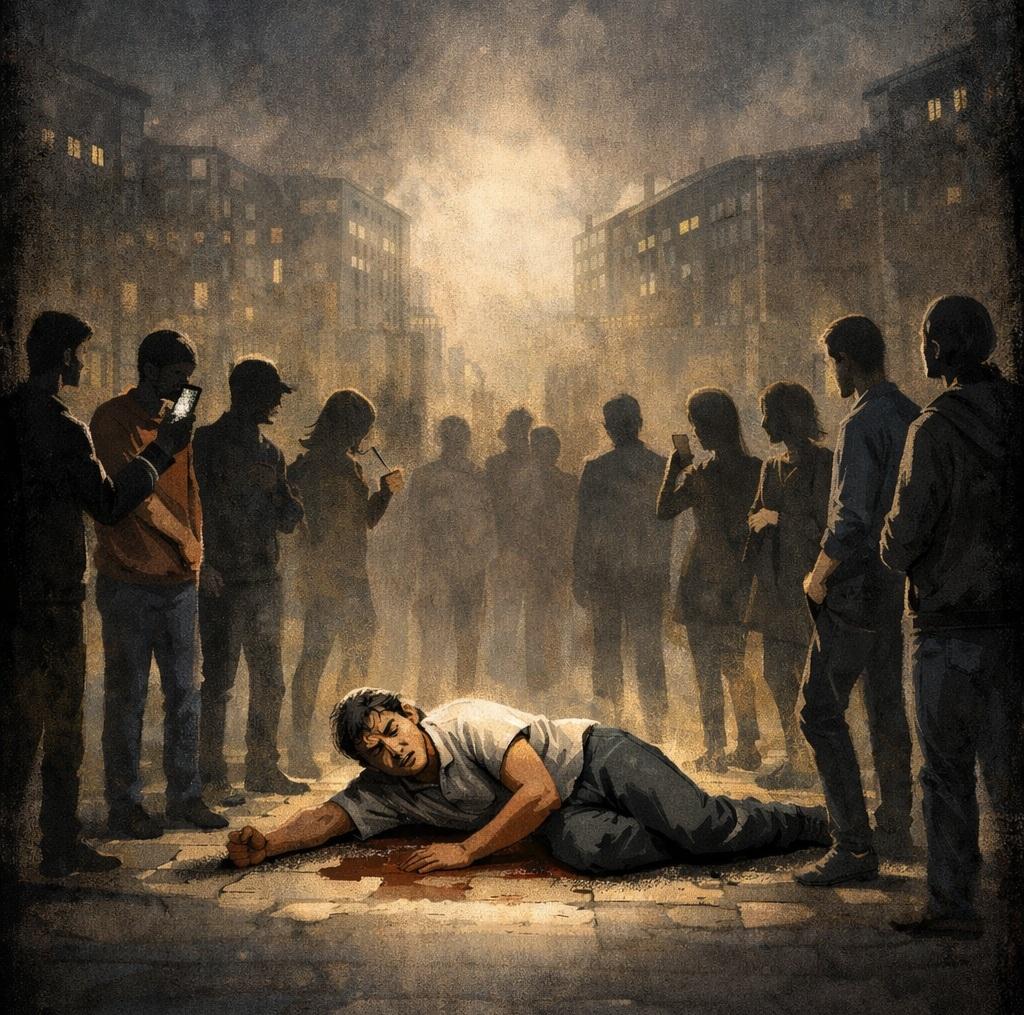
Generated by Artificial Intelligence.
Bystander Effect
Origin | The event that led to its entry into literature The failure of bystanders to intervene during the 1964 attack on Kitty Genovese in New York | ||||||||
|---|---|---|---|---|---|---|---|---|---|
Neural Mechanism | In emergency situations, the activation of the 'personal distress' system in the brain instead of 'empathy', triggering freezing and avoidance reflexes rather than helping behavior | ||||||||
New Generation View | Although social media makes responding easier due to physical distance and anonymity, intervention is often limited to virtual sharing (New Generation Bystander Effect) | ||||||||
Organizational Reflection | Remaining silent in the face of injustice or unethical situations witnessed at the workplace due to fear of retaliation or organizational indifference | ||||||||
Bystander Effect is defined as the phenomenon in which individuals are less likely to intervene or respond when confronted with an emergency, dangerous, or situation requiring assistance, due to the presence of other people in the environment.【1】 This concept, which holds a significant place in social psychology literature, indicates that as the number of witnesses to an event increases, individuals’ willingness to help decreases.【2】 The concept describes a state of passivity in which the individual, although physically present at the scene as a witness, is neither the perpetrator nor the victim and is not directly held responsible for the incident.【3】
The introduction of the bystander effect into scientific literature is associated with the 1964 murder of Kitty Genovese in New York. It was reported that during the attack that resulted in the death of Catherine Susan Genovese, despite the presence of 38 eyewitnesses, none intervened or called the police.【4】 This tragic event prompted social psychologists to investigate why people remain indifferent in such situations, and the phenomenon came to be known as the “Genovese Syndrome.”【5】 John M. Darley and Bibb Latané launched a comprehensive research program in the late 1960s to examine this phenomenon in laboratory settings.【6】
The psychological processes underlying the bystander effect are traditionally explained by three key factors:
Diffusion of Responsibility: It is argued that when more witnesses are present, individuals feel that the responsibility to help is shared among others, leading to a reduction in their sense of personal accountability.【7】
Evaluation Apprehension: Individuals are said to fear being negatively judged or making a mistake if they intervene.【8】
Pluralistic Ignorance: The inaction of other witnesses leads individuals to form a false perception that the situation is not actually urgent, thereby reinforcing inaction.【9】
In addition to these processes, it has been noted that helping behavior requires a cognitive process known as the “Bystander Intervention Model,” which involves recognizing the event, interpreting it as an emergency, assuming responsibility, knowing how to help, and taking action; the bystander effect arises when this process breaks down.【10】
Recent neurological studies have shown that the bystander effect is not merely a situational decision-making process but is also linked to neural and biological mechanisms. It has been suggested that helping behavior in some cases may be a reflexive, non-cognitive process rather than a deliberate choice.【11】
Functional magnetic resonance imaging (fMRI) studies have observed a decrease in activity in brain regions associated with preparing to help (pre- and postcentral gyrus and medial prefrontal cortex) as the number of bystanders increases.【12】 Furthermore, factors such as “empathy” (other-focused compassion) and “personal distress” (self-focused discomfort), which vary according to individual personality, have been found to influence helping behavior; individuals with higher levels of personal distress are more likely to exhibit freezing or avoidance responses in crowded environments.【13】
With the advancement of communication technologies, the bystander effect has extended beyond physical environments and begun to be studied in digital platforms. This phenomenon, referred to as the “new generation bystander effect,” is examined through responses to violent or emergency content on social media.【14】
In the new public sphere offered by social media, individuals may exhibit a tendency toward desensitization toward violent content, yet feel more comfortable responding than in real life. While situations that go unaddressed in real life due to physical risks or hesitation may elicit stronger and faster reactions on social media through comments or sharing, the sincerity and actual impact of these reactions as forms of intervention remain debated.【15】 Differences have been identified between the bystander effect in real life and on social media in terms of motivation to intervene and forms of response.【16】
In the field of organizational behavior, the bystander effect is examined in the context of employees remaining silent in the face of workplace negativity, injustice, or organizational misconduct. It has been noted that even in environments where employees know each other, they often avoid reporting such issues due to diffusion of responsibility, fear of retaliation, and emotional disengagement.【17】
In organizational settings, the bystander effect has been found to have a negative relationship with “organizational dissent” (employees voicing dissatisfaction); as the tendency to remain passive increases, the likelihood of speaking up and challenging issues decreases.【18】 Additionally, it has been suggested that the level of “perceived organizational support” plays an intermediary role in this relationship; a supportive organizational climate and leadership structure can reduce the bystander effect and facilitate constructive responses from employees.【19】
Hortensius, Ruud, and Beatrice de Gelder. “From Empathy to Apathy: The Bystander Effect Revisited”. *Current Directions in Psychological Science* 27, no. 4 (2018): 249–256. Accessed January 22, 2026.https://pmc.ncbi.nlm.nih.gov/articles/PMC6099971/
Tatlıoğlu, Sevra Su. “Şiddet Olgusu ve Yeni Nesil Seyirci Kalma Etkisi: Sosyal Medya ve Gerçek Hayat İkilemi.” Master's thesis, İstanbul Üniversitesi, 2020. Accessed January 22, 2026.https://nek.istanbul.edu.tr/ekos/TEZ/ET002710.pdf
Vural, Mehmet Fatih. “Seyirci Kalma Etkisi ile Örgütsel Muhalefet Arasındaki İlişkide Örgütsel Destek Algısının Aracılık Etkisi: Hava Taşımacılığı Sektöründe Bir Araştırma”. PhD thesis, Bursa Uludağ Üniversitesi, 2024. Accessed January 22, 2026.https://acikerisim.uludag.edu.tr/entities/publication/5790ceb0-2e80-4f5d-a17e-269e80546d81
[1]
Hortensius, Ruud ve Beatrice de Gelder. “From Empathy to Apathy: The Bystander Effect Revisited”. Current Directions in Psychological Science 27, sy. 4 (2018): 249-256. Erişim tarihi 22 Ocak 2026. https://pmc.ncbi.nlm.nih.gov/articles/PMC6099971/
Tatlıoğlu, Sevra Su. “Şiddet Olgusu ve Yeni Nesil Seyirci Kalma Etkisi: Sosyal Medya ve Gerçek Hayat İkilemi”. Yüksek Lisans Tezi, İstanbul Üniversitesi, 2020. Erişim tarihi 22 Ocak 2026. https://nek.istanbul.edu.tr/ekos/TEZ/ET002710.pdf
Vural, Mehmet Fatih. “Seyirci Kalma Etkisi ile Örgütsel Muhalefet Arasındaki İlişkide Örgütsel Destek Algısının Aracılık Etkisi: Hava Taşımacılığı Sektöründe Bir Araştırma”. Doktora Tezi, Bursa Uludağ Üniversitesi, 2024. Erişim tarihi 22 Ocak 2026. https://acikerisim.uludag.edu.tr/entities/publication/5790ceb0-2e80-4f5d-a17e-269e80546d81
[2]
Tatlıoğlu, Sevra Su. “Şiddet Olgusu ve Yeni Nesil Seyirci Kalma Etkisi: Sosyal Medya ve Gerçek Hayat İkilemi”. Yüksek Lisans Tezi, İstanbul Üniversitesi, 2020. Erişim tarihi 22 Ocak 2026. https://nek.istanbul.edu.tr/ekos/TEZ/ET002710.pdf
[3]
Tatlıoğlu, Sevra Su. “Şiddet Olgusu ve Yeni Nesil Seyirci Kalma Etkisi: Sosyal Medya ve Gerçek Hayat İkilemi”. Yüksek Lisans Tezi, İstanbul Üniversitesi, 2020. Erişim tarihi 22 Ocak 2026. https://nek.istanbul.edu.tr/ekos/TEZ/ET002710.pdf
Vural, Mehmet Fatih. “Seyirci Kalma Etkisi ile Örgütsel Muhalefet Arasındaki İlişkide Örgütsel Destek Algısının Aracılık Etkisi: Hava Taşımacılığı Sektöründe Bir Araştırma”. Doktora Tezi, Bursa Uludağ Üniversitesi, 2024. Erişim tarihi 22 Ocak 2026. https://acikerisim.uludag.edu.tr/entities/publication/5790ceb0-2e80-4f5d-a17e-269e80546d81
[4]
Tatlıoğlu, Sevra Su. “Şiddet Olgusu ve Yeni Nesil Seyirci Kalma Etkisi: Sosyal Medya ve Gerçek Hayat İkilemi”. Yüksek Lisans Tezi, İstanbul Üniversitesi, 2020. Erişim tarihi 22 Ocak 2026. https://nek.istanbul.edu.tr/ekos/TEZ/ET002710.pdf
Vural, Mehmet Fatih. “Seyirci Kalma Etkisi ile Örgütsel Muhalefet Arasındaki İlişkide Örgütsel Destek Algısının Aracılık Etkisi: Hava Taşımacılığı Sektöründe Bir Araştırma”. Doktora Tezi, Bursa Uludağ Üniversitesi, 2024. Erişim tarihi 22 Ocak 2026. https://acikerisim.uludag.edu.tr/entities/publication/5790ceb0-2e80-4f5d-a17e-269e80546d81
[5]
Tatlıoğlu, Sevra Su. “Şiddet Olgusu ve Yeni Nesil Seyirci Kalma Etkisi: Sosyal Medya ve Gerçek Hayat İkilemi”. Yüksek Lisans Tezi, İstanbul Üniversitesi, 2020. Erişim tarihi 22 Ocak 2026. https://nek.istanbul.edu.tr/ekos/TEZ/ET002710.pdf
Vural, Mehmet Fatih. “Seyirci Kalma Etkisi ile Örgütsel Muhalefet Arasındaki İlişkide Örgütsel Destek Algısının Aracılık Etkisi: Hava Taşımacılığı Sektöründe Bir Araştırma”. Doktora Tezi, Bursa Uludağ Üniversitesi, 2024. Erişim tarihi 22 Ocak 2026. https://acikerisim.uludag.edu.tr/entities/publication/5790ceb0-2e80-4f5d-a17e-269e80546d81
[6]
Hortensius, Ruud ve Beatrice de Gelder. “From Empathy to Apathy: The Bystander Effect Revisited”. Current Directions in Psychological Science 27, sy. 4 (2018): 249-256. Erişim tarihi 22 Ocak 2026. https://pmc.ncbi.nlm.nih.gov/articles/PMC6099971/
[7]
Hortensius, Ruud ve Beatrice de Gelder. “From Empathy to Apathy: The Bystander Effect Revisited”. Current Directions in Psychological Science 27, sy. 4 (2018): 249-256. Erişim tarihi 22 Ocak 2026. https://pmc.ncbi.nlm.nih.gov/articles/PMC6099971/
Vural, Mehmet Fatih. “Seyirci Kalma Etkisi ile Örgütsel Muhalefet Arasındaki İlişkide Örgütsel Destek Algısının Aracılık Etkisi: Hava Taşımacılığı Sektöründe Bir Araştırma”. Doktora Tezi, Bursa Uludağ Üniversitesi, 2024. Erişim tarihi 22 Ocak 2026. https://acikerisim.uludag.edu.tr/entities/publication/5790ceb0-2e80-4f5d-a17e-269e80546d81
[8]
Hortensius, Ruud ve Beatrice de Gelder. “From Empathy to Apathy: The Bystander Effect Revisited”. Current Directions in Psychological Science 27, sy. 4 (2018): 249-256. Erişim tarihi 22 Ocak 2026. https://pmc.ncbi.nlm.nih.gov/articles/PMC6099971/
[9]
Hortensius, Ruud ve Beatrice de Gelder. “From Empathy to Apathy: The Bystander Effect Revisited”. Current Directions in Psychological Science 27, sy. 4 (2018): 249-256. Erişim tarihi 22 Ocak 2026. https://pmc.ncbi.nlm.nih.gov/articles/PMC6099971/
[10]
Vural, Mehmet Fatih. “Seyirci Kalma Etkisi ile Örgütsel Muhalefet Arasındaki İlişkide Örgütsel Destek Algısının Aracılık Etkisi: Hava Taşımacılığı Sektöründe Bir Araştırma”. Doktora Tezi, Bursa Uludağ Üniversitesi, 2024. Erişim tarihi 22 Ocak 2026. https://acikerisim.uludag.edu.tr/entities/publication/5790ceb0-2e80-4f5d-a17e-269e80546d81
[11]
Hortensius, Ruud ve Beatrice de Gelder. “From Empathy to Apathy: The Bystander Effect Revisited”. Current Directions in Psychological Science 27, sy. 4 (2018): 249-256. Erişim tarihi 22 Ocak 2026. https://pmc.ncbi.nlm.nih.gov/articles/PMC6099971/
[12]
Hortensius, Ruud ve Beatrice de Gelder. “From Empathy to Apathy: The Bystander Effect Revisited”. Current Directions in Psychological Science 27, sy. 4 (2018): 249-256. Erişim tarihi 22 Ocak 2026. https://pmc.ncbi.nlm.nih.gov/articles/PMC6099971/
[13]
Hortensius, Ruud ve Beatrice de Gelder. “From Empathy to Apathy: The Bystander Effect Revisited”. Current Directions in Psychological Science 27, sy. 4 (2018): 249-256. Erişim tarihi 22 Ocak 2026. https://pmc.ncbi.nlm.nih.gov/articles/PMC6099971/
[14]
Tatlıoğlu, Sevra Su. “Şiddet Olgusu ve Yeni Nesil Seyirci Kalma Etkisi: Sosyal Medya ve Gerçek Hayat İkilemi”. Yüksek Lisans Tezi, İstanbul Üniversitesi, 2020. Erişim tarihi 22 Ocak 2026. https://nek.istanbul.edu.tr/ekos/TEZ/ET002710.pdf
[15]
Tatlıoğlu, Sevra Su. “Şiddet Olgusu ve Yeni Nesil Seyirci Kalma Etkisi: Sosyal Medya ve Gerçek Hayat İkilemi”. Yüksek Lisans Tezi, İstanbul Üniversitesi, 2020. Erişim tarihi 22 Ocak 2026. https://nek.istanbul.edu.tr/ekos/TEZ/ET002710.pdf
[16]
Tatlıoğlu, Sevra Su. “Şiddet Olgusu ve Yeni Nesil Seyirci Kalma Etkisi: Sosyal Medya ve Gerçek Hayat İkilemi”. Yüksek Lisans Tezi, İstanbul Üniversitesi, 2020. Erişim tarihi 22 Ocak 2026. https://nek.istanbul.edu.tr/ekos/TEZ/ET002710.pdf
[17]
Vural, Mehmet Fatih. “Seyirci Kalma Etkisi ile Örgütsel Muhalefet Arasındaki İlişkide Örgütsel Destek Algısının Aracılık Etkisi: Hava Taşımacılığı Sektöründe Bir Araştırma”. Doktora Tezi, Bursa Uludağ Üniversitesi, 2024. Erişim tarihi 22 Ocak 2026. https://acikerisim.uludag.edu.tr/entities/publication/5790ceb0-2e80-4f5d-a17e-269e80546d81
[18]
Vural, Mehmet Fatih. “Seyirci Kalma Etkisi ile Örgütsel Muhalefet Arasındaki İlişkide Örgütsel Destek Algısının Aracılık Etkisi: Hava Taşımacılığı Sektöründe Bir Araştırma”. Doktora Tezi, Bursa Uludağ Üniversitesi, 2024. Erişim tarihi 22 Ocak 2026. https://acikerisim.uludag.edu.tr/entities/publication/5790ceb0-2e80-4f5d-a17e-269e80546d81
[19]
Vural, Mehmet Fatih. “Seyirci Kalma Etkisi ile Örgütsel Muhalefet Arasındaki İlişkide Örgütsel Destek Algısının Aracılık Etkisi: Hava Taşımacılığı Sektöründe Bir Araştırma”. Doktora Tezi, Bursa Uludağ Üniversitesi, 2024. Erişim tarihi 22 Ocak 2026. https://acikerisim.uludag.edu.tr/entities/publication/5790ceb0-2e80-4f5d-a17e-269e80546d81

Generated by Artificial Intelligence.
Bystander Effect
Origin | The event that led to its entry into literature The failure of bystanders to intervene during the 1964 attack on Kitty Genovese in New York | ||||||||
|---|---|---|---|---|---|---|---|---|---|
Neural Mechanism | In emergency situations, the activation of the 'personal distress' system in the brain instead of 'empathy', triggering freezing and avoidance reflexes rather than helping behavior | ||||||||
New Generation View | Although social media makes responding easier due to physical distance and anonymity, intervention is often limited to virtual sharing (New Generation Bystander Effect) | ||||||||
Organizational Reflection | Remaining silent in the face of injustice or unethical situations witnessed at the workplace due to fear of retaliation or organizational indifference | ||||||||
Historical Development and Origins
Theoretical Approaches and Psychological Mechanisms
Neurological and Biological Foundations
Social Media and the New Generation Bystander Effect
Bystander Effect in Organizational Contexts