

This article was automatically translated from the original Turkish version.
+1 More
Location | Cabo da Roca | ||||||||
|---|---|---|---|---|---|---|---|---|---|
Country | Portugal | ||||||||
Function(s) | Coastal Lighthouse | ||||||||
Visit Status | Closed to visitors for an indefinite period | ||||||||
Oldest Lighthouse Order | The second oldest lighthouse on the coast | ||||||||
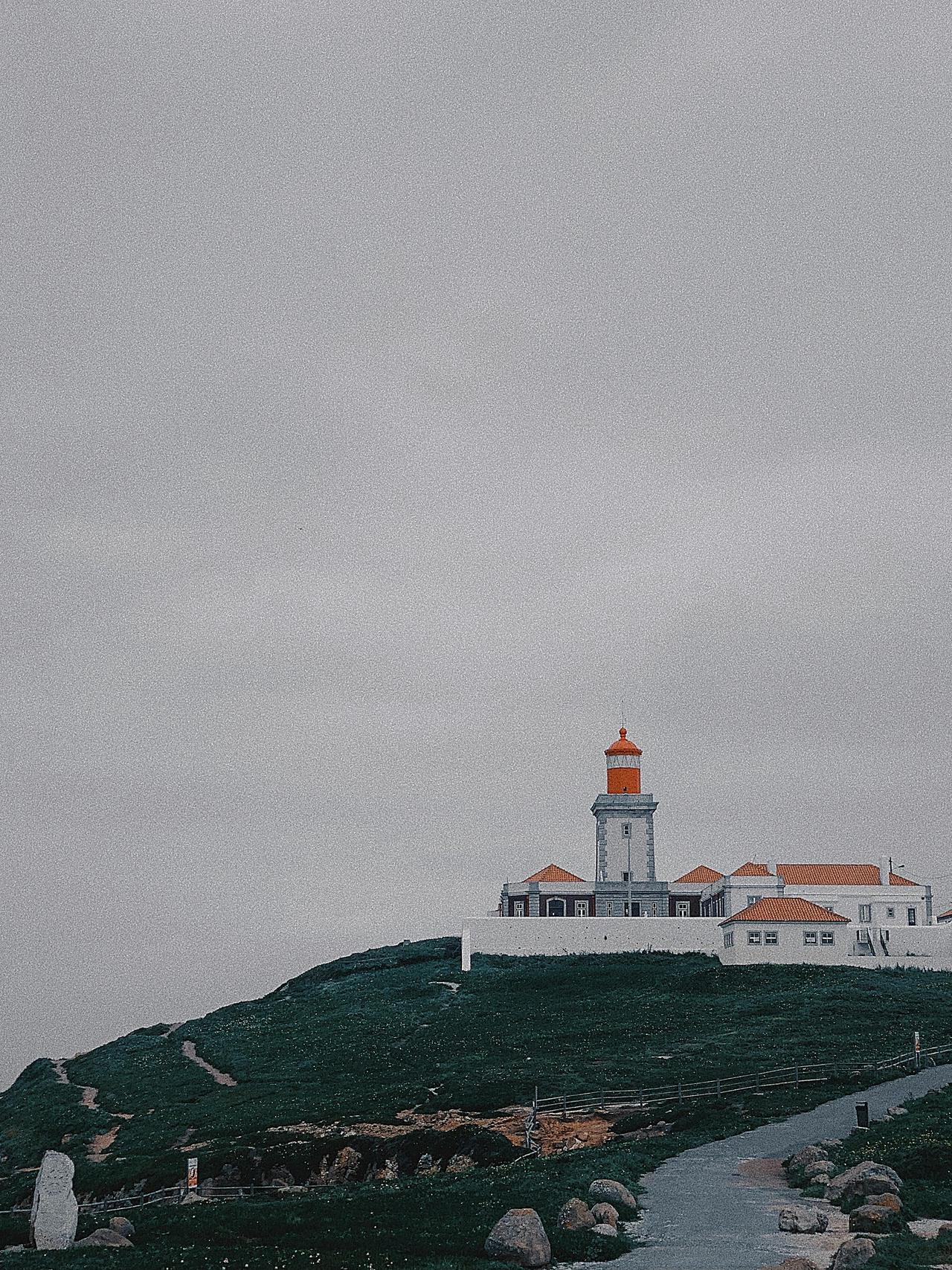
Cabo da Roca Lighthouse is one of Portugal’s oldest and highest-elevation sea lighthouses. Strategically positioned to ensure coastal safety, the lighthouse also symbolizes the technological transformation in Portugal’s maritime history. The Cabo da Roca Lighthouse is located at Cabo da Roca, geographically situated at 38º 46′.99 North latitude and 09º 29′.75 West longitude.
The construction of the lighthouse was planned as one of six lighthouses ordered by the Pombaline decree of 1 February 1758 with the goal of enhancing Portugal’s coastal security. Lighthouse It was officially put into operation in 1772 upon completion of construction. With this founding date, the Cabo da Roca Lighthouse holds the distinction of being the second oldest still-active lighthouse along Portugal’s coastline.

Cabo da Roca Lighthouse (getarchive)
Since its establishment, the lighthouse has continuously undergone modernization by incorporating every major advancement in lighthouse technology.
The first major renovation occurred in 1843. During this period, the lighting system was replaced with a new arrangement consisting of sixteen Argand lamps equipped with oil-powered parabolic reflectors. The distinguishing feature of this system was a rotating mechanism controlled by a clockwork mechanism that caused the light to flash at regular intervals. However, observations made in 1865 indicated that the lighthouse’s illumination performance still failed to meet expectations.
The electrification of lighthouse technology began in the late 19th century. The 1883 Portuguese General Lighting and Signaling Plan formally mandated the conversion of the lighthouse to an electrical system. After fourteen years of preparation, the lighthouse was electrified and entered service in 1897. The new light source consisted of eight arc lamps fitted with regulators modified by A. Berjol from the Baron system. In the same year, a steam-powered siren was activated to provide warnings under poor visibility conditions, and the catoptric apparatus was replaced with a fourth-order optical device.
Even after transitioning to an electrical system, the lighthouse’s fuel and gas requirements were still managed. Due to the insufficient purity of commercially available gas, an acetylene gas production facility was established within the lighthouse compound in 1917. The optical system determining the lighthouse’s range and efficiency was replaced in 1947 with a high-performance new third-order (sea-air) optical apparatus (500 mm focal length), which remains in use today.
In the second half of the 20th century, the lighthouse was fully modernized. In 1982, it was connected to the public electricity grid, and the main bulb, previously rated at 3000 W, was replaced with a more energy-efficient 1000 W halogen bulb. In 1990, the lighthouse was converted to an automated system in line with technological advances, and the acetylene gas production facility was shut down. Finally, in 2009, the bulb was replaced with an OSRAM HCI-TM 250 W/830 WDL metal halide lamp.

Aerial View of Cabo da Roca Lighthouse (pexels)
The significance of the Cabo da Roca Lighthouse stems not only from its technical function but also from its intrinsic heritage value in relation to Portugal’s maritime history and geographical identity.
Due to its historical and functional importance, the Cabo da Roca Lighthouse is subject to a continuous conservation and maintenance regime; however, public access is affected by this process.
Almada Studio. “Clouds over Lighthouse on Cabo da Roca JPG.” Pexels. Accessed October 5, 2025. https://www.pexels.com/photo/clouds-over-lighthouse-on-cabo-da-roca-16026776/
Autoridade Marítima Nacional. "Visitas." AGN – Autoridade Marítima Nacional. Accessed October 5, 2025. https://www.amn.pt/DF/Paginas/visitas.aspx
Autoridade Marítima Nacional. “Farol do Cabo da Roca.” Accessed October 5, 2025. https://www.amn.pt/DF/Paginas/FaroldoCabodaRoca.aspx
European Route of Lighthouses. "Farol do Cabo da Roca." Accessed October 5, 2025. https://er-ol.eu/explore/lighthouses/farol-do-cabo-da-roca
Itoldya420. “Lighthouse — Cabo da Roca, Portugal.” GetArchive. Accessed October 5, 2025. https://itoldya420.getarchive.net/amp/media/lighthouse-cabo-da-roca-portugal-f0aff3
Rockwell branding agency. “The Cabo de Roca Lighthouse in the Coast of Portugal JPG.” Pexels. Accessed October 5, 2025. https://www.pexels.com/photo/the-cabo-de-roca-lighthouse-in-the-coast-of-portugal-9022620/

Location | Cabo da Roca | ||||||||
|---|---|---|---|---|---|---|---|---|---|
Country | Portugal | ||||||||
Function(s) | Coastal Lighthouse | ||||||||
Visit Status | Closed to visitors for an indefinite period | ||||||||
Oldest Lighthouse Order | The second oldest lighthouse on the coast | ||||||||
No Discussion Added Yet
Start discussion for "Cabo da Roca Lighthouse" article
History and Establishment
Technological Transformation and Development Processes
Intrinsic Heritage Value and Cultural Context
Conservation and Public Access